Ford’s Disruptive Pivot: The China-Built Transit City EV Is a Fleet Game-Changer
The electric commercial vehicle sector is about to witness a massive shift in economics. Ford China, in partnership with Jiangling Motors Corporation ...
Editorial Team
World Of EV
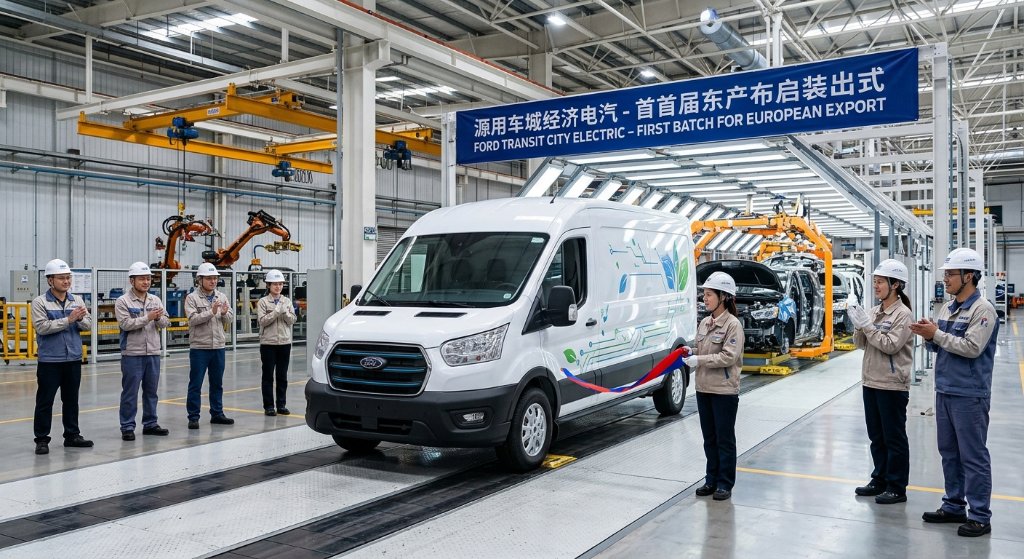
The electric commercial vehicle sector is about to witness a massive shift in economics. Ford China, in partnership with Jiangling Motors Corporation (JMC), has completed production of the first batch of its all-new Transit City electric commercial van at the Xiaolan plant in Nanchang, China. Approximately 1,000 units are currently being prepared for shipment, with European deliveries expected to begin by the end of 2026. This is not just another product launch—it represents Ford’s first battery-electric commercial vehicle built in China specifically targeted at developed international markets.
Historically, Western legacy automakers have struggled to produce affordable, smaller-scale electric commercial vehicles. They have either over-engineered them, leading to sky-high price tags, or relied on low-range conversions of old diesel architectures. With the Transit City, Ford is abandoning the old playbook. Instead of building from scratch, they have co-developed the van alongside JMC, leveraging the robust underpinnings of the Chinese-market JMC Touring EV platform. The result is a highly competitive, built-for-purpose urban workhorse designed to lower the barrier of entry for business fleets.
A Purpose-Built, Built-to-Cost Spec Sheet
The Ford Transit City is strictly engineered for urban logistics, intentionally choosing efficiency and low operating costs over unnecessary, heavy range capabilities. The specs reflect a pragmatic approach to the daily demands of city driving:
- Efficient Drivetrain: Powered by a front-mounted 110 kW (148 horsepower) single electric motor.
- Robust LFP Battery: Utilizes a highly durable 56 kWh lithium iron phosphate (LFP) battery chemistry, which offers exceptional thermal stability and lifecycle longevity.
- Optimized Range: Delivers up to 254 km (approx. 158 miles) of WLTP range—perfectly matched to the sub-100 km average daily route of most urban commercial fleets.
- Capable Charging: Supports DC fast charging up to 67 kW, enabling a 10% to 80% charge in about 30 minutes, alongside an 11 kW AC onboard charger.
- Impressive Capability: Offers up to 8.5 cubic meters of cargo volume and a maximum payload capacity of 1,600 kg (over 3,500 lbs).
- Flexible Configurations: Available in three body styles—L1H1 (low-roof), L2H2 (high-roof), and a versatile Chassis Cab configuration.
Demolishing the Price Barrier
While the larger, European-built E-Transit Custom remains a premium powerhouse with a starting price around €47,000, the Transit City is aiming directly at the budget-conscious heart of the market. Expected to land around £27,000 (roughly €36,000), it successfully bridges the pricing gap between diesel vans and high-voltage EVs.
Despite the lower price tag, Ford has not stripped the interior to the bone. Every Transit City comes with a single, highly-equipped trim level that includes a 12.3-inch touchscreen running Ford's Sync infotainment system (with wireless Apple CarPlay and Android Auto), a digital instrument cluster, adaptive cruise control, lane-keeping assist, and parking sensors. It’s an aggressive, complete package designed to deliver up to a 40% lower total cost of ownership (TCO) compared to traditional diesel equivalents.
Why This Matters:
This move marks a highly calculated chess game by Ford Pro. By shifting manufacturing of its entry-level urban EV to China, Ford is executing a "Hardware-Software Arbitrage."
The Software Moat: While several Chinese automakers are attempting to enter the European commercial market with cheap vans, they lack the dealer network, roadside assistance, and enterprise software ecosystem that fleet managers rely on. Ford’s genius here is taking highly cost-efficient Chinese hardware (co-developed with JMC) and wrapping it in the premium "Ford Pro" ecosystem. Fleet buyers get Chinese-scale pricing backed by the absolute security of Ford Telematics, Ford Pro charging software, and an established, trusted servicing network.
Navigating the Geopolitical Tightrope: The "In China, For the World" strategy allows Ford to circumvent the massive capital expenditures required to build low-margin electric platforms in Europe. Although Chinese-produced passenger EVs are currently facing intense regulatory and tariff headwinds in the West, commercial vehicles operate under a different set of rules. This vehicle serves as a critical test case for how Western legacy brands can leverage Chinese supply chains to maintain global market dominance.
The Winners and Losers: The clear winners are urban fleet managers and small business owners, who finally get an affordable, low-maintenance EV from an established manufacturer with an 8-year/100,000-mile battery warranty. The losers? Traditional European commercial vehicle rivals. Companies like Stellantis and Renault will now find themselves forced to compete against China's unbeatable manufacturing economics, wrapped in a legendary Ford Transit badge.
Summary and What's Next
The rollout of the Ford Transit City represents a realistic, pragmatic shift in Ford’s global electrification strategy. Rather than fighting Chinese manufacturing advantages, Ford is actively co-opting them to defend its commercial vehicle crown. When the first 1,000 units land on European shores at the end of 2026, it won't just mark the arrival of a new van—it will signal the beginning of a highly globalized, joint-venture approach to building the commercial fleets of tomorrow.