Ford’s EV Strategy Faces a Brutal Reality Check: Mach-E and Lightning Sales Crater 41% in Shock Q2 Report
Ford Motor Co. has hit a massive roadblock on its path to electrification. The blue oval reported a bruising 10.3% drop in overall U.S. vehicle sales ...
Editorial Team
World Of EV
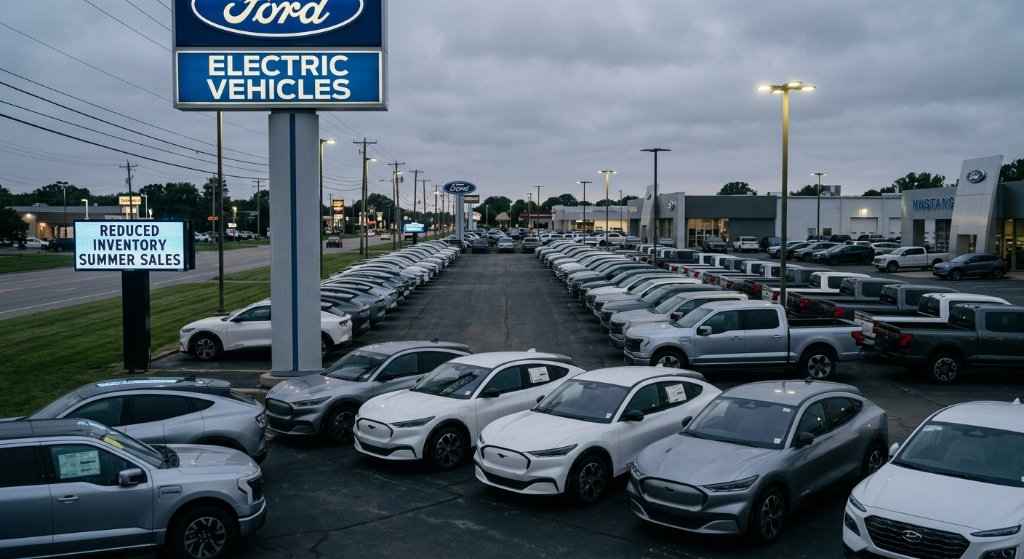
Ford Motor Co. has hit a massive roadblock on its path to electrification. The blue oval reported a bruising 10.3% drop in overall U.S. vehicle sales for the second quarter of 2026, heavily weighed down by an alarming 40.7% collapse in pure electric vehicle sales. The numbers paint a grim picture for Dearborn's aggressive EV push, exposing deep structural vulnerabilities in consumer demand and supply chain resilience.
This isn't just a temporary dip; it is a structural crisis. After years of reorganizing its business into distinct divisions—relying on the newly formed "Model e" unit to eventually rival Tesla—Ford is running headfirst into a cold, hard truth: mass-market consumers are rejecting high-priced, pure battery-electric vehicles (BEVs) faster than anyone predicted. The sudden removal of the federal EV tax credit in late 2025 stripped away the primary demand driver for these premium vehicles, leaving Ford's EV lineup exposed to a harsh new economic climate.
The Red Ink of Model e: EV Sales Plunge
The decline in pure EV volumes has spared none of Ford’s landmark battery-powered vehicles. Once hailed as the vanguard of a new era, these models are now sitting unsold on dealer lots as buyers retreat to hybrid and internal combustion alternatives. The key models suffered devastating setbacks in the second quarter:
- Pure EV Sales: Fell 40.7% year-over-year, marking a catastrophic loss of momentum for Ford's flagship electric division.
- F-150 Lightning: Deliveries plummeted by an astonishing 58.6% compared to the same period last year, signaling that utility buyers remain highly skeptical of pure-battery pickups.
- Mustang Mach-E: Sales tumbled 30.9% to just 7,032 units, losing significant ground to more affordable and updated competitors.
- Bleeding Cash: These cratering sales numbers are expected to widen losses for Ford's Model e division, which previously projected a staggering full-year EBIT loss of up to $4.5 billion.
Fires and Foreclosures: The Aluminum Supply Chain Nightmare
To compound Ford’s EV demand woes, a physical supply chain disaster struck the company’s most profitable division: the gas- and hybrid-powered F-Series trucks. Two devastating fires late last year at a hot mill operated by Novelis—Ford’s key aluminum supplier—completely halted production of the specialized aluminum sheeting required to build the F-150's military-grade body.
- F-Series Production Bottleneck: Truck sales fell 11% during the quarter to 197,900 units, as the ripple effects of the raw material shortage restricted dealer inventories.
- Financial Hit: Ford previously acknowledged that the uneven recovery from the Novelis plant shutdown could cost the company up to $2 billion in lost volume.
- The Saving Grace: Despite the supply bottlenecks, the F-Series still retained its crown as America's best-selling truck, while the Maverick Hybrid surged 19.3% to a record 29,457 units. This proves that while pure EVs are languishing, buyers are aggressively purchasing hybrid powertrains.
Why This Matters:
Ford's bruising second-quarter results represent a critical inflection point for the entire automotive landscape. This is a "do-or-die" moment for CEO Jim Farley's transition playbook. It signals that legacy automakers can no longer rely on early adopters to subsidize expensive, un-optimized EV platforms in a post-tax-credit era.
- The Big Winner: Toyota and the Hybrid Hegemony. Toyota’s cautious, hybrid-first strategy has been fully vindicated. By avoiding a massive, premature commitment to purely battery-powered vehicles, Toyota has dodged the multi-billion-dollar losses currently bleeding Ford’s balance sheet. Meanwhile, Ford’s own Maverick Hybrid is keeping the lights on in Dearborn.
- The Big Loser: Detroit's EV Timeline. Ford is burning cash at a rate of over $4 billion annually on its Model e division. If pure EV demand does not rebound, Ford and its rival GM (which took huge EV write-downs and delayed electric truck platforms) will be forced to mothball future gigafactories and delay next-generation EV architectures.
- What This Signals to the Market: The dream of rapid, top-down EV adoption is over. The market is demanding a "middle path." Automakers that cannot build profitable, sub-$30,000 hybrids and plug-in hybrids in the near term will lose massive market share. For the consumer, it means legacy brands will scale back EV production, focusing instead on extending the lifespans of combustion and hybrid platforms.
Looking ahead, Ford expects its aluminum supply to recover in the second half of the year, which should unleash pent-up demand for its highly profitable gas and hybrid F-Series pickups. However, the existential threat of its bleeding EV division remains. If Ford cannot successfully pivot its EV assembly lines to produce genuinely affordable, next-generation platforms, the Blue Oval risks being left behind by nimbler, hybrid-focused global rivals in an increasingly cost-conscious market.