From 'Anti-EV Guy' to Enthusiast: How Financial Reality and Home Charging Converted a U.S. Army Veteran
Ivan Rudenko, a decorated U.S. Army veteran, stands as a compelling testament to the transformative power of electric vehicles, particularly when prac...
Editorial Team
World Of EV
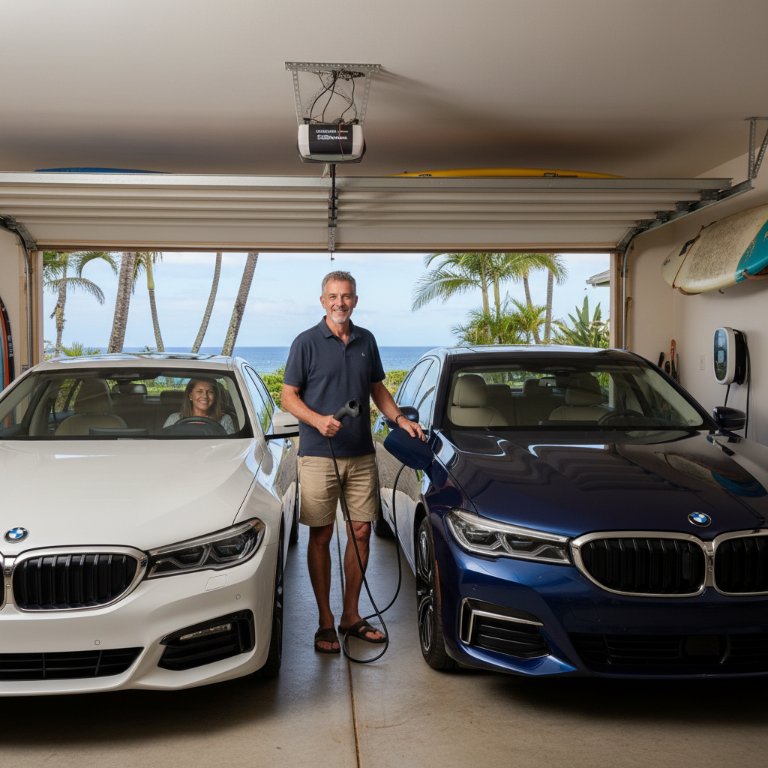
Ivan Rudenko, a decorated U.S. Army veteran, stands as a compelling testament to the transformative power of electric vehicles, particularly when practicality and financial prudence enter the equation. Once a self-proclaimed 'anti-electrical vehicle guy,' Rudenko's journey from skepticism to staunch EV advocacy is a powerful narrative for an industry still battling misconceptions. His story isn't one of early adoption for environmental ideals, but rather a calculated, financially driven transition that ultimately unveiled the undeniable conveniences of EV ownership.
The Costly Wake-Up Call
Rudenko’s pivot to electric mobility wasn't a sudden ideological shift, but a pragmatic response to escalating automotive expenses. The breaking point arrived with a significant transmission repair bill for his Mercedes—a common, expensive pain point for internal combustion engine (ICE) vehicle owners. Coupled with consistently high monthly fuel costs, these financial burdens forced a reevaluation of his transportation strategy. This scenario resonates deeply with many consumers grappling with the long-term expenses of traditional vehicles, often overshadowing the initial purchase price of a new car.
BMW's i-Series: A Catalyst for Change
The real turning point for Rudenko came through his wife's positive experience with a BMW i5. As she enjoyed the benefits of an electric luxury sedan, the family witnessed a dramatic reduction in their monthly fuel expenses. This direct, tangible saving, offset by only a modest increase in their electric bill, provided irrefutable evidence of the financial advantages. This personal success story ultimately convinced Rudenko to invest in his own electric vehicle, opting for the opulent BMW i7. Unlike some early EV offerings that compromised on luxury or performance, the i5 and i7 demonstrate that premium driving experiences are not just maintained but often enhanced in the EV format, a critical factor for many luxury car buyers.
The Unbeatable Convenience of Home Charging
For Rudenko, the true game-changer and the linchpin of his EV satisfaction is the ubiquitous convenience of home charging. Despite living in Hawaii, where public charging infrastructure can be a concern for some, he rarely uses public chargers. The simple act of plugging in his BMW i7 overnight means he consistently wakes up to a fully charged vehicle with ample range for daily needs. This eliminates range anxiety, a persistent concern for prospective EV buyers, by integrating vehicle fueling seamlessly into the nightly routine. It highlights a stark contrast to the traditional gas station stop, which remains a frequent, time-consuming interruption for ICE vehicle owners.
Why This Matters:
Rudenko's transformation is far more than an individual anecdote; it's a critical bellwether for the broader EV market, offering profound insights for both consumers and the automotive industry.
Overcoming Skepticism with Real-World Economics: His journey directly addresses and dismantles common anti-EV sentiments centered on perceived high costs and impracticality. It underscores that financial incentives—lower operating costs, reduced maintenance—are powerful drivers for mass adoption, often more so than environmental consciousness alone. Consumers win by understanding the long-term savings potential.
The Undeniable Advantage of Home Charging: This story unequivocally reinforces that robust home charging infrastructure is paramount for widespread EV acceptance. For individuals with access to private charging, the experience transforms from a perceived chore to an unmatched convenience. This signals to urban planners and real estate developers the increasing necessity of integrating charging solutions into new and existing properties. While public charging is vital, reliable home charging is often the key to initial user satisfaction and subsequent advocacy.
Luxury Brands Leading the Charge: BMW's role in Rudenko's conversion is also significant. Premium manufacturers like BMW, often seen as traditional bastions of ICE performance, are successfully demonstrating that their EV counterparts not only maintain but often elevate the brand's core values of luxury, performance, and technological sophistication. This helps to normalize EVs within the luxury segment, attracting buyers who might otherwise shy away from new technology.
The Power of Personal Experience: Rudenko's story serves as a powerful word-of-mouth endorsement. As more individuals like him share their positive, practical experiences, it chips away at lingering doubts and accelerates the mainstream acceptance of EVs. Who loses? Traditional ICE vehicle manufacturers who fail to adapt quickly, and public charging networks that don't prioritize reliability and accessibility.
Ivan Rudenko's journey from EV skeptic to enthusiastic advocate isn't just a personal victory; it's a microcosm of the larger shift occurring in the automotive landscape. His experience spotlights the potent combination of financial common sense and the unparalleled convenience of home charging as irresistible forces driving EV adoption. As more consumers discover these practical benefits, the road ahead for electric vehicles looks not just clearer, but entirely inevitable.