From Road to Ranch: Farm Bill Amendment Ignites Second Life for EV Batteries, Powering Sustainable Agriculture
The burgeoning electric vehicle (EV) revolution presents an impending challenge: the responsible management of millions of retired battery packs. Howe...
Editorial Team
World Of EV
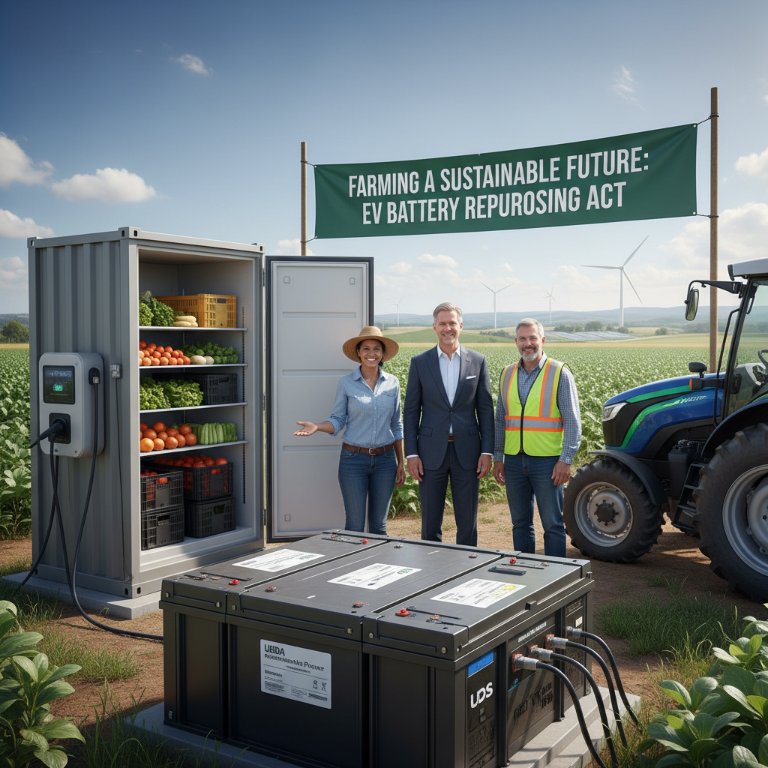
The burgeoning electric vehicle (EV) revolution presents an impending challenge: the responsible management of millions of retired battery packs. However, a recent legislative breakthrough, championed by Representative Kevin Mullin (CA-15), is set to transform this challenge into a profound opportunity for American agriculture. Mullin's successful amendment to the Farm, Food, and National Security Act of 2026 mandates a joint study by the U.S. Department of Agriculture (USDA) and the Department of Energy (DOE) into the repurposing of old EV batteries for critical agricultural applications. This forward-thinking initiative promises to enhance domestic energy supply, bolster American farmers, and pave the way for a truly sustainable future.
The Looming Battery Wave Meets Agricultural Need
The EV industry's rapid expansion means an estimated 1.2 million EV batteries will reach their end-of-life annually by 2030. Currently, options for these powerful but degraded units range from costly recycling to less-than-ideal disposal. Mullin’s amendment directly addresses this looming wave by seeking innovative solutions within the agricultural sector. The study will explore practical uses for these retired packs, such as:
- Power storage for refrigeration units: Ensuring the freshness of produce and other perishables, especially in remote or off-grid locations.
- Charging equipment for electric farm machinery: Providing sustainable power for the growing fleet of electric tractors, forklifts, and other essential tools.
- Grid stabilization and supplemental power: Offering farmers increased energy independence and resilience against power outages.
This visionary approach not only tackles a critical environmental concern but also offers tangible benefits to a vital national industry, aligning sustainability goals with economic empowerment.
Why This Matters:
This amendment isn't merely a legislative footnote; it represents a pivotal shift in how we perceive and manage the lifecycle of advanced energy components. For the EV industry, this move solidifies the circular economy narrative, offering a viable and valuable second life for batteries that still possess significant energy storage capacity. This helps to mitigate the environmental footprint of EV manufacturing and can potentially defer or reduce the intensive processes of full-scale recycling, making electric mobility even more sustainable. The message to the market is clear: EV batteries are not disposable; they are a long-term asset with multi-stage utility.
For American farmers and ranchers, this initiative could be a game-changer. Energy costs are a significant burden, and the prospect of leveraging repurposed EV batteries for reliable, potentially cheaper, and greener power storage offers a substantial competitive advantage. Imagine remote ranches powering essential refrigeration without constant reliance on diesel generators, or farms reducing their grid dependency during peak hours. This fosters energy independence and resilience, directly supporting the livelihoods of those who feed the nation. Moreover, it positions agriculture at the forefront of sustainable energy adoption, attracting environmentally conscious consumers and potentially opening new avenues for 'green' branding.
Ultimately, this signals a maturation of both the EV ecosystem and national resource management strategies. It demonstrates a proactive governmental approach to integrating cutting-edge technology into traditional sectors, fostering innovation, and creating a win-win scenario for environmental stewardship and economic growth. This isn't a do-or-die moment for any single entity, but rather a crucial step for the entire EV industry to fulfill its promise of true sustainability and for agriculture to embrace a greener, more resilient future.
Representative Mullin's amendment provides a clear pathway for collaboration between the USDA and DOE to unlock the untapped potential of retired EV batteries. This timely initiative addresses both the environmental imperative of battery repurposing and the practical energy needs of the agricultural sector, promising a more sustainable and resilient future for both. We eagerly await the findings of this critical study and the subsequent implementation that could redefine energy use on American farms.