Game Changer: AI Charging Algorithm Extends EV Battery Life by 23% Without Sacrificing Speed
The Achilles' heel of widespread EV adoption – battery degradation, particularly from frequent DC fast charging – may have met its match. Researchers ...
Editorial Team
World Of EV
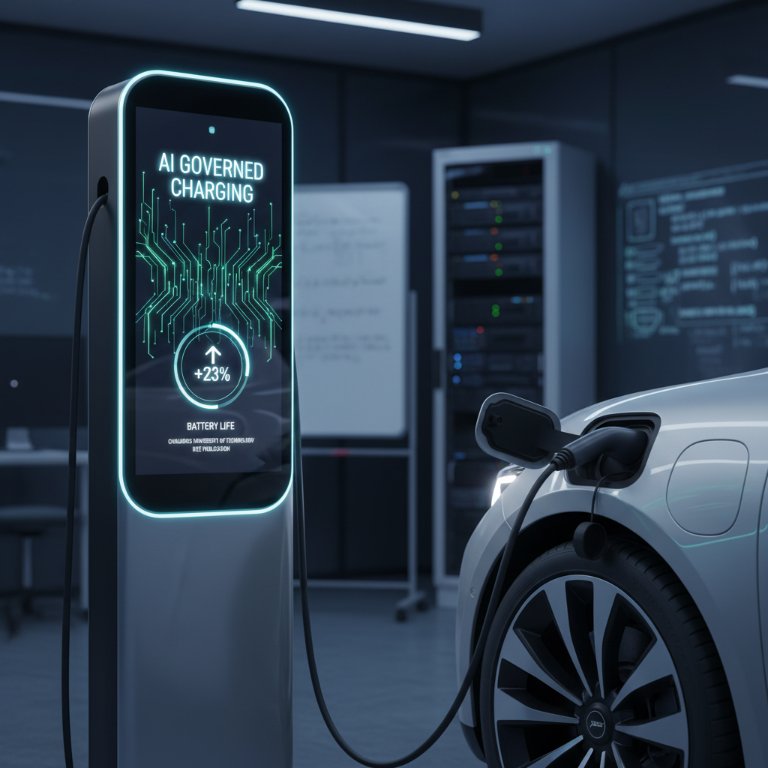
The Achilles' heel of widespread EV adoption – battery degradation, particularly from frequent DC fast charging – may have met its match. Researchers at Chalmers University of Technology have unveiled a groundbreaking 'health-aware' charging algorithm, published in IEEE, that leverages artificial intelligence to dynamically adapt charging behavior, promising to extend an EV battery's usable life by approximately 23% while maintaining original charging times. This isn't just an incremental improvement; it's a fundamental rethinking of how we power our electric future.
For years, the industry has grappled with the delicate balance between charging speed and battery longevity. While DC fast charging offers unparalleled convenience for long journeys, it's widely understood that frequent exposure to high-power charging can accelerate battery degradation through increased heat generation and faster charge cycles. This concern has fueled consumer anxiety about long-term EV ownership costs and resale values, prompting many to limit their fast-charging habits. Current Battery Management Systems (BMS) in EVs are sophisticated, monitoring parameters like voltage, current, and temperature to ensure safety and optimize performance. However, Chalmers' new approach represents a significant leap forward in proactive battery health management.
The AI-Powered Solution to Battery Longevity
The core of this innovation lies in its AI-based, 'health-aware' charging algorithm. This system is designed to deeply understand a battery's current state of health (SoH) and predict its aging trajectory. Rather than adhering to a rigid charging profile, the algorithm dynamically adjusts the charging parameters as the battery ages.
Key aspects of this technology include:
- AI-Driven Adaptation: The system utilizes reinforcement learning, allowing it to interact with the battery environment and continuously refine its charging decisions based on feedback.
- Dynamic Voltage Control: It can intelligently slow down or speed up charging by setting optimal voltage limits based on the battery's real-time health and chemistry.
- Significant Life Extension: Simulations demonstrate a remarkable reduction in projected degradation, extending a battery's usable life by nearly 23%. This means more cycles before capacity drops below the critical 80% threshold, prolonging the battery's effectiveness.
- No Compromise on Speed: Crucially, this extended lifespan comes without a penalty to charging times. Simulations showed charging times of 24.12 minutes with the AI method, virtually identical to the 24.15 minutes for traditional constant voltage charging.
- Software Implementable: The researchers note that this method could be implemented via software updates to existing vehicle battery management systems, suggesting a relatively straightforward path to adoption.
To put these numbers into context, a simulated battery charged with the new algorithm achieved 703 charge and discharge cycles before its capacity fell below 80%, compared to only 572 cycles for a battery charged using a constant voltage method. This represents a substantial improvement in durability, directly addressing a primary concern for EV owners.
Why This Matters:
- For Consumers: This is a monumental win. A 23% extension in battery life translates directly to lower long-term ownership costs, higher resale values, and significantly reduced 'range anxiety' over the lifespan of the vehicle. It means delaying costly battery replacements and enjoying consistent performance for longer, making EV ownership more economical and appealing.
- For Manufacturers: Automakers can leverage this technology to offer extended battery warranties, a powerful competitive differentiator. It could also alleviate pressure on raw material supply chains by extending the functional life of existing batteries. Companies that integrate this kind of intelligent charging early could gain a substantial market advantage, especially against those who have faced criticism for battery longevity issues in the past (e.g., some early EV models with less robust thermal management). While some studies, notably with Tesla vehicles, have suggested minimal statistically significant degradation from frequent fast charging due to advanced systems, this AI approach provides a universal and proactive solution for all battery types and chemistries.
- For the Industry: This innovation signals a crucial step towards accelerating global EV adoption. By mitigating a core concern about battery longevity, it bolsters consumer confidence and strengthens the overall value proposition of electric vehicles. It also supports sustainability goals by maximizing the utility of critical battery materials and reducing waste. Furthermore, it highlights the increasing role of advanced software and AI in optimizing hardware performance, potentially setting a new industry standard for battery management systems.
This research, spearheaded by Changfu Zou of Chalmers University of Technology and Meng Yuan of Victoria University of Wellington, represents a profound shift in how we approach EV battery care. It's a testament to the power of intelligent software to unlock unprecedented levels of efficiency and durability from existing hardware. The next step involves rigorous testing on physical batteries, but the simulations present a compelling vision for a future where EV battery degradation is no longer a primary concern.
This AI-driven 'health-aware' charging isn't just a technical paper; it's a roadmap to a more sustainable, affordable, and worry-free electric future. We at "World Of EV" will be watching its real-world implementation closely, as it promises to be one of the most impactful developments for EV owners in years.