Giants Hit the Brakes: GM and Ford Signal a Major EV Strategy Recalibration
The week of June 9-15, 2024, marked a significant turning point for the electric vehicle (EV) market in the United States, as two of Detroit's automot...
Editorial Team
World Of EV
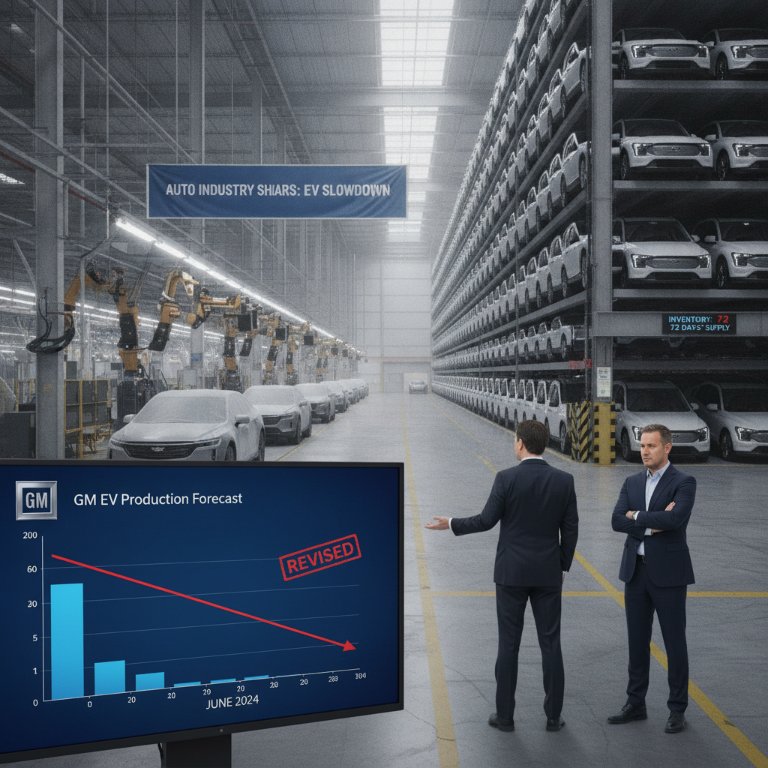
The week of June 9-15, 2024, marked a significant turning point for the electric vehicle (EV) market in the United States, as two of Detroit's automotive titans, General Motors (GM) and Ford, candidly acknowledged a slowing demand for EVs and indicated a strategic shift away from aggressive production ramps. This isn't merely a minor adjustment; it's a stark recalibration of the industry's once-feverish pursuit of an all-electric future, forcing both manufacturers to confront the realities of a maturing, and perhaps more skeptical, consumer base.
For years, both GM and Ford, alongside other legacy automakers, have invested billions in developing dedicated EV platforms and manufacturing capabilities, often with ambitious timelines for phasing out internal combustion engine (ICE) vehicles. GM, with its Ultium platform, and Ford, with its F-150 Lightning and Mustang Mach-E, have been at the forefront of this electrification charge. However, recent statements from their respective chief financial officers paint a picture of pragmatism overriding previous aspirations.
GM Puts the Brakes on Aggressive EV Targets
General Motors’ CFO Paul Jacobson delivered a clear message: the company plans to build fewer electric vehicles than initially projected. This decision stems directly from a revised outlook on the percentage of total auto sales that EVs will command for the year, which is now lower than GM’s original forecast.
- Revised Production Outlook: GM is adjusting its production schedules to better align with current market demand, moving away from a 'build it and they will come' mentality.
- Focus on Profitability: The shift signals a prioritization of profitable EV sales over sheer volume, a crucial step for a company that has seen significant investment in its EV segment without immediate equivalent returns.
- Acknowledging Market Realities: This move implicitly acknowledges that the pace of EV adoption isn't as rapid or as universally embraced as initial projections suggested, especially outside of early adopter segments.
Ford Grapples with Swelling Inventories Across the Industry
Across town, Ford's CFO echoed a similar cautious sentiment, expressing concern over rising inventories that are accumulating across the entire automotive industry. Ford is specifically targeting its dealers to maintain a more manageable 50 to 60 days' supply of vehicles. This focus on inventory management highlights broader market health issues.
- Industry-Wide Inventory Concerns: Elevated inventory levels often signal slowing sales and can lead to increased pressure on pricing, potentially through greater incentives, to move vehicles off lots.
- Dealer Profitability Impact: For dealers, excessive inventory ties up capital and incurs carrying costs, directly impacting their profitability. Ford’s target aims to alleviate this burden.
- Potential for Production Adjustments: To achieve leaner inventory levels, Ford, like GM, may need to implement production cuts or reallocate resources, impacting both ICE and EV lines.
Why This Matters:
These pronouncements from GM and Ford are more than just financial updates; they represent a fundamental pivot for the entire automotive landscape. For years, the narrative has been one of an inexorable, accelerating shift to EVs, fueled by government incentives and aggressive corporate targets. This week, however, marks a significant moment where two of the world's largest automakers are publicly acknowledging a slowdown and, more importantly, acting on it.
Who Wins? Consumers, initially, might see increased incentives and more competitive pricing as manufacturers work to clear inventory and stimulate demand. Efficient manufacturers who can quickly adapt their production lines and supply chains to fluctuating demand will also benefit, as will those with a robust portfolio of hybrid and plug-in hybrid options that serve as a bridge technology. Also, the legacy ICE market may see an extended lifespan and continued investment as OEMs recalibrate their all-EV timelines.
Who Loses? Companies that have overinvested in rapid, high-volume EV production capacity without corresponding market demand face significant financial strain. Suppliers exclusively tied to aggressive EV ramp-ups may also feel the squeeze. Early EV adopters who paid premium prices might also see faster depreciation if new models arrive with heavy incentives.
Market Signal: This signals a maturation of the EV market, moving beyond the initial hype cycle into a more pragmatic, demand-driven phase. It's a stark wake-up call for any automaker or investor with unrealistic expectations about the pace of the EV transition. This isn't a 'do-or-die' moment for GM or Ford in terms of their overall existence, but it is unequivocally a 'recalibrate-or-die' moment for their EV strategies. Failure to adapt to these new market realities could lead to costly overproduction and eroded profitability.
The declarations from GM and Ford underscore a critical truth: the EV transition, while inevitable, will likely be a more complex, nuanced, and perhaps slower journey than many initially predicted. Expect to see a more measured approach to electrification, increased focus on cost-efficiency, and a potential resurgence of interest in hybrid technologies as automakers seek to balance ambitious environmental goals with market realities and profitability.