Global EV Crossroads: BP Seizes Tesla Opportunity, China Nears 50% Domination, and VW Rethinks Performance
The electric vehicle landscape is a dynamic arena, constantly reshaped by shifting corporate strategies, relentless market growth, and evolving consum...
Editorial Team
World Of EV
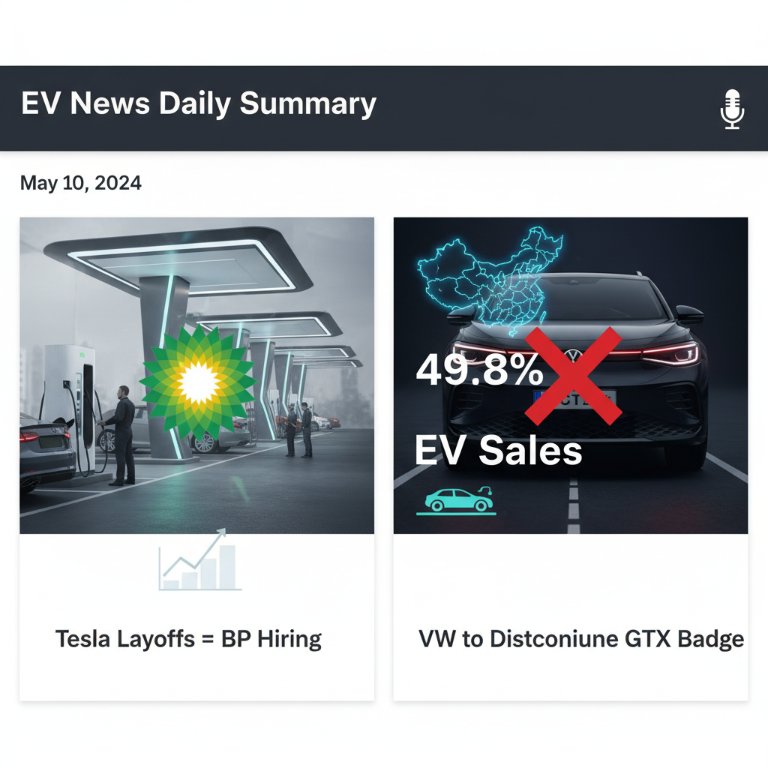
The electric vehicle landscape is a dynamic arena, constantly reshaped by shifting corporate strategies, relentless market growth, and evolving consumer demands. May 10, 2024, brought a trifecta of significant developments, highlighting both the maturity and continued volatility of the global EV sector. From an energy giant’s opportunistic pivot following industry layoffs to China's undeniable market dominance and a legacy automaker's rebranding decision, these events signal deeper currents within the industry.
BP Charges Ahead in Tesla's Wake
In a move that underscores the fierce competition for talent and infrastructure, global energy behemoth BP is reportedly making strategic moves in the wake of Tesla's recent, widely publicized layoffs. These significant workforce reductions at the EV pioneer have sent ripples across the industry, raising questions about Tesla's growth trajectory and its ability to maintain its aggressive expansion plans. BP, which has been steadily investing in its BP Pulse charging network and broader EV ecosystem, appears poised to capitalize on this availability of skilled professionals and potentially strategic assets. This proactive stance by BP reinforces the notion that traditional energy companies are not merely observing the EV transition but actively shaping its future, recognizing the immense value in human capital and established infrastructure within the burgeoning electric mobility sector.
China's EV Market Nears Historic 50% Milestone
Meanwhile, the world's largest automotive market, China, continues to set an astonishing pace in EV adoption. Recent reports indicate that electric vehicle sales in China are now approaching a staggering 50% of the total market share. This milestone is not just a statistical anomaly; it represents a profound societal and industrial shift. For years, China has incentivized EV adoption through subsidies, robust charging infrastructure development, and a highly competitive domestic manufacturing base featuring innovative players like BYD, Nio, and Xpeng. Nearing the 50% mark signals mainstream acceptance and integration of EVs into the daily lives of Chinese consumers, far surpassing adoption rates in many Western markets. This accelerated transition in China provides a blueprint—and a challenge—for the rest of the world, demonstrating the potential for rapid decarbonization and technological leadership.
Volkswagen Retires GTX: A Sign of Shifting Performance Strategy
Across the Atlantic, Volkswagen has announced its decision to discontinue the GTX performance badge for its electric vehicles. Introduced to denote sportier, higher-performance versions of models within its ID.electric lineup (such as the ID.4 GTX and ID.5 GTX), the GTX badge aimed to imbue EVs with the emotional appeal traditionally associated with VW's performance internal combustion engine (ICE) models. The move to retire it suggests a re-evaluation of Volkswagen’s long-term performance branding strategy for its all-electric future. It prompts speculation: Is VW planning to consolidate all performance EVs under a more universally recognized banner, perhaps leveraging its iconic 'R' division, or does it signal a broader rethink of how 'performance' is defined and communicated in the electric era, where instantaneous torque is a given?
Why This Matters:
BP's maneuvers following Tesla's layoffs signal a pivotal moment in the battle for talent and infrastructure. BP clearly sees an opportunity to strengthen its position in the EV charging and service ecosystem, potentially accelerating its transition from an oil and gas major to a diversified energy provider. This benefits BP by potentially acquiring top-tier talent and expands charging options for consumers, but it underscores the volatile nature of employment in even leading EV companies. The market takeaway is clear: the EV race is as much about human capital and robust infrastructure as it is about groundbreaking vehicles.
China's near 50% EV penetration is nothing short of revolutionary. This unprecedented rate of adoption reshapes global automotive manufacturing, supply chains, and technological benchmarks. For domestic Chinese automakers, it solidifies their leadership and provides a powerful platform for international expansion. For foreign brands, however, it represents an immense challenge; those failing to keep pace risk irrelevance in the world’s most crucial market. This signals that government policy, local innovation, and consumer readiness can rapidly accelerate profound market transformations, setting a high bar for other nations.
Volkswagen's decision to discontinue GTX highlights the ongoing identity crisis many legacy automakers face when translating established brand equity into the electric age. While some enthusiasts might mourn the badge's passing, it opens the door for a more coherent and impactful performance strategy. This could mean a more exclusive 'R' brand for truly high-performance EVs, or a broader integration of dynamic capabilities across the ID.lineup, ensuring that 'performance' becomes an inherent trait rather than an appended badge. This signals that simply porting over ICE performance nomenclature isn't always the answer for EVs, demanding a fresh approach to branding the electric thrill.
In essence, May 10, 2024, encapsulates an EV market that is simultaneously maturing, diversifying, and undergoing significant strategic realignments. Companies like BP are seizing opportunities born from competitor challenges, while entire markets like China are demonstrating the breathtaking speed of EV adoption. Concurrently, established players like Volkswagen are refining their brand identity for a fully electric future. The road ahead remains complex and competitive, demanding constant innovation and strategic acumen from all involved.