GM Energy and PG&E Partner to Give Away Free EV Chargers, Paying Owners to Save California's Fragile Grid
In a bold move to tackle two of the biggest roadblocks to electric vehicle adoption—upfront charging hardware costs and persistent anxiety over grid c...
Editorial Team
World Of EV
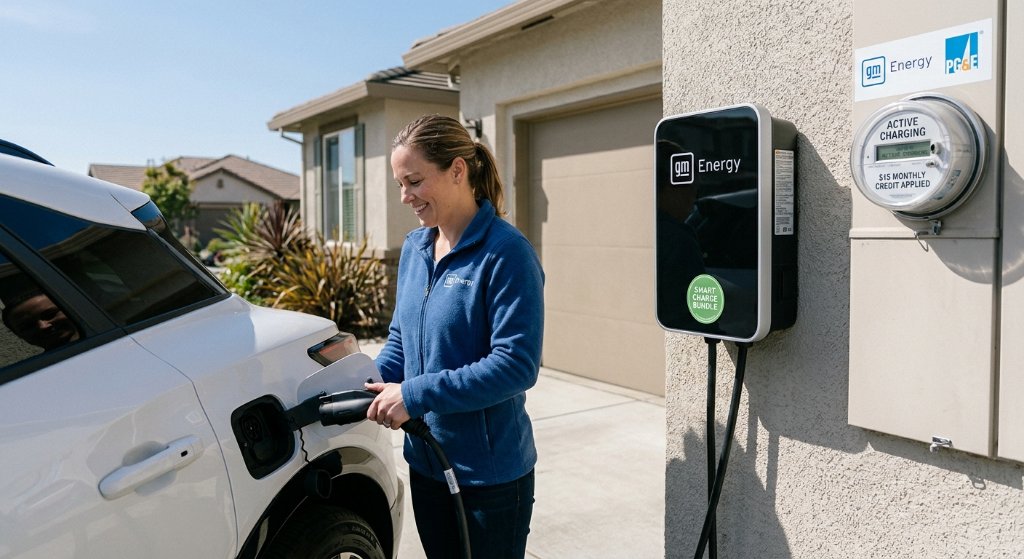
In a bold move to tackle two of the biggest roadblocks to electric vehicle adoption—upfront charging hardware costs and persistent anxiety over grid capacity—GM Energy has teamed up with Pacific Gas and Electric (PG&E). The duo has officially launched the 'Smart Charge Bundle' in Northern and Central California, a region notorious for its baking-hot summers and highly stressed electrical grid. By offering a complimentary high-end home charger and monthly utility bill credits in exchange for managed charging, the program aims to turn GM’s growing fleet of Ultium-based EVs into flexible, grid-balancing assets.
This move is far more than a simple dealer promo. For GM, it is a crucial pivot after a rocky few years of Ultium platform software bugs and battery assembly bottlenecks. By offering this bundle directly at the point of sale, GM is directly challenging Tesla’s California stronghold and trying to make EV ownership a friction-free experience for mainstream buyers.
Inside the "Smart Charge Bundle": Hardware and Incentives
At participating Chevrolet, GMC, or Cadillac dealerships, buyers can seamlessly tie their vehicle purchase to home energy management. The deal consists of several key elements designed to ease the transition to electric driving:
- Free Hardware: Buyers or lessees of a new GM EV can select a home charger at no additional hardware cost, representing a value of up to $1,999. They can choose the premium GM Energy PowerShift Charger (which supports bidirectional charging) or the GM PowerUp 2 Charger (a standard Level 2 unit).
- Monthly Incentives: By enrolling in PG&E's 'EV Charge Manager' program (powered by WeaveGrid software), participants receive a flat $15 monthly utility bill credit. Shifting charging to off-peak periods can save drivers up to an additional $50 per month.
- Managed Charging: In exchange for the free hardware and credits, PG&E can remotely optimize charging times to balance the grid. Drivers can easily override the smart charging schedule via OnStar if they need an immediate top-up.
- Out-of-Pocket Expenses: While the charger itself is free, customers must still pay for installation, permitting, and any electrical panel upgrades. GM's preferred installer, Electrum, handles the setup with packages starting at $1,499.
The Crucial OnStar Connection
To qualify for the ongoing monthly credits, the vehicle must have an active OnStar service plan with location services enabled. Fortunately, GM now includes up to eight years of OnStar Connected Access on its newer models. This program is compatible with GM's entire modern EV lineup, including:
- Chevrolet Blazer EV, Equinox EV, and Silverado EV (2024–2027)
- Cadillac LYRIQ, OPTIQ, and Escalade IQ (2024–2027)
- GMC Sierra EV and Hummer EV (2025–2027)
Why This Matters:
This partnership marks a watershed moment in how automakers and utility providers interact. Historically, electric vehicles have been viewed by utilities as a looming threat—a sudden surge in demand that could push aging grids over the edge during peak hours. By transforming these vehicles into controllable, smart-charging loads, PG&E is effectively building a massive virtual power plant (VPP). If GM and PG&E hit their joint target of integrating 52,000 EVs into this network by 2030, they will have created an incredibly powerful shock absorber for California's grid.
For GM, the 'Why This Matters' is all about customer acquisition and ecosystem lock-in. Tesla has long dominated the California EV landscape, but GM is weaponizing its dealer network by handling utility enrollment and hardware delivery right at the point of sale. While a Tesla buyer must purchase a wall connector and navigate complex utility rebates independently, a GM buyer walks out of the dealership with a $2,000 bidirectional-ready charger and an active connection to utility savings.
Furthermore, this represents a major step forward for Vehicle-to-Home (V2H) and V2G commercialization. The PowerShift charger is a gateway drug to home backup energy. By getting these bidirectional units into garage stalls today, GM is preparing a massive install base for when vehicle-to-grid power sharing becomes the industry standard.
Conclusion
The GM-PG&E Smart Charge Bundle is a blueprint for the future of EV ownership. By eliminating the upfront cost of high-end home charging equipment and aligning vehicle charging with grid health, the program benefits the driver, the manufacturer, and the utility provider alike. As other states watch California's aggressive grid-management experiments, expect to see similar utility-automaker partnerships sprout up nationwide as the industry realizes that the best way to sell EVs is to make the grid work with them, not against them.