GM Pivots: Silverado EV's Future Paused as Gasoline Prowess and Lunar Ambitions Take Center Stage
General Motors is executing a significant strategic pivot, signaling a recalibration of its electrification timeline for core consumer products while ...
Editorial Team
World Of EV
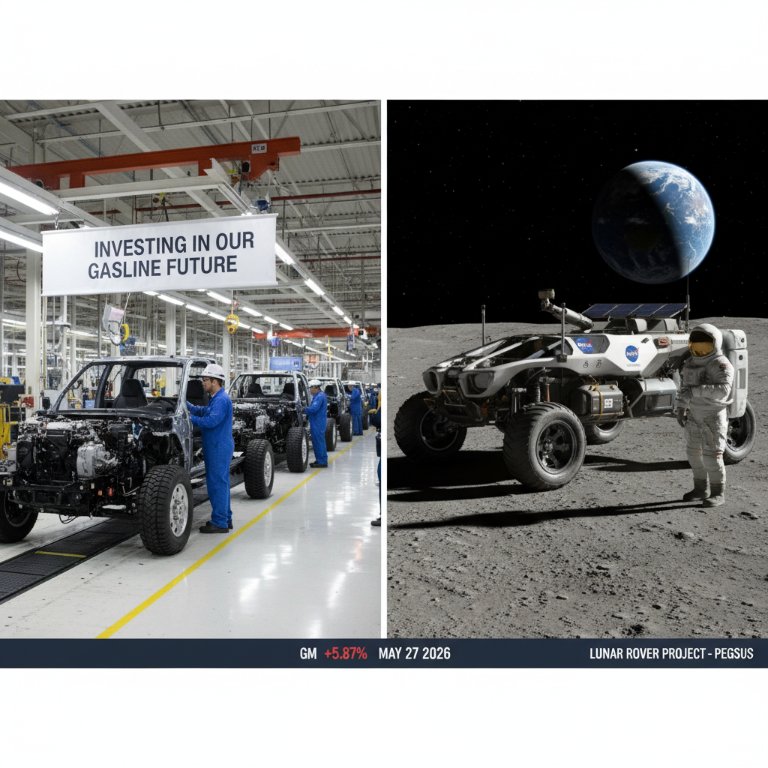
General Motors is executing a significant strategic pivot, signaling a recalibration of its electrification timeline for core consumer products while simultaneously doubling down on its profitable gasoline vehicle lineup. The automotive giant announced the suspension of next-generation development for its highly anticipated Chevrolet Silverado EV pickup truck, a move that immediately follows an almost $1 billion commitment to bolster its internal combustion engine (ICE) vehicle portfolio and U.S. manufacturing infrastructure. This nuanced strategy, combined with robust first-quarter 2026 earnings and a substantial return to shareholders, sent GM's stock soaring by 5.87% on May 27, 2026.
Silverado EV: A Strategic Pause or Retreat?
The decision to halt development on the next-generation Chevrolet Silverado EV comes as a surprising turn, particularly for an automaker that has consistently championed an 'all-electric' future. While the current Silverado EV is on the market, the suspension of its successor's development suggests GM is re-evaluating the pace and profitability of its mass-market EV truck strategy. This move contrasts sharply with the aggressive electrification push seen from competitors like Ford with its F-150 Lightning and Stellantis’s upcoming Ram 1500 REV. For many EV enthusiasts, the Silverado EV was poised to be a critical player in the burgeoning electric pickup segment, and this pause raises questions about GM's long-term commitment to leading the charge in this specific, high-volume category.
GM's Gasoline Re-Commitment: Fueling the Present
Simultaneously, GM is injecting nearly $1 billion into strengthening its gasoline vehicle lineup, with over $340 million earmarked for its U.S. manufacturing plants. This substantial investment underscores a pragmatic recognition of current market realities. While EV adoption continues to grow, the demand for traditional gasoline-powered trucks, SUVs, and sedans remains robust and highly profitable, particularly in North America. By bolstering its ICE production capabilities, GM aims to:
- Capitalize on strong, immediate market demand for high-margin gasoline vehicles.
- Optimize existing production lines and supply chains.
- Secure American manufacturing jobs and economic stability.
This strategic allocation of resources suggests GM is prioritizing immediate profitability and responding to the current consumer landscape, rather than solely chasing an aggressive, potentially less profitable, all-EV transition.
To the Moon and Beyond: GM Defense's Lunar Leap
In a fascinating counterpoint to its consumer EV strategy, GM Defense, the company's military contracting subsidiary, is making significant strides in advanced battery-electric propulsion. The subsidiary will act as a key subcontractor on NASA's ambitious 'Pegasus' Lunar Terrain Vehicle (LTV) program, providing vital battery-electric power systems. NASA's initial award to prime contractor Lunar Outpost totals $220 million for the initial development phase. This endeavor showcases GM's cutting-edge EV technology in a specialized, high-performance application, harkening back to its legacy of building the original Apollo lunar rovers. It demonstrates that while mass-market EV timelines may be shifting, GM's fundamental expertise in advanced electric propulsion remains a crucial asset for specialized, high-tech ventures.
Market Reacts: Investor Confidence Soars
The financial markets reacted enthusiastically to GM's comprehensive announcement. Strong first-quarter 2026 earnings provided a solid foundation, further bolstered by the company's commitment to shareholder returns through a new $6 billion share repurchase authorization and an increased quarterly dividend. The combination of pragmatic resource allocation, strong financial performance, and a clear path to profitability resonated deeply with investors, leading to the significant stock surge.
Why This Matters:
This isn't merely a headline; it's a profound strategic recalibration by one of the world's largest automakers, signaling a more nuanced approach to the EV transition. GM's decision to pause next-gen Silverado EV development, while simultaneously investing heavily in its gasoline lineup, points to a clear prioritization of immediate profitability and market demand over an aggressive, potentially loss-making, full-speed-ahead EV sprint. This strategy benefits:
- Shareholders: The immediate stock jump and increased dividends confirm investor approval for a more pragmatic, financially disciplined approach.
- Traditional Truck and SUV Buyers: Those not yet ready to make the jump to EV will see continued investment and innovation in their preferred vehicle segments.
- GM Defense and Space Exploration: This niche but high-profile win for GM Defense validates its advanced EV battery technology and positions GM as a key player in future extraterrestrial mobility.
However, this move could be seen as a setback for:
- Early EV Adopters: Those hoping for an accelerating pace of innovation and product diversification in the electric pickup space might view this as a slowdown.
- GM's 'All-Electric' Narrative: While the commitment to EVs hasn't vanished (as seen with GM Defense), the emphasis has shifted, potentially complicating its messaging around electrification leadership.
Ultimately, this signals a broader industry trend: the EV transition will be more of a marathon than a sprint, with automakers carefully balancing aggressive long-term goals against present-day market realities and profitability demands. GM is choosing a path of pragmatism, leveraging its current strengths while continuing to develop advanced EV tech for strategic applications.
Conclusion:
General Motors' latest announcements represent a calculated strategic shift, prioritizing near-term profitability through its robust gasoline vehicle sales and rewarding shareholders, even if it means tempering the pace of its consumer EV rollout. Yet, the simultaneous push into lunar exploration with advanced battery-electric technology through GM Defense demonstrates that the company remains deeply committed to electrification where it makes strategic and technological sense. GM is navigating a complex automotive landscape, proving that flexibility and a balanced portfolio may be the key to long-term success in both terrestrial and extraterrestrial markets.