GM Unleashes Comprehensive Energy Strategy: V2G, Grid Storage, and Unified Charging Mark Industry Transformation
General Motors (GM) is making a profound strategic pivot, moving beyond mere electric vehicle manufacturing to establish itself as a formidable player...
Editorial Team
World Of EV
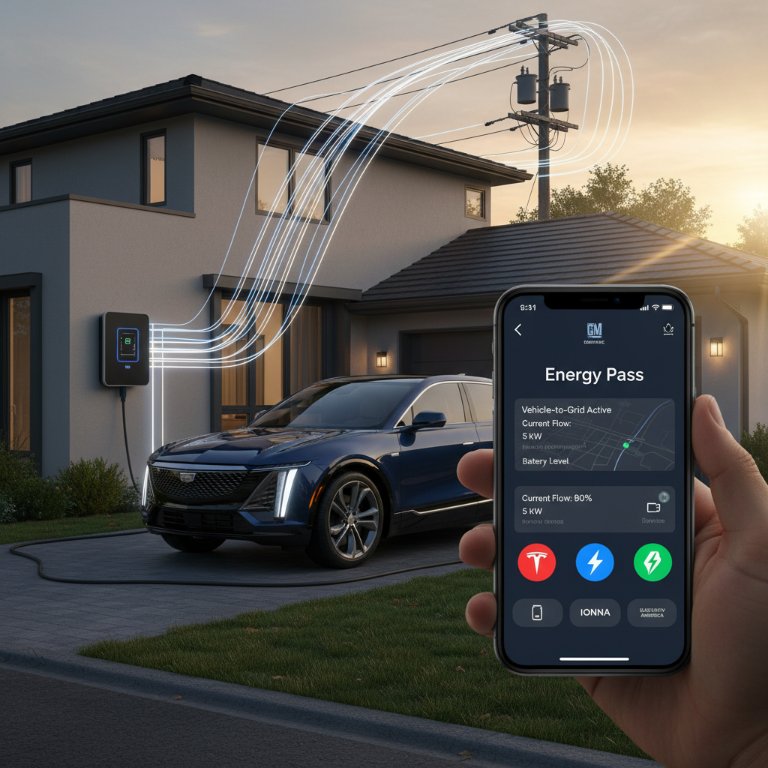
General Motors (GM) is making a profound strategic pivot, moving beyond mere electric vehicle manufacturing to establish itself as a formidable player in the broader energy ecosystem. The automaker recently announced a comprehensive U.S.-wide push for vehicle-to-grid (V2G) technology, committing to make bidirectional charging a foundational standard across its entire EV portfolio. This ambitious move, coupled with an aggressive entry into the grid-scale energy storage market and the launch of the 'Energy Pass' charging platform, signals a transformative era for GM and the EV industry at large.
This isn't just about selling more cars; it's about integrating the electric vehicle into the fabric of daily energy consumption and management. While GM has consistently invested in its EV future, this latest announcement, delivered at its 'GM Empower' event, outlines a vertical integration strategy that positions the company to capitalize on the growing demand for distributed energy resources.
Bidirectional Charging: A New Standard for GM EVs
GM is integrating bidirectional charging capability as a foundational standard across its EV lineup, from the Chevrolet Equinox EV to the Cadillac Escalade IQ. This means GM EVs will soon do more than just consume electricity; they will actively participate in energy management by feeding power back to homes (Vehicle-to-Home, V2H) and the grid (Vehicle-to-Grid, V2G). The company indicates that over 250,000 bidirectional-capable EVs are already on U.S. roads, with a firmware update enabling this functionality.
- V2G Expansion: GM is actively inviting utility companies across the U.S. to collaborate on V2G technology. Pilot programs are already underway with Pacific Gas and Electric Company (PG&E) in California, aiming for up to 52,000 GM vehicles to participate in grid-balancing by 2030, and with DTE Energy in Michigan.
- Home Integration: When paired with GM's home energy systems (which require additional equipment like a PowerShift Charger and V2H Enablement Kit costing around US$20,000), these vehicles can power a home for days during outages.
Forging Ahead in Grid-Scale Energy Storage
Beyond individual vehicle capabilities, GM is making a significant leap into the grid-scale energy storage market. This involves two key strategies:
- Second-Life Battery Systems: GM is deploying a 1.5MW/7.2MWh second-life battery energy storage system (BESS) at one of its Michigan factories, utilizing approximately 100 repurposed EV battery packs. This initiative, in partnership with Redwood Materials, showcases a sustainable approach to extending the value of EV batteries and is projected to save over US$3 million in electricity costs over its lifetime. This builds on an existing partnership with Redwood Energy, which has seen GM battery packs used in a 12MW/63MWh system in Nevada.
- Sodium-Ion Battery Partnership: GM is partnering with sodium-ion battery startup Peak Energy, backed by an investment from GM Ventures, to develop and deploy next-generation sodium-ion battery cells purpose-built for grid storage applications. GM will develop prototype sodium-ion cells at its Wallace Battery Cell Innovation Center in Michigan, targeting first production this year, and retaining exclusive manufacturing rights. Sodium-ion batteries are seen as a safer, cheaper, and faster-to-deploy alternative to incumbent lithium-iron phosphate (LFP) chemistry for stationary storage, offering a wider operating temperature range and potential for longer cycle life, thus reducing complexity and the need for active cooling.
Simplifying the Charging Experience with 'Energy Pass'
Addressing a long-standing pain point for EV owners – the fragmented public charging landscape – GM has launched 'Energy Pass.' This new charging platform is integrated into GM's mobile apps (MyChevrolet, MyCadillac, MyGMC), providing a single interface for managing public charging sessions. Energy Pass simplifies access and payment across multiple major networks:
- Broad Network Access: At launch, it includes Tesla Supercharger, IONNA, and Electrify America. ChargePoint and EVgo networks are set to be onboarded soon, collectively covering nearly 70% of all DC fast chargers in the U.S.
- NACS Alignment: This platform aligns with GM's transition to the North American Charging Standard (NACS), which it will make standard on all new EVs past 2025, starting with models like the 2026 Cadillac Optiq. Existing GM EVs will gain access to Tesla Superchargers via adapters in 2024.
- Plug & Charge: Energy Pass supports Plug & Charge functionality at compatible stations (already live with IONNA, coming to ChargePoint this summer, and Tesla Superchargers for NACS-native GM vehicles), streamlining the charging process by eliminating the need for separate apps or payment methods.
Why This Matters:
This is more than just a series of product announcements; it's a profound strategic reorientation that positions General Motors as an energy company, not just an automotive manufacturer. This shift is crucial for several reasons:
- For GM's Bottom Line: By diversifying into V2G and grid-scale storage, GM opens significant new revenue streams beyond vehicle sales, a critical move as the EV market experiences fluctuations. The integration of second-life batteries and the exploration of sodium-ion technology demonstrate a commitment to cost-effectiveness and supply chain resilience, reducing reliance on expensive and geopolitically sensitive lithium.
- For EV Owners: The bidirectional charging standard transforms an EV from a simple mode of transport into a valuable home and grid asset. This empowers owners with energy independence during outages, potential for cost savings through arbitrage (selling power back during peak demand), and a tangible role in grid stability. Energy Pass is a long-overdue solution to the frustratingly fragmented public charging experience, promising seamless, single-app access to a vast network, dramatically reducing range anxiety and improving the overall ownership proposition.
- For the Energy Grid and Industry: GM is proactively addressing critical challenges facing the grid, including increasing electricity demand (partly from AI data centers) and the need for greater flexibility with renewable energy integration. By making V2G standard, GM is essentially creating a massive distributed energy resource, acting as a virtual power plant. The investment in sodium-ion batteries, a technology still nascent outside of China for grid applications, positions GM as a leader in next-generation stationary storage, potentially setting a new industry benchmark for affordable and reliable solutions.
- Competitive Landscape: GM's bold moves put significant pressure on other legacy automakers to accelerate their own energy ecosystem strategies. While Ford has also entered the energy storage market, GM's holistic approach, from V2G as a standard to direct investment in cutting-edge battery chemistry for grid applications, is notably comprehensive. This could redefine competitive advantages in the evolving EV and energy sectors.
Conclusion:
General Motors' latest announcements underscore a visionary shift from merely manufacturing electric vehicles to actively shaping the future of energy. By embedding bidirectional charging as a standard, aggressively pursuing grid-scale energy storage with innovative battery chemistries, and unifying the public charging experience, GM is not just reacting to market trends; it is actively creating them. This comprehensive strategy could profoundly impact consumers, the automotive industry, and the energy grid, signaling a future where the EV is central to a cleaner, more resilient energy ecosystem.