GM's Bold Bet: New Michigan Battery Plant Poised to Deliver Sub-$30,000 EVs by 2028
General Motors is taking an aggressive leap into the future of affordable electric vehicles, unveiling plans for a new Michigan-based battery producti...
Editorial Team
World Of EV
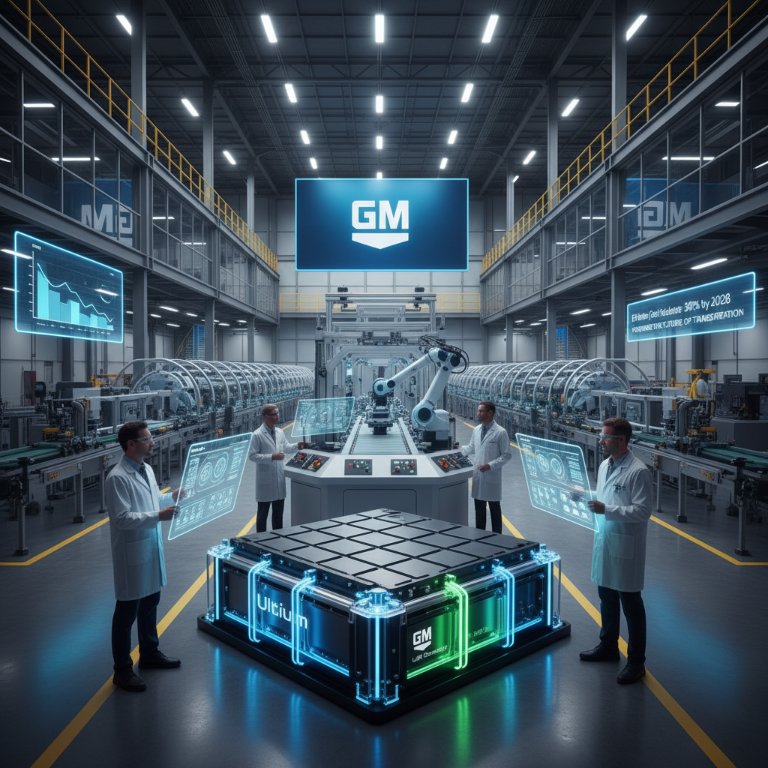
General Motors is taking an aggressive leap into the future of affordable electric vehicles, unveiling plans for a new Michigan-based battery production facility. This strategic move aims to accelerate EV cost reductions, bringing a new class of cheaper batteries to market by 2028—a full year ahead of initial projections—with the ambitious goal of pushing EV sticker prices below the critical $30,000 threshold. For years, the industry has grappled with the high cost of EV batteries, a significant barrier to mainstream adoption. GM's latest announcement signals a profound shift in its strategy, demonstrating a firm commitment to vertical integration and domestic manufacturing, which could redefine the competitive landscape.
Proprietary Chemistry to Unlock Massive Savings
The new Michigan plant, slated to commence operations by late 2026, will be instrumental in GM's cost-cutting efforts. The facility will produce battery cells utilizing a proprietary chemistry, likely focusing on either lithium iron phosphate (LFP) or lithium-manganese-rich (LMR) technologies. These chemistries promise substantial savings, potentially reducing battery costs by up to 30% compared to current lithium-ion batteries.
- Targeted Savings: Up to 30% cost reduction versus existing lithium-ion battery technology.
- Significant Impact: This translates to a potential savings of at least $6,000 on the battery cost for a large electric truck like the Silverado EV.
- Chemistry Choice: While LFP batteries are known for their affordability, safety, and longevity, they typically have a lower energy density than nickel-manganese-cobalt (NMC) cells. However, LMR batteries, which GM is actively developing with LG Energy Solution, offer 33% higher energy density than LFP at a comparable cost, making them a potent candidate for a balance of range and affordability.
GM's $900 million investment in its Battery Cell Development Centre underpins this initiative, underscoring the automaker's dedication to internalizing critical battery technology. This vertical integration is designed to curb reliance on external suppliers, streamline logistics, and ultimately provide GM with greater control over its supply chain and costs—a vital lesson learned from recent global disruptions. The project also benefits from federal funds stemming from the Inflation Reduction Act (IRA), which aims to bolster domestic EV and battery manufacturing through significant tax credits and incentives.
Accelerating the Race to Affordability
The push for sub-$30,000 EVs by 2028 is a direct response to a market hungry for more accessible electric options. Current LFP battery packs average around €89 per kWh, significantly cheaper than NMC packs at €123 per kWh. Industry analysts, including Goldman Sachs, predict that average battery prices could fall to as low as $80/kWh by 2026, making the prospect of cost parity with gasoline-powered vehicles a near-term reality, even without subsidies.
Competitors like Tesla have already made strides in this arena. Tesla's in-house 4680 cells, enhanced by a dry electrode process, became its lowest-cost cells per kWh by the end of 2024, projected to reduce costs by over 30%. Tesla also initiated LFP cell production at its Gigafactory Nevada in early 2026. Meanwhile, Chinese battery giant BYD has innovated with its Blade Battery, utilizing LFP chemistry and a cell-to-pack design to achieve higher energy density and lower costs, effectively challenging traditional battery architectures.
Why This Matters:
This announcement from General Motors is more than just news of a new factory; it's a strategic declaration that reshapes the future of the EV market. The implications are profound for consumers, the industry, and GM itself.
- For Consumers: The promise of sub-$30,000 EVs by 2028 is a game-changer. It means electric mobility, once seen as a premium luxury, is rapidly becoming a viable option for a much broader segment of the population. This affordability, combined with federal incentives, tackles the single largest barrier to widespread EV adoption, making electric vehicles genuinely accessible to the masses.
- For General Motors: This move represents a crucial pivot. By vertically integrating battery production and investing heavily in proprietary, cost-effective chemistries like LFP or LMR, GM is asserting greater control over its destiny. This reduces its vulnerability to volatile supply chains and external supplier costs, which has historically plagued the automotive sector. This strategic independence is vital for long-term profitability and competitive advantage, moving beyond reliance on joint ventures like Ultium Cells with LG Energy Solution, which have also seen shifts towards LFP for energy storage.
- For the EV Industry: GM's aggressive timeline and cost targets will intensify competition. It signals a clear industry trend towards lower-cost battery chemistries for mainstream vehicles. Other automakers will face increased pressure to either develop their own low-cost battery solutions or secure favorable supply agreements to remain competitive, especially as IRA incentives continue to drive domestic production. This could accelerate innovation across the board, pushing the entire industry toward more affordable and sustainable EV solutions.
Conclusion:
General Motors' investment in its new Michigan battery facility, targeting advanced chemistries and aggressive cost reductions, is a pivotal moment in the ongoing electric vehicle revolution. By bringing forward its timeline for cheaper batteries and aiming for sub-$30,000 EVs, GM is not merely responding to market demands; it is actively shaping the future of accessible electric transportation. This strategic foresight, backed by significant investment and federal support, positions GM to lead the charge into a new era of mainstream EV adoption, solidifying its place as a key player in the global shift towards electrification.