Honda Doubles Down on Battery Innovation with Nexeon Investment Amidst Shifting EV Strategy
Honda, a stalwart of the automotive industry, is making a pivotal strategic move in the electric vehicle (EV) landscape, announcing a significant inve...
Editorial Team
World Of EV
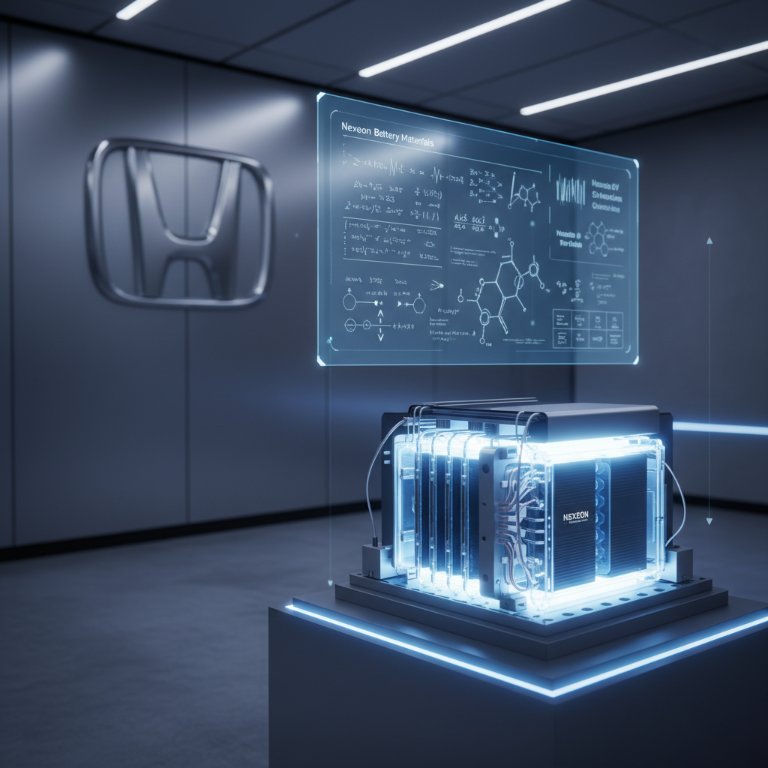
Honda, a stalwart of the automotive industry, is making a pivotal strategic move in the electric vehicle (EV) landscape, announcing a significant investment in Nexeon, a leading battery materials supplier. This commitment to foundational battery innovation comes at a critical juncture, directly following Honda's recalibration of its immediate North American EV strategy, including the cancellation of plans for three key models and shelving broader EV manufacturing ambitions.
This dual approach reveals a company grappling with the current realities of softening EV demand and high production costs, while simultaneously laying crucial groundwork for long-term competitiveness. For an automaker that has historically lagged in the rapid EV transition, this investment in core technology could be a defining moment.
Strategic Investment in Nexeon
The investment in Nexeon underscores Honda's firm belief that future EV success hinges on superior battery technology. Nexeon is at the forefront of developing advanced silicon anode materials, which promise increased energy density and faster charging capabilities compared to conventional graphite anodes. By investing directly in a materials supplier, Honda is signaling a clear intent to influence and integrate cutting-edge battery chemistry into its future vehicle architecture, rather than merely sourcing off-the-shelf solutions. This proactive stance suggests a recognition that proprietary or deeply integrated battery technology will be a key differentiator in a crowded and rapidly evolving market.
Reassessing the North American EV Playbook
Crucially, this bold investment arrives amidst a period of significant strategic reassessment for Honda's EV ambitions. The company recently confirmed a rollback of its immediate North American EV plans, halting the development and launch of three anticipated models and pausing broader manufacturing initiatives. This decision, attributed to softening EV demand and the high costs associated with bringing new electric platforms to market, highlights the immense pressures even major automakers face in the current economic climate. While some might interpret this as a step back, the Nexeon investment paints a more nuanced picture: Honda is not abandoning EVs, but rather shifting its focus from a rushed market entry to a more deliberate, technologically driven long-term play.
Forging Future Platforms by Decade's End
Despite the immediate scaling back, Honda remains committed to realizing new, competitive EV platforms by the end of the decade. The Nexeon investment directly supports this long-term vision, allocating substantial research and engineering efforts towards developing the fundamental technologies that will power these next-generation vehicles. This approach mirrors strategies employed by industry leaders like Tesla and BYD, who have demonstrated the strategic advantage of vertical integration and deep expertise in battery technology. Honda's aim is to develop platforms that can truly compete against global leaders, suggesting a focus on efficiency, performance, and cost-effectiveness that can only be achieved through innovative core components.
Why This Matters:
Long-Term Vision Over Short-Term Gains: This move by Honda isn't about incremental improvements; it's a fundamental bet on future battery chemistry. By investing in Nexeon, Honda is signaling that it believes truly competitive EVs require a deep dive into material science, rather than simply adapting existing combustion engine platforms or relying solely on external suppliers for complete battery packs.
A Strategic Pivot, Not a Retreat: The simultaneous news of curtailed immediate EV plans and a significant battery materials investment is not contradictory; it's a strategic pivot. Honda is effectively saying, 'We recognize the current market challenges, but we are absolutely committed to winning the long game by developing superior underlying technology.' This allows them to avoid costly, underperforming launches in a difficult market while building a stronger foundation.
Focus on Cost and Performance: The softening EV demand and high costs cited by Honda are significant concerns for the entire industry. Investing in advanced materials like those from Nexeon can lead to more energy-dense, faster-charging, and potentially more cost-effective batteries, which are critical for broader EV adoption and profitability. This could position Honda to launch highly competitive, desirable EVs when market conditions are more favorable and technology is more mature.
A 'Do-or-Die' Moment for Honda's EV Future: After years of a relatively cautious EV approach, including initial ventures that haven't captivated the market (like the Honda e in some regions, or their reliance on GM's Ultium platform for initial North American models), this investment signals a recognition that Honda's future in the automotive industry is inextricably linked to its success in EVs. Mastering battery technology internally or through deep partnerships is no longer optional; it's essential for survival and leadership.
Market Signal to Competitors: Honda’s move sends a clear message: the race for EV dominance is increasingly shifting from mere production volume to technological superiority, particularly in battery chemistry. Competitors relying on less integrated strategies may find themselves at a disadvantage if Honda successfully leverages Nexeon's innovations.
Honda's strategic investment in Nexeon, juxtaposed with its temporary recalibration in North America, paints a clear picture of a company committed to a long-term, technology-driven approach to electrification. Rather than rushing into a challenging market with potentially compromised products, Honda is focusing on building a robust technological foundation. This patient but potent strategy could ultimately position the automaker to emerge as a formidable leader in the global EV arena by the close of the decade, armed with cutting-edge battery technology that delivers tangible benefits to consumers.