Honda Pumps the Brakes on Pure EVs, Pivots Hard to Hybrids After Staggering $2.7 Billion Loss
Honda, a titan of automotive engineering, has delivered a seismic shock to the electric vehicle landscape, announcing its first-ever full-year financi...
Editorial Team
World Of EV
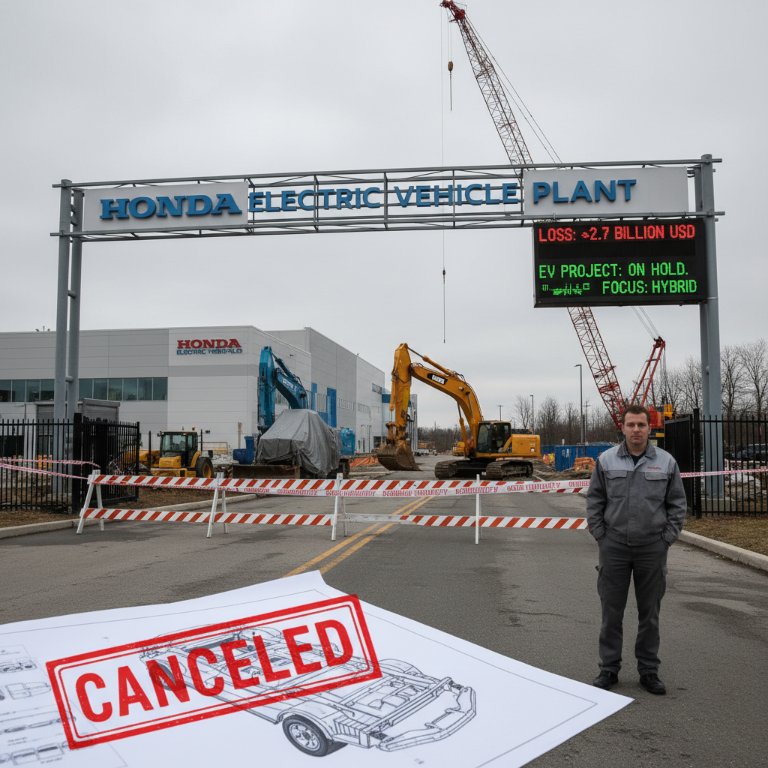
Honda, a titan of automotive engineering, has delivered a seismic shock to the electric vehicle landscape, announcing its first-ever full-year financial loss for the fiscal year ending March 2026. The automaker reported a deficit of approximately $2.7 billion (423.9 billion yen), a sobering figure driven primarily by a colossal $10 billion in EV-related writedowns and restructuring charges. This unprecedented financial hit has forced Honda to abruptly suspend plans for a $15-billion electric vehicle project in Ontario, Canada, signaling a dramatic recalibration of its electrification strategy.
For years, industry observers have noted Honda's somewhat cautious approach to the full-electric transition, often relying on partnerships and delivering niche models while other automakers forged ahead with dedicated EV architectures. Now, facing significant headwinds, the company is making a decisive pivot back to hybrid models, a move that starkly underscores the intensifying pressures on legacy automakers navigating the complex, capital-intensive shift to electric mobility.
The Stark Financial Reality and a Canadian Dream Deferred
The nearly $3 billion full-year loss is a stark anomaly for a company with Honda's historical financial resilience. The massive $10 billion in writedowns, directly tied to its electric vehicle endeavors, represents a critical reassessment of its prior investments and projected returns in the pure EV space. This financial reckoning has immediate and significant consequences, most notably the indefinite suspension of a colossal $15-billion electric vehicle manufacturing project slated for Ontario, Canada. This facility was envisioned as a cornerstone of Honda's North American EV production, and its halt represents a substantial blow to both the company's future manufacturing plans and Canada's aspirations as a burgeoning EV hub.
Strategic U-Turn: The Hybrid Pivot
Honda Global CEO Toshihiro Mibe has clearly articulated the company's revised focus: prioritizing the rebuilding of its automobile business structure over the next three years. This involves a marked shift towards hybrid powertrains, a strategy Honda attributes to several interconnected factors:
- Slowing EV Adoption: While global EV sales continue to grow, the pace of adoption in key markets, particularly North America, has decelerated from earlier projections, leading to inventory build-ups and increased competitive pressures.
- Policy Changes in the U.S.: The article highlights the significant impact of recent shifts in U.S. federal policy. This includes the repeal of federal tax credits for certain EV models and rolled-back emissions standards. Such changes erode the financial incentives for consumers and reduce regulatory pressure on automakers, thereby diminishing the impetus for rapid EV deployment.
- Heightened Competition from Chinese Manufacturers: The influx of cost-effective and technologically advanced EVs from Chinese automakers like BYD and Nio is creating unprecedented pricing pressure and challenging established players across global markets, forcing a reevaluation of competitive strategies.
Why This Matters:
Honda's seismic announcement isn't merely a corporate financial update; it's a critical barometer for the entire automotive industry's EV transition. This isn't a company known for rash decisions, and their $10 billion writedown sends a chilling message: the path to pure electrification is far more challenging and costly than many initially believed. For consumers, this signifies a prolonged period where hybrids will remain a central, viable, and perhaps even preferred, option, offering a bridge between traditional internal combustion and pure electric. Those who invested in Honda's pure EV vision might feel a sense of whiplash, as the company effectively admits its prior aggressive targets were unsustainable under current market conditions.
This move validates a growing sentiment among industry analysts: the EV market is not a straight, exponential curve, but rather a more volatile, nuanced landscape. Who wins? Companies like Toyota, which have consistently championed a hybrid-heavy approach, are likely to see their strategy vindicated, at least in the near term. The biggest losers are arguably the pure-play EV startups and legacy automakers that over-committed to an all-in pure EV strategy without adequate contingency planning. This also signals a potential slowdown in the overall pace of global decarbonization in transportation, as governments and manufacturers grapple with the economic realities of the transition. Ultimately, Honda's actions reflect a strategic retreat, not from electrification itself, but from the aggressive timeline and investment required for a rapid, pure-EV overhaul, making it a pivotal moment in the ongoing automotive revolution.
Honda’s decision to pull back on its substantial EV investment in Canada and pivot hard to hybrids underscores a tough truth about the current state of the EV market: the transition will be neither smooth nor linear. As the company focuses on rebuilding its core business over the next three years, the industry will be watching closely to see if this strategic deceleration ultimately positions Honda for a more sustainable, albeit slower, journey into the electrified future.