Hyundai Unleashes Mobile Service Fleet, Revolutionizing Customer Convenience for EV and ICE Owners
Hyundai Motor Company is dramatically expanding its mobile service program across the United States, a strategic move poised to redefine convenience f...
Editorial Team
World Of EV
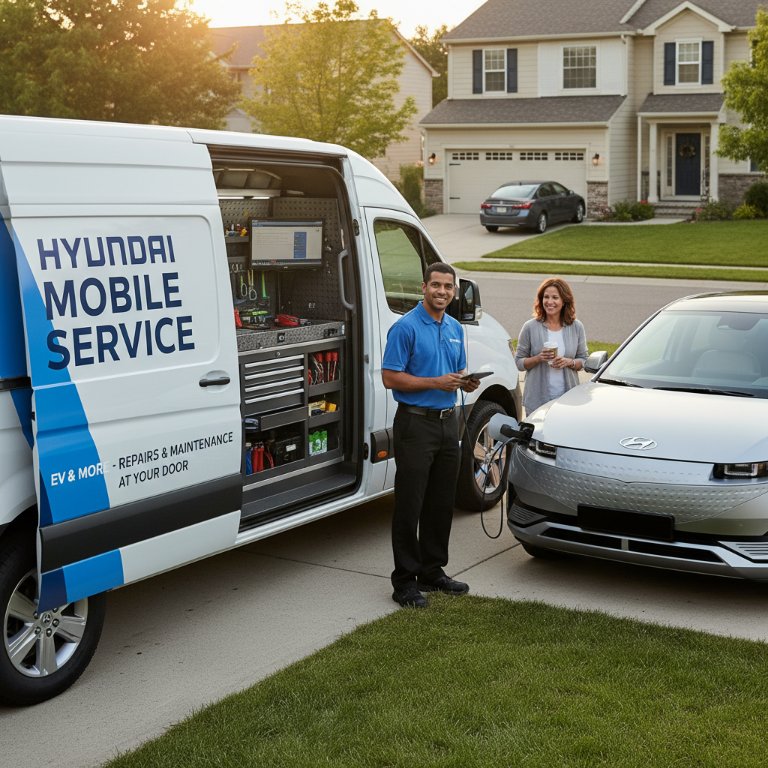
Hyundai Motor Company is dramatically expanding its mobile service program across the United States, a strategic move poised to redefine convenience for both its electric vehicle (EV) and traditional internal combustion engine (ICE) owners. Following a highly successful pilot program, Hyundai aims to deploy an impressive fleet of 150 active service vans by year-end, signaling a profound shift in how the automaker approaches customer care and challenging the conventional dealership model.
This initiative comes as Hyundai continues its aggressive push into the EV market with its acclaimed IONIQ line-up, recognizing that modern consumers, especially EV adopters, demand seamless and time-saving service solutions. The move directly mirrors and aims to compete with the convenience-driven strategies pioneered by EV-focused automakers like Tesla and Rivian.
Hyundai's On-Demand Maintenance Revolution
The core of Hyundai's expanded mobile service program is straightforward: bring the dealership's expertise directly to the customer. This fleet of specially equipped vans will handle a wide array of routine maintenance tasks and basic repairs, effectively minimizing the need for owners to disrupt their schedules with a trip to a service center.
- Routine Maintenance: Oil changes for ICE vehicles, tire rotations, brake pad and rotor replacements.
- Software Updates: Crucial for maintaining optimal performance and functionality in modern, connected vehicles, particularly EVs.
- Basic Repairs: Addressing minor issues and conducting service recall campaigns on-site.
- Convenient Scheduling: Customers can easily book appointments through participating Hyundai dealers' online service portals, allowing technicians to come to their home or workplace.
This direct-to-customer approach is a direct response to evolving consumer expectations, which increasingly prioritize convenience, accessibility, and personalized experiences in automotive care.
Learning from the EV Pioneers
Hyundai's decision to scale its mobile service fleet clearly draws inspiration from EV trailblazers like Tesla and Rivian, which have long championed direct-to-consumer service models. Tesla, with its robust mobile technician network, and Rivian, with its extensive fleet of service vans and remote diagnostics capabilities, have set a high bar for convenience. However, Hyundai's strategy introduces a critical nuance: it integrates this modern convenience within its established dealership network. Rather than bypassing dealerships, Hyundai empowers them to extend their service reach, reinforcing brand loyalty and ensuring consistent, factory-trained service using genuine parts. It’s important to note that while mobile units excel at routine tasks, complex repairs requiring specialized bays and extensive equipment will still necessitate a visit to a traditional dealership.
Why This Matters:
- Elevated Customer Experience and Retention: For Hyundai, this is a direct investment in customer satisfaction. In an increasingly competitive market, especially for EVs where service expectations are higher, offering unparalleled convenience can be a decisive factor in purchase decisions and, critically, long-term brand loyalty. Happy customers are repeat customers, and they are less likely to stray to competitors.
- Competitive Advantage in the EV Space: By mirroring the best service practices of EV-native brands, Hyundai positions its growing EV lineup (IONIQ 5, IONIQ 6, etc.) as not just technologically advanced but also exceptionally convenient to own. This directly addresses one of the perceived advantages of brands like Tesla and Rivian.
- Modernizing the Dealership Model: This initiative forces Hyundai's traditional dealership network to adapt and innovate. Instead of seeing mobile service as a threat, forward-thinking dealers will leverage it to expand their service capacity, manage increasing vehicle volumes, and ultimately improve their profitability by retaining more service work. This signals a necessary evolution for legacy automakers and their dealer partners.
- Industry Trendsetter: Hyundai is among the first traditional automakers to scale such a comprehensive mobile service strategy nationally. This move could very well compel other mainstream manufacturers to follow suit, accelerating a broader shift in how automotive maintenance is delivered across the industry. The market for mobile vehicle repair services is already experiencing robust growth, with a projected CAGR of 8.82% from 2025 to 2030.
- Addressing Service Capacity: With increasing sales and the evolving service needs of EVs, dealerships have faced capacity challenges. Mobile units help alleviate this pressure, ensuring that all customers receive timely and efficient service.
Who wins? Hyundai owners, undoubtedly, gain immense convenience and a modern ownership experience. Hyundai itself wins by strengthening its brand, improving customer retention, and carving out a competitive edge. Dealerships that embrace this model also win by modernizing their operations and boosting their service revenue. Who loses? Competitors who fail to adapt to this rising demand for at-home service risk falling behind in the critical arena of customer satisfaction.
This is not merely a service update; it's a strategic pillar in Hyundai's ambition to be a leader in the future of mobility.
Conclusion
Hyundai’s aggressive expansion of its mobile service program across the U.S. marks a pivotal moment for the brand and the broader automotive industry. By committing to 150 service vans by year-end, Hyundai isn't just offering a convenience; it's setting a new benchmark for customer care in the mainstream market, demonstrating a keen understanding of evolving consumer expectations. This strategic investment in accessible, on-demand maintenance solidifies Hyundai's position as a forward-thinking innovator, ready to compete fiercely in the burgeoning EV landscape and redefine the future of vehicle ownership.