Living The EV Life: Bolt Owner's Extreme Usage Unearths Critical Durability Questions
The electric vehicle landscape constantly evolves, and with it, the innovative ways owners integrate EVs into their daily lives. A recent online discu...
Editorial Team
World Of EV
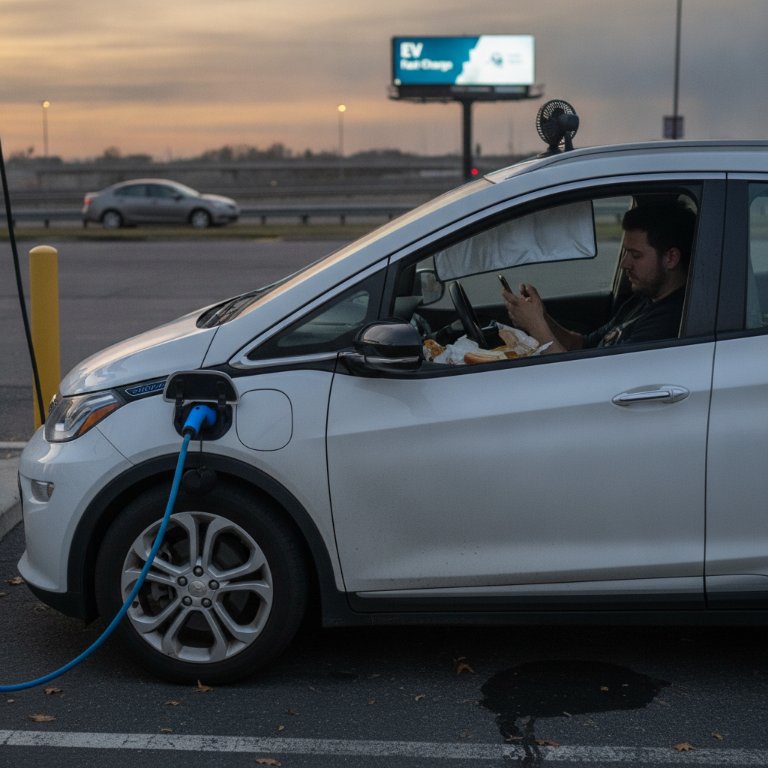
The electric vehicle landscape constantly evolves, and with it, the innovative ways owners integrate EVs into their daily lives. A recent online discussion, sparked by a Chevrolet Bolt owner's unconventional usage, has thrust a critical question into the spotlight: How much can an EV truly endure when pushed to its operational limits? The scenario involves a Bolt owner using their vehicle not just for transportation but also as a primary shelter and DoorDash delivery platform, leading to near-constant operation and daily fast-charging. This unique use case has ignited a vital conversation among enthusiasts and experts alike about EV longevity and component wear, pushing the boundaries of what we consider 'normal' EV ownership.
The Bolt's Unconventional Test
The core of the discussion revolves around the Bolt owner's declaration of running their vehicle 'almost 24/7' with the air conditioning constantly engaged. This extreme demand stems from using the car as both a mobile workspace and a temporary living space, necessitating continuous climate control regardless of external conditions. Compounding this demanding operational profile is the daily reliance on fast-charging, a necessity for keeping the battery topped up for continuous service in the gig economy. This isn't merely an anecdote; it's a real-world stress test that few manufacturers explicitly design for, offering invaluable insights into EV resilience.
Expert Consensus on Component Wear
Seasoned EV owners and automotive technicians largely concurred that such continuous, high-intensity operation would inevitably accelerate wear on specific vehicle components. The most prominent concern centered on the AC compressor. While designed for robust operation, constant cycling and sustained load undeniably shorten its lifespan, demanding more frequent maintenance or even premature replacement than a vehicle used for typical commutes. Similarly, the cabin air filter, responsible for maintaining air quality within the vehicle, would experience significantly increased strain, requiring more frequent replacement to combat the constant airflow and filtration demands. These components, often overlooked in the broader EV conversation, become critical points of failure under such demanding conditions.
Fast Charging's Double-Edged Sword
The impact of daily fast charging also drew considerable attention. While modern EV batteries and their sophisticated Battery Management Systems (BMS) are designed to handle frequent fast charging, consistent reliance on Level 3 DCFC (Direct Current Fast Charging) inherently generates more heat and stress on the battery pack compared to slower Level 1 or Level 2 charging. Commenters rightly pointed out that while a single fast charge is well within design parameters, daily, sustained fast charging cycles would 'slightly accelerate battery degradation' over the long term. This isn't to say the battery will fail immediately, but rather that its overall useful life and capacity retention might see a minor, yet measurable, reduction when compared to an identical vehicle primarily charged at slower rates. This nuance is crucial, as many prospective EV buyers focus solely on range and charging speed, often overlooking the long-term effects of charging habits.
Why This Matters:
This compelling case of the Chevy Bolt isn't just an isolated incident; it's a potent signal to both consumers and the automotive industry. It vividly demonstrates the growing versatility of EVs, capable of supporting unconventional lifestyles and demanding professional applications like DoorDash. For consumers, especially those considering an EV for heavy-duty use or gig economy work, this highlights the importance of understanding the trade-offs. While EVs are incredibly robust, all mechanical and electrical systems have operational limits. Pushing those limits, particularly with constant climate control and daily fast charging, will undeniably influence the vehicle's long-term health and potential maintenance costs. This insight can help prospective buyers make more informed decisions about vehicle choice and usage habits.
For manufacturers, this scenario serves as invaluable real-world data. It suggests a growing need to engineer components like AC compressors and cabin filtration systems for even greater durability under sustained, extreme loads. Furthermore, it underscores the continuous pressure on battery technology and thermal management systems to mitigate degradation from constant fast charging, especially as more vehicles enter the demanding gig economy or serve as mobile workspaces. Manufacturers who can design for these 'edge cases' – perhaps offering enhanced warranties or commercial-grade options – stand to gain a significant competitive advantage. This situation isn't a 'do-or-die' moment for Chevrolet or any single manufacturer, but rather a vital data point signaling the need for ongoing innovation in EV durability and component longevity as the definition of 'vehicle use' expands dramatically.
In conclusion, the Chevy Bolt owner's experience offers a fascinating glimpse into the future of EV ownership, where vehicles transcend traditional roles. While showcasing the inherent adaptability of electric vehicles, it also provides a crucial reminder that even the most advanced machinery operates within physical limits. As EVs continue to integrate deeply into diverse lifestyles and professions, understanding and addressing these extreme use cases will be paramount for both informed ownership and continued industry advancement.