Mary Barra’s Shock Over Politicized EVs Exposes GM’s Multi-Billion Dollar Blind Spot
For a company that famously declared an "all-electric future" by 2035, General Motors is finding itself caught in a geopolitical and regulatory vice o...
Editorial Team
World Of EV
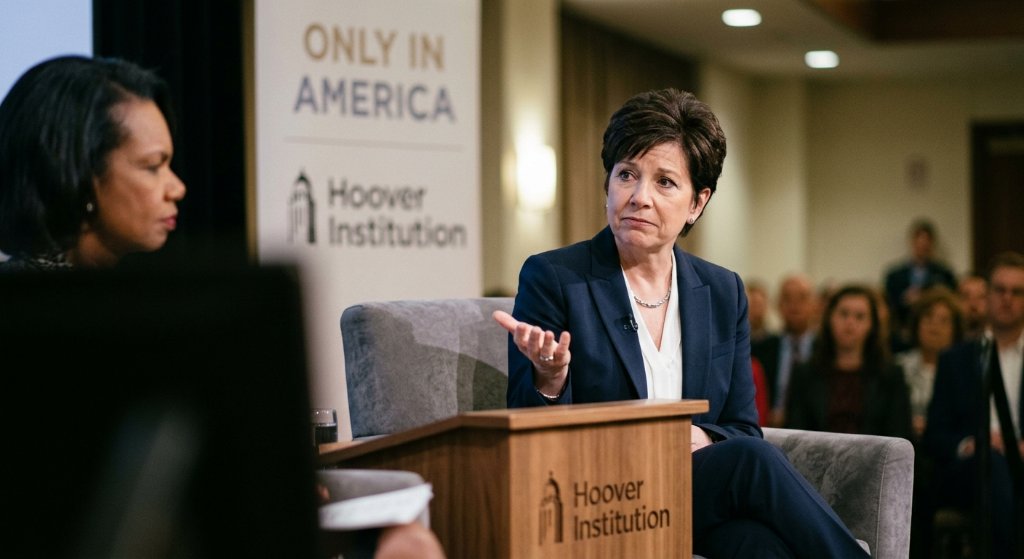
For a company that famously declared an "all-electric future" by 2035, General Motors is finding itself caught in a geopolitical and regulatory vice of its own making. During a recent high-profile interview with former U.S. Secretary of State Condoleezza Rice for the Hoover Institution's Only in America series, GM CEO Mary Barra raised eyebrows by admitting she was surprised at how electric vehicles have become a highly politicized "football" in the United States. Barra’s comments highlight a jarring disconnect: while GM has invested tens of billions into its proprietary Ultium battery platform, the transition is hitting a wall of shifting consumer demand and volatile partisan warfare.
Detroit has never been a stranger to Washington, which makes Barra’s professed surprise particularly striking. Six years ago, GM set a course to phase out internal-combustion engines (ICE) entirely, emboldened by early market projections, state-level mandates, and massive federal backing like the $7,500 federal tax credit. Today, however, those hockey-stick projections are crumbling. As GM faces slow-selling EVs, production setbacks, and a highly unstable political landscape that threatens to strip away EV subsidies, Barra is pivoting to a strategy of damage control, pleading for regulatory stability.
The Billion-Dollar Gamble Meets Political Headwinds
In the tech-heavy setting of GM’s Mountain View software hub, Barra argued that the auto industry is hamstrung by the lack of a stable regulatory runway. "We always say in the industry, we need some level of consistency, or we need lead time for change," Barra noted. But in a polarized America, "consistency" is a luxury of the past. The EV has transformed from an engineering challenge into a cultural flashpoint, with federal tailpipe rules and tax incentives serving as a primary battleground between political factions.
This regulatory whiplash has real-world consequences for automakers who operate on five-to-seven-year product cycles. GM's massive bet on its Ultium architecture was designed for a linear, rapid transition. Instead, the company is managing a highly fragmented market where buyers are pushing back against perceived forced transitions and charging infrastructure struggles.
Shifting Gears to 'Customer Choice'
To survive this friction, GM is quietly backtracking on its rigid all-electric timeline and reviving its flexibility. Barra emphasized that GM’s new mandate is to offer a diverse mix of powertrains so that the company can adapt to any regulatory environment. To navigate this uneven terrain, GM is executing several key tactical adjustments:
- Reviving Plug-In Hybrids (PHEVs): After years of dismissing hybrids as a half-measure, GM is reintroducing PHEVs to its North American lineup to bridge the gap for wary buyers.
- Preserving ICE Profitability: GM continues to rely heavily on its highly profitable gas-powered full-size trucks and SUVs (like the Chevrolet Silverado and Cadillac Escalade) to fund its expensive electric development.
- Pragmatic Production Scaling: The automaker has walked back its ambitious target of producing 1 million EVs in North America, choosing instead to match production closely with actual dealership demand.
- Software Overhaul: Following devastating software-related stop-sales on models like the Chevrolet Blazer EV, GM is refocusing its engineering hubs on fixing critical software glitches rather than rushing new designs to market.
Why This Matters:
This is a defining "do-or-die" moment for Mary Barra’s legacy and General Motors’ future. To claim surprise at the politicization of a heavily subsidized, government-mandated product category points to a profound blind spot in Detroit's C-suites. Automakers did not just follow market trends; they lobbied for the policies that helped shape them, only to find that political winds can shift overnight.
- Who Wins: Hybrid-heavy rivals like Toyota and Honda, who resisted going "all-in" on pure battery EVs, are vindicated. They possess the flexible, high-margin hybrid portfolios that consumers are actually buying today.
- Who Loses: Pure-play EV startups and suppliers who built their entire business models around rapid legacy-brand EV adoption. GM’s deceleration directly impacts the broader charging and battery supply chain.
- The Market Signal: The era of the forced EV transition is officially dead. Barra’s public pleading for "consistency" is a clear signal to Wall Street and Washington that GM cannot afford to build cars that require political life support. From here on out, consumer demand—not regulatory mandates—will dictate production.
Ultimately, GM’s survival depends on how quickly it can master the art of the hedge. By stepping back from its dogmatic "all-EV" rhetoric and embracing a multi-energy strategy, GM is attempting to insulate itself from the upcoming political storm. But as the gap between corporate projection and consumer reality continues to widen, Barra's team will have to prove they can build EVs that people want to buy on their merits—regardless of which party holds the keys to the White House.