Mastering the Open Road: Unlocking Peak Efficiency and Savings on Your EV Road Trips
As electric vehicles rapidly redefine the automotive landscape, savvy owners are discovering that long-distance travel isn't just feasible—it's an opp...
Editorial Team
World Of EV
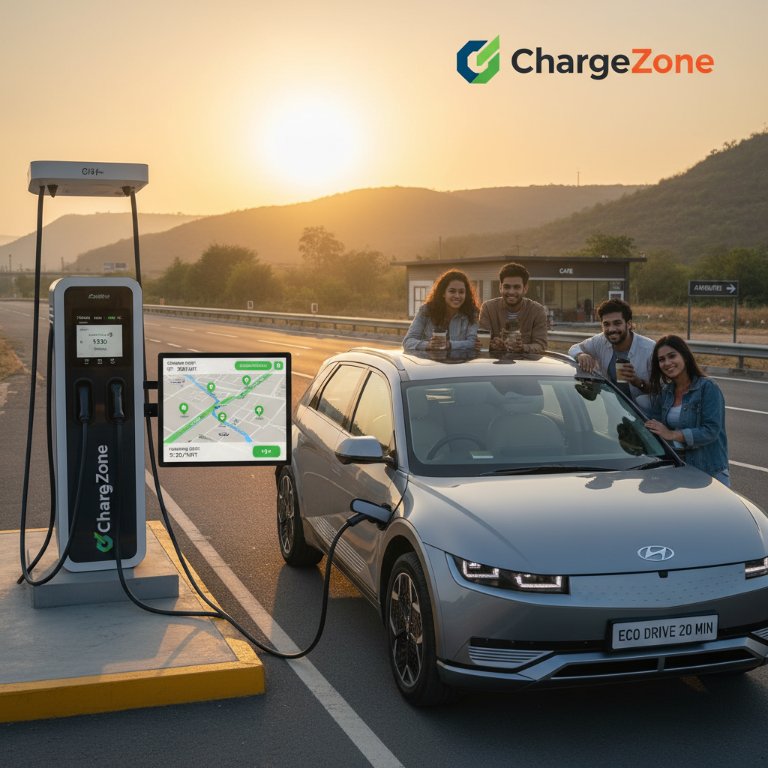
As electric vehicles rapidly redefine the automotive landscape, savvy owners are discovering that long-distance travel isn't just feasible—it's an opportunity for significant savings and an optimized driving experience. Dispel any lingering range anxiety; with the right strategies, EV road trips transform into economical, enjoyable journeys. "World Of EV" delves into the critical 'life hacks' that empower drivers to maximize range, minimize costs, and confidently navigate India's evolving charging infrastructure.
Strategic Driving for Maximum Range
The fundamental truth of EV efficiency on the highway is counter-intuitive for many traditional drivers: speed kills range. While internal combustion engine (ICE) vehicles often find their sweet spot at higher speeds, EVs face increased aerodynamic drag, which intensifies quadratically with velocity. This means that pushing your EV beyond a certain threshold can drastically cut into its available range.
Maintain the 'Golden Speed' (80-100 km/h): Our analysis shows that a steady speed between 80-100 km/h is the optimal zone for most EVs, balancing travel time with energy conservation. Exceeding this, say to 120 km/h, can slash your available range by a substantial 20-30% due to heightened aerodynamic resistance and increased motor workload. EVs become progressively less efficient above 80 km/h, requiring the motor to work harder against wind resistance. Moreover, high-speed, steady driving minimizes the benefit of regenerative braking, a key EV efficiency feature, as there are fewer opportunities to coast and recover energy.
Embrace Eco-Mode: Activating your EV's 'eco-mode' isn't just a suggestion; it's a strategic move for long journeys. This mode intelligently limits throttle response, smooths power output, and often optimizes climate control settings, preventing sudden, energy-intensive accelerations and reducing auxiliary loads. This translates directly into extended range and a more relaxed driving experience.
Intelligent Planning: Your Digital Co-Pilot
Beyond driving style, meticulous route planning stands as a cornerstone of efficient EV travel. Modern EV-friendly navigation applications do more than just point you to the nearest charger; they are sophisticated tools for energy management.
Avoid Energy-Sapping Terrain and Traffic: Utilize apps that consider topography and real-time traffic conditions. Steep uphill climbs significantly increase energy consumption, potentially reducing range by up to 30%. Similarly, stop-and-go traffic, while allowing for some regenerative braking, can be less efficient than smooth, consistent speeds. Planning routes to minimize elevation changes and avoid known congestion points directly contributes to better range and less stress.
Charging Costs: The Unrivaled Economic Advantage
The most compelling argument for EV road trips often boils down to economics. While the upfront cost of an EV might still be higher than an equivalent ICE vehicle, the running costs on a road trip offer unparalleled savings, especially in India.
Home Charging Dominance: Charging at home remains the most cost-effective option, typically ranging from ₹8-10 per unit (kWh). For a full charge of a common 40 kWh battery, this could be as low as ₹320-₹400.
Public Charging Value: Even when relying on public fast chargers, which are pricier at ₹20-22 per unit, the cost per kilometer remains significantly lower than petrol. Estimates suggest EV running costs are around ₹1-₹3.7 per kilometer, starkly contrasting with petrol cars' ₹5.5-₹10 per kilometer. This translates to EVs being 50-85% cheaper to run. Furthermore, many public fast chargers are strategically located near amenities, allowing drivers to recharge while enjoying a meal or taking a break.
Pre-Conditioning is Key: A smart tactic is to pre-condition your EV's cabin temperature while it's still plugged into a charger. This uses grid power to heat or cool the interior, rather than draining your battery on the go, making your initial miles more efficient and comfortable.
Why This Matters:
This isn't just about a few tips; it's about fundamentally shifting the narrative around EV travel. For existing EV owners, these strategies represent substantial, tangible savings and a boost in confidence, transforming what some perceive as a limitation (range) into a manageable variable. This knowledge democratizes efficient long-distance EV travel, empowering owners to take full control of their vehicle's performance and their travel budget.
For the broader EV market and prospective buyers, this detailed analysis addresses a critical hurdle: range anxiety and perceived operational costs. By highlighting the significant economic advantages and practical solutions, it dismantles common misconceptions. Who wins? EV owners, who gain greater autonomy and savings. The EV ecosystem wins, as more positive road trip experiences encourage wider adoption. Traditional ICE vehicles lose a key advantage in the long-distance cost debate, making EVs even more compelling. This signals the increasing maturity of the EV experience, where intelligent usage complements technological advancements, moving beyond mere specification sheets to real-world, user-centric benefits.
Conclusion:
The era of the EV road trip is here, not as a compromise, but as a superior, more sustainable, and economically sound alternative. By embracing smart driving habits, leveraging intelligent route planning, and understanding the cost advantages of charging, EV owners can embark on their journeys with unprecedented efficiency and peace of mind. As India's charging infrastructure continues its rapid expansion, these 'life hacks' will only become more potent, firmly establishing electric vehicles as the undisputed champions of the open road.