E
World Of EVEditorial
News 56 mins ago
Mind the Gap: New Survey Reveals 70% of EV Drivers Say Media Coverage is Divorced from Reality
While mainstream headlines continue to paint electric vehicles as a risky, infrastructure-deprived gamble, the reality on the asphalt tells a vastly d...
E
Editorial Team
World Of EV
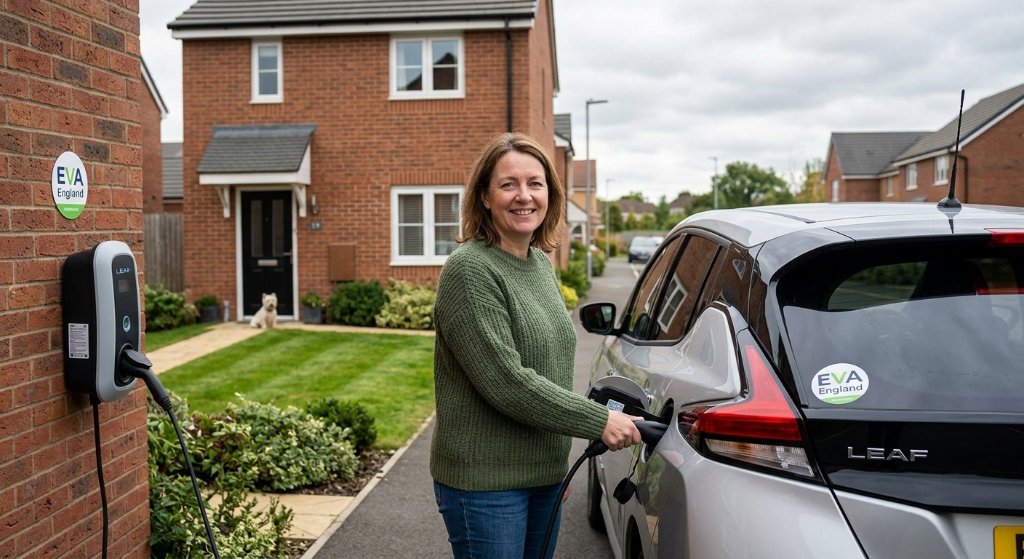
While mainstream headlines continue to paint electric vehicles as a risky, infrastructure-deprived gamble, the reality on the asphalt tells a vastly different story. For years, mainstream media has fed a steady diet of range anxiety and charging "chaos" to a hesitant public. However, early findings from EVA England’s annual 'Steer the Conversation' survey deliver a sharp reality check to the naysayers: nearly 70% of active EV drivers state that the public debate and media coverage do not accurately reflect their overwhelmingly positive, real-life experiences.
This widening chasm between public perception and actual ownership exposes a critical flaw in how we talk about the electric transition. While prospective buyers—swayed by sensationalist reporting—worry about charger availability and battery degradation, experienced drivers are quietly enjoying low running costs, reliable performance, and an increasingly robust public charging network. The narrative is broken, and the data proves it.
### The FUD vs. Fact Divide
The survey, conducted in collaboration with EVA Cymru, EVA Northern Ireland, and EVA Scotland, highlights that the "Fear, Uncertainty, and Doubt" (FUD) dominating the airwaves is actively stalling potential adoption. While non-owners lose sleep over hypotheticals, real-world operators overwhelmingly report high satisfaction:
* **The Sceptics' Anxiety:** Prospective buyers remain deeply concerned about range limitations and the sheer volume of public charge points.
* **The Owners' Reality:** Experienced drivers concentrate on practical, day-to-day economic benefits. Previous EVA England data shows that 91% of owners would never return to a petrol or diesel vehicle, and 86% find their EVs significantly cheaper to run.
* **The Charging Evolution:** Nearly two-thirds (69%) of respondents note massive, tangible improvements in public charging infrastructure over the past year alone.
### The Driveway Divide Remains a Practical Hurdle
We cannot dismiss all public concern as mere media fabrication. The 2026 data also highlights structural inequalities that the automotive and energy industries must address:
* **The Driveway Privilege:** Roughly 87% of drivers with off-street parking find their EVs "much cheaper" to run thanks to low overnight home tariffs.
* **The On-Street Penalty:** For those without a driveway, only 50% agree that running costs are significantly lower, pointing directly to the high VAT and inflated rates of public rapid chargers.
* **The Policy Push:** To bridge this gap, advocacy groups are urging the UK government to reform the upcoming Electric Vehicle Excise Duty (eVED) scheduled for April 2028 and accelerate cross-pavement charging regulations to democratize home-charging rates for all motorists.
### Why This Matters:
The EVA England survey exposes a massive strategic failure by both legacy automakers and government policy communicators. For too long, they have allowed anti-EV lobbies and clickbait-driven media outlets to dictate the narrative.
* **Who Wins:** Legacy car manufacturers who are dragging their feet on electrification. As long as the public remains terrified of charging networks and battery health, these brands can continue milking high-margin internal combustion engine (ICE) and hybrid platforms without facing massive consumer backlash.
* **Who Loses:** The climate, prospective car buyers, and the economy. When buyers are scared off by myths, they miss out on substantial long-term fuel and maintenance savings. Furthermore, a slow transition threatens massive economic fallout; research indicates that delaying the EV shift could cost the UK automotive sector billions in GDP and hundreds of thousands of jobs.
* **The Market Signal:** This is a clear call to action for EV manufacturers. Automakers like Tesla, Hyundai, and BYD must pivot their marketing strategies away from clinical "tech-spec" wars (like 0-60 mph times or theoretical range) and focus heavily on educating the public through real-world owner stories and simplified, transparent charging solutions. If the industry cannot bridge this narrative chasm, misinformation will continue to act as a handbrake on the entire EV transition.
Ultimately, the 'Steer the Conversation' survey proves that the EV transition doesn't have an engineering or satisfaction problem—it has a PR problem. Electric vehicles are already delivering a superior, cheaper driving experience for the vast majority of people who actually own them. Until mainstream media and industry marketing catch up to this ground-level truth, millions of drivers will remain needlessly locked out of the electric revolution.