Mixed Signals and Cost Anxiety: Why EV Hesitation is Spiking Among UK Fleets
The transition to electric vehicles was supposed to be a linear march toward progress, but real-world market dynamics in 2026 are proving far more tur...
Editorial Team
World Of EV
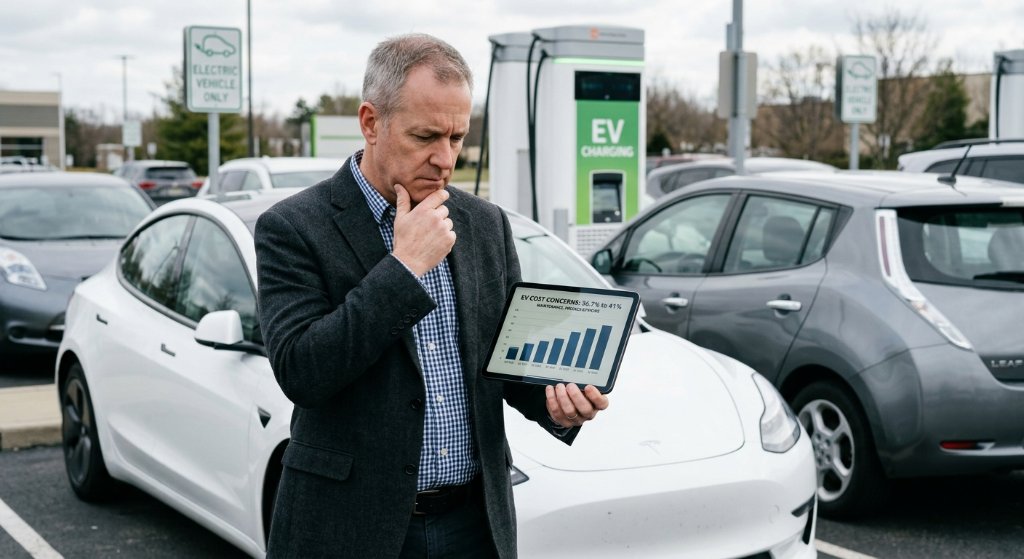
The transition to electric vehicles was supposed to be a linear march toward progress, but real-world market dynamics in 2026 are proving far more turbulent. For years, corporate fleet operators—historically the bedrock of EV adoption—charged ahead, incentivized by generous tax breaks and clear net-zero mandates. However, a toxic mix of shifting government policies, tax uncertainties, and a persistent education gap is causing a dramatic spike in EV cost anxiety, threatening to stall the entire transition just as it was reaching escape velocity.
The newly released Q1 2026 EV Barometer from Europcar Mobility Group UK highlights a worrying trend: business and consumer concerns regarding the purchase, maintenance, and financing of EVs rose sharply from 36.7% in Q4 2025 to 41% in Q1 2026. This uptick reveals a fragile market where buyers, despite appreciating the technological evolution of electric motoring, are increasingly spooked by the financial realities of long-term EV ownership.
A Fiscal Fog: Government Policy Breeds Confusion
The primary driver behind this sudden rise in fleet hesitation isn't the vehicles themselves; it is the fiscal policy surrounding them. As corporate decision-makers navigate 2026, they are grappling with a complex, shifting landscape of tax adjustments.
- The Pay-Per-Mile Threat: The UK government's proposals to introduce a pay-per-mile road tax for EVs have introduced massive uncertainty. Fleet operators planning 3-to-5-year vehicle lifecycles are struggling to calculate accurate Total Cost of Ownership (TCO) without concrete details on mileage taxation.
- Rising Benefit-in-Kind (BiK) Taxes: The April 2026 increase in BiK tax rates has further chipped away at the financial incentives that once made company EVs an undeniable choice.
- Infrastructure Worries Persist: Charging infrastructure concerns also crept up, holding back 29.5% of businesses in Q1 2026, up from 28.6% at the end of 2025.
The Maintenance Myth and the Education Gap
While upfront purchasing costs and taxes dominate headlines, the Europcar review identifies a more insidious obstacle: a profound lack of clear understanding and education surrounding actual EV maintenance costs. Despite studies consistently proving that EVs require fewer moving parts and generally cost less to service than internal combustion engine (ICE) counterparts over their lifespans, the myth of the "unfixable, expensive EV" continues to grip corporate risk managers.
- TCO Illiteracy: Many fleet managers still evaluate EVs on a pure retail-price-to-lease-rate basis, overlooking the massive fuel-to-electricity savings and reduced mechanical wear.
- Lack of Standardized Data: Fleet operators are starved of clear, real-world maintenance benchmarks, making corporate accounting departments reluctant to authorize the capital expenditure for massive EV fleet transitions.
Silver Linings: Supply and Choice are No Longer Bottlenecks
If there is a bright spot in the barometer, it is that the physical barriers of the past are disappearing. Concern over EV choice and vehicle availability fell from 15.9% in Q4 2025 to 13.5% in Q1 2026. Thanks to a wave of fresh EV entrants—including highly competitive Chinese manufacturing giants and legacy brands offering purpose-built "skateboard" EV platforms rather than half-hearted ICE conversions—finding the right vehicle is no longer the issue. Resistance from both employers and employees also ticked down from 13% to 10.8%, proving that once a driver gets behind the wheel of an EV, the driving experience itself is highly convincing.
Why This Matters:
This is a critical juncture for the EV ecosystem. Corporate fleets represent the largest pipeline of new car sales, which in turn feeds the crucial secondhand market 3 to 4 years down the line. If fleets pause or scale back their electrification plans now, it triggers a catastrophic domino effect: the used EV market will starve, charging networks will see lower-than-projected utilization, and automakers will struggle to meet strict ZEV (Zero Emission Vehicle) mandate targets.
The real loser here is long-term market stability. The UK government's mixed messaging—proposing a pay-per-mile tax on one hand while mandating EV sales quotas on the other—is actively sabotaging its own net-zero transport timeline. For EV automakers and leasing giants like Europcar, the mission has shifted from a sales pitch about technology and environmental benefits to an aggressive, "do-or-die" education campaign. If the industry cannot demystify EV maintenance costs and provide absolute TCO transparency, the transition risks grinding to a costly, policy-induced halt.
Conclusion
The Europcar Q1 2026 Barometer is a stark reminder that technology alone cannot drive a revolution; economics and clear policy must pave the way. While automakers have solved the hardware side of the equation with better, more diverse EV lineups, governments and fleet management partners must now solve the software—namely, clear taxation, transparent maintenance data, and robust driver education. Until the financial fog clears, expect corporate buyers to keep their feet firmly on the brakes.