Musk Accelerates Unmonitored Autonomy: Tesla's Robotaxi Ambitions Set for Nationwide Rollout This Year
Tesla CEO Elon Musk has dramatically upped the ante in the race for autonomous driving, announcing plans for the widespread operation of fully autonom...
Editorial Team
World Of EV
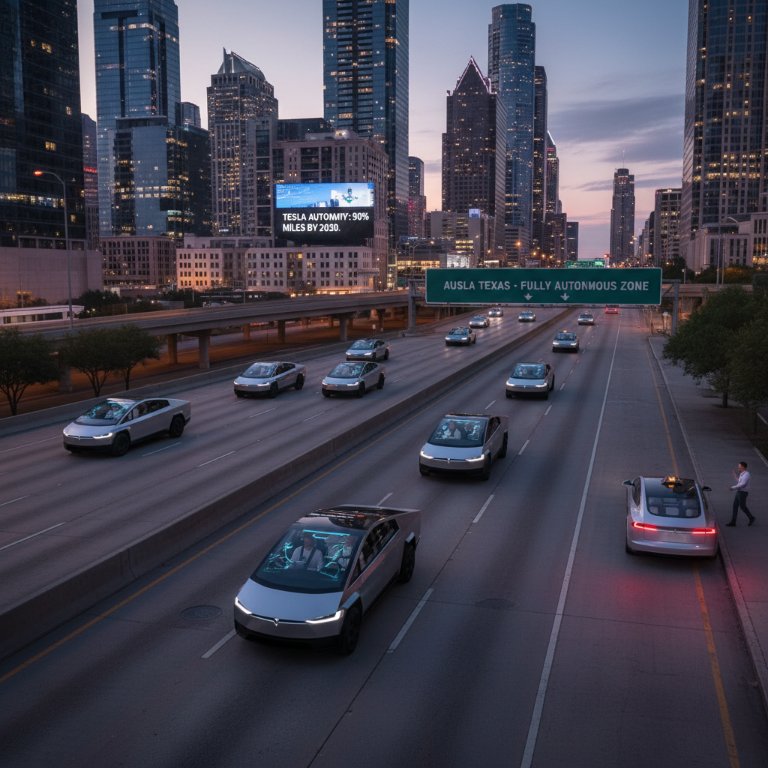
Tesla CEO Elon Musk has dramatically upped the ante in the race for autonomous driving, announcing plans for the widespread operation of fully autonomous vehicles across the U.S. later this year — crucially, without human safety monitors. This bold move follows initial deployments in key Texas cities, including Austin, Dallas, and Houston, and signals a pivotal moment for both Tesla and the entire automotive industry.
Musk's latest revelation came during a virtual appearance at the Smart Mobility Summit in Tel Aviv, where he didn't just outline near-term goals but cast a sweeping vision for the future. He projected that within the next 5 to 10 years, artificial intelligence systems will manage an astonishing 90% of all driving miles globally. This isn't merely an incremental step; it's a declaration of intent to fundamentally reshape personal transportation as we know it.
The Nationwide Unmonitored Rollout
Tesla’s strategy to expand fully autonomous operations across the U.S. later this year, devoid of human oversight, represents a significant leap from its current Full Self-Driving (FSD) Beta program. While FSD Beta has been available to a growing number of customers, it still requires an attentive driver ready to intervene. The shift to unmonitored operation underscores Tesla's confidence in its AI and sensor suite, pushing the boundaries of what's currently deployed at scale by any automaker. This phased approach, building on experience gained in populous Texas metros, suggests a refinement process is underway, albeit one with immense public scrutiny.
Musk's AI-Driven Future
Musk's projection of 90% of global driving miles managed by AI within a decade is nothing short of revolutionary. It envisions a world where human error, a primary cause of road accidents, is drastically reduced, and transportation efficiency reaches unprecedented levels. This long-term vision positions Tesla not just as an automaker, but as a dominant force in AI and robotics, potentially disrupting traditional logistics, public transport, and personal mobility sectors. The scale of this ambition requires not only technological prowess but also overcoming immense regulatory and societal hurdles.
Navigating Current Roadblocks
Despite Musk's optimistic timelines, the path to widespread robotaxi adoption has not been without its bumps. Early robotaxi rollouts, both from Tesla and competitors, have faced mixed results. Users frequently report issues ranging from unexpected delays to inconsistent service quality. These challenges highlight the immense complexity of autonomous driving, particularly in unpredictable urban environments. While significant progress has been made in handling routine driving scenarios, edge cases, adverse weather, and complex human interactions continue to test the limits of even the most advanced AI systems. Addressing these inconsistencies will be paramount to building public trust and ensuring a smooth transition to a truly driverless future.
Why This Matters:
This announcement is a seismic event for the automotive and tech worlds, carrying profound implications across several fronts:
For Tesla: This is arguably a 'do-or-die' moment. If Tesla can successfully deploy widespread unmonitored autonomy, it will solidify its lead in AI-driven vehicles, unlock massive new revenue streams through its robotaxi network, and dramatically increase its market valuation. A failure to deliver reliably, however, could severely damage its brand reputation, invite intense regulatory backlash, and erode investor confidence, much like past FSD timeline misses. The stakes couldn't be higher.
For Competitors: Legacy automakers and tech giants investing heavily in autonomous driving (e.g., Waymo, Cruise, Mobileye) will feel immense pressure. Tesla's aggressive timeline forces them to accelerate their own development and deployment strategies, or risk being left behind in a rapidly evolving market. It also highlights divergent strategies, with some prioritizing a slower, more cautious rollout with safety drivers.
For Regulators: The move to unmonitored operations will intensify scrutiny from bodies like NHTSA. Questions of liability, safety standards, and robust validation protocols for truly driverless vehicles will become central. A patchwork of state and federal regulations could emerge, potentially complicating nationwide deployment.
For Consumers: The promise of readily available, highly convenient, and potentially safer autonomous transportation is huge. Imagine a world with dramatically reduced traffic accidents and increased personal productivity. However, initial reliability issues and the psychological hurdle of trusting an AI with human lives will be significant. The transition period will likely be characterized by a mix of excitement and skepticism, requiring flawless execution from Tesla to win over the masses.
Industry Disruption: Musk's 90% AI driving projection signals a future where car ownership itself could fundamentally change. Why own a depreciating asset if an on-demand robotaxi network is universally available and affordable? This could disrupt ride-hailing services, car rental companies, and even public transportation models.
Tesla's pivot to widespread unmonitored autonomous operations within the year represents an audacious leap of faith in its technology. While the promise of an AI-driven transportation future is tantalizing, the path ahead is fraught with immense technical, regulatory, and public acceptance challenges. The world will be watching closely as Tesla attempts to turn its ambitious vision into a reliable, real-world experience, potentially reshaping mobility for generations to come.