Navigating the Used EV Gold Rush: Five Essential Checks to Avoid a Multi-Thousand-Dollar Battery Trap
The used electric vehicle market is currently experiencing an unprecedented gold rush. Driven by aggressive depreciation cycles—largely fueled by Tesl...
Editorial Team
World Of EV
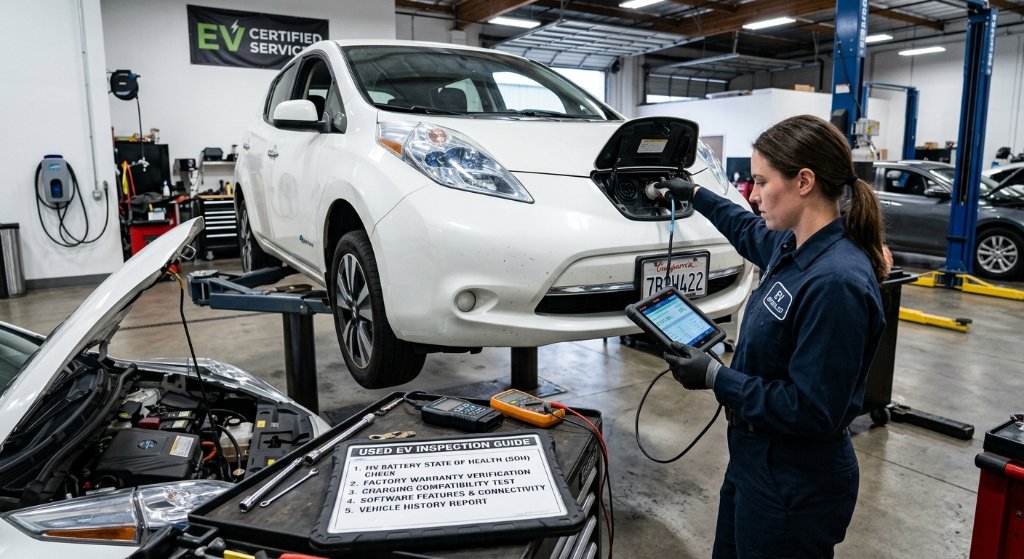
The used electric vehicle market is currently experiencing an unprecedented gold rush. Driven by aggressive depreciation cycles—largely fueled by Tesla's aggressive pricing strategy and a massive wave of off-lease vehicles entering the market—previously premium EVs are now entering budget-friendly territory. However, transitioning from a traditional internal combustion engine (ICE) vehicle to a pre-owned EV is not a direct translation. The days of kicking tires and checking engine oil are long gone; in their place is a complex matrix of software locks, battery chemistry, and shifting charging standards.
A recent guide published by Clean Fleet Report shines a critical spotlight on this evolving landscape, outlining five essential maintenance and inspection areas that can make or break the used EV ownership experience. For the modern buyer, mastering these checks is the difference between securing an incredible bargain and inheriting an expensive, depreciated brick.
The High-Voltage Heart: Diagnosing State of Health (SOH)
The battery pack is the single most expensive component of an EV, often accounting for up to 40% of the vehicle’s total value. Unlike an ICE engine, which can run reliably for decades with basic maintenance, lithium-ion batteries naturally degrade over time and mileage.
- Get a Diagnostics Report: Never rely solely on the dashboard’s estimated range (affectionately known as the "Guess-o-Meter"), which fluctuations wildly based on recent driving habits. Use OBD-II dongles combined with diagnostic apps or request a certified State of Health (SOH) report from the dealer.
- Understand Degradation Rates: A healthy used EV should retain at least 85% to 90% of its original capacity. Anything below 80% warrants a steep price discount or walking away entirely, as range will degrade faster under extreme weather conditions.
The Charging Standards Minefield: Navigating NACS vs. CCS
The North American EV charging landscape is undergoing its most significant transition in history as the industry consolidates around Tesla's North American Charging Standard (NACS/SAE J3400). Buyers of older EVs must understand what they are plugging into.
- CCS Infrastructure Phase-Out: Many older non-Tesla EVs utilize the Combined Charging System (CCS). While adapters are increasingly available, verify if the vehicle can natively support or adapt to Tesla’s vast Supercharger network.
- AC vs. DC Speed Limits: Check the vehicle’s onboard charger rating (kW). Some early EVs, like the Nissan Leaf (which uses the nearly defunct CHAdeMO standard) or older BMW i3s, have severely limited fast-charging speeds, making them impractical for long-distance road trips.
Software, Subscriptions, and the Warranty Safety Net
Modern EVs are essentially rolling computers, which introduces unique challenges regarding digital ownership and factory warranties.
- Warranty Verification: Federal law mandates that EV batteries are covered for 8 years or 100,000 miles, but boundaries vary by state and manufacturer. Verify if the remaining warranty transfers seamlessly to subsequent owners, as some manufacturer policies vary on secondary buyers.
- Connected Feature Lockout: Legacy automakers and Tesla alike are increasingly locking features behind paywalls. Ensure that over-the-air (OTA) updates, navigation, and heated seats aren't deactivated once the vehicle changes hands, or budget for the monthly subscription fees.
- The Paper Trail: Always run a comprehensive history report to check for past structural damage. A minor collision can compromise the battery frame, leading to hidden, catastrophic structural failures down the line.
Why This Matters:
The used EV market represents a massive paradigm shift for both consumers and traditional dealerships. For decades, dealerships have treated used cars as mechanically simple, predictable assets. Now, they are forced to act as IT departments and battery chemists. Dealerships that fail to adapt and provide transparent battery SOH certificates will lose consumer trust and see vehicles sit on lots.
- Who wins? Savvy buyers who leverage high depreciation to buy near-new EVs (like a two-year-old Hyundai Ioniq 5 or Ford Mustang Mach-E) at a 40-50% discount, armed with the knowledge of how to verify battery health.
- Who loses? Uninformed buyers who purchase cheap, first-generation EVs with highly degraded batteries or outdated charging standards, only to realize a battery replacement costs more than the car's entire market value.
Ultimately, this shift signals a maturing market. As third-party battery diagnostic tools become the industry standard, the transparency of the used EV market will improve, driving stabilization in residual values and fostering wider, more confident EV adoption.
In Summary
As the EV market matures, purchasing a used electric vehicle is no longer a gamble reserved for tech-forward early adopters—provided you follow the right playbook. By prioritizing battery diagnostics, understanding charging compatibility, and verifying software transfers, buyers can confidently secure a high-tech, low-emission ride at a fraction of its original MSRP. The future of transportation is electric, and the used market is the gateway to making it accessible for everyone.