NHTSA Shuts Down Tesla Steering Probe, Proving Software is the Ultimate Recall Killer
The National Highway Traffic Safety Administration (NHTSA) has officially closed its high-profile engineering analysis into power-steering failures af...
Editorial Team
World Of EV
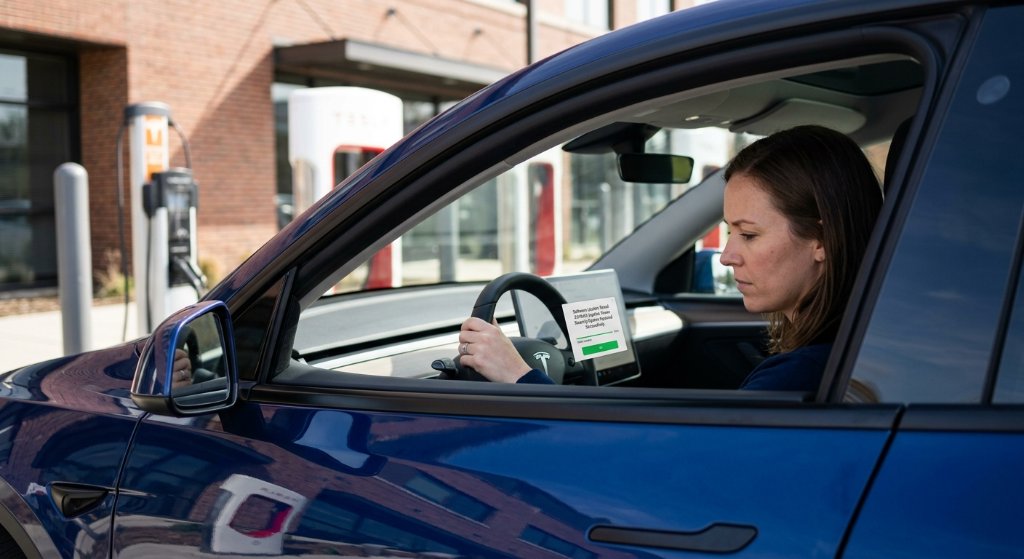
The National Highway Traffic Safety Administration (NHTSA) has officially closed its high-profile engineering analysis into power-steering failures affecting the 2023 Tesla Model 3 and Model Y. By shuttering this investigation, federal regulators have handed Tesla a massive validation of its software-first approach. For years, critics and traditional automotive giants have scoffed at Tesla’s reliance on over-the-air (OTA) updates to fix critical mechanical systems, but the government’s decision proves that remote software maintenance is no longer a gimmick—it is a highly effective safety tool.
This federal inquiry, designated as EA24001, began in mid-2023 following a wave of driver complaints about a sudden loss of power steering. While a physical loss of steering control normally prompts weeks of dealer visits, parts shortages, and massive manufacturer expenses, Tesla bypassed the traditional recall gauntlet entirely. By deploying a targeted software update, Tesla quietly resolved the underlying voltage issue and watched customer complaints evaporate, prompting the NHTSA to declare the case closed.
The Voltage Bug Behind the Loss of Control
The root of the issue was not a mechanical failure of the steering rack itself, but rather an electrical overload on the printed circuit board of the steering electronic control unit (ECU). Tesla’s engineering team discovered that an overvoltage condition was overstressing vital motor drive components on the board.
When this occurred, the steering system was designed to keep working while the car was in motion to prevent high-speed accidents. However, the moment the vehicle came to a stop (0 mph), the power steering system would shut down, leaving drivers with heavy, unassisted manual steering as they tried to accelerate or park.
Under federal recall 25V092, which covered approximately 376,241 vehicles, Tesla addressed the issue head-on. Key details of the recall and subsequent fix include:
- The Affected Fleet: 2023 Model 3 and Model Y vehicles running software releases older than version 2023.38.4.
- The Real-World Symptoms: Drivers experienced a "Steering assist reduced" warning, "notchy" or "clicky" steering feel, and a sudden, heavy resistance when trying to turn from a complete stop.
- The Software Remedy: Firmware version 2023.38.4 (and later) was pushed OTA to prevent the overvoltage condition on the ECU board, eliminating the stress on the motor drive components.
- The Result: The NHTSA's Office of Defects Investigation (ODI) confirmed a dramatic drop in customer complaints following the software deployment, leading to the closure of the multi-year probe.
Rewriting the Recall Playbook
In the legacy automotive world, a safety defect of this scale would trigger a logistical nightmare. When traditional OEMs like Ford or Toyota recall over 370,000 vehicles for a steering or drivetrain issue, it requires mailing paper letters, booking hundreds of thousands of dealership service appointments, and manufacturing physical replacement parts. It costs tens of millions of dollars and takes months—if not years—to achieve a high completion rate.
Tesla, conversely, initiated this fix in the background. Most owners simply woke up to a notification on their smartphones that their car had been updated overnight. The NHTSA's closure of the case is proof that this digital-first approach works. The regulator's reliance on data—tracking the sharp decline in real-world complaint traffic post-update—demonstrates that the federal government now views OTA updates as a legitimate, primary method of resolving safety-critical defects.
Why This Matters:
- The Big Winner is the EV Consumer: Prospective buyers and current owners get the ultimate convenience. Instead of losing a Saturday sitting in a dealership waiting room or driving a basic rental car, owners had their safety-critical steering defect resolved while they slept. It redefines the post-purchase ownership experience, transforming a stressful safety recall into a seamless background task.
- A Massive Financial Shield for Tesla: Had Tesla been forced to replace 376,000 physical steering ECUs or entire steering racks, the cost would have skyrocketed into the hundreds of millions of dollars. By resolving the issue via code, Tesla protected its industry-leading profit margins and proved the immense financial hedge that a truly software-defined vehicle platform provides.
- Pressure Mounts on Legacy Automakers: This resolution serves as a stark warning to legacy manufacturers still struggling with software integration. Brands like GM and Volkswagen have faced highly publicized software delays and glitches as they try to transition to Software-Defined Vehicles (SDVs). Tesla's ability to easily pacify a federal safety investigation with a few lines of code highlights just how far ahead they remain in electrical architecture.
- The Regulatory Shift is Official: The NHTSA’s willingness to close a major engineering analysis solely based on the success of an OTA patch cements a precedent. "Recalls" are no longer synonymous with physical defects, and regulators are fully comfortable letting software do the heavy lifting of automotive safety.
Conclusion
The closing of the NHTSA’s power-steering probe is more than just a regulatory sigh of relief for Tesla; it is a watershed moment for the entire automotive industry. By proving that a complex electrical defect in over 376,000 vehicles could be permanently solved via an over-the-air update, Tesla has showcased the undeniable superiority of the Software-Defined Vehicle. As traditional automakers scramble to catch up to this level of digital integration, the consumer is left with a clear takeaway: the future of car maintenance is wireless, and the traditional dealership service bay is rapidly becoming a relic of the past.