NTSB Vindicates Tesla’s FSD in Fatal Texas Crash, Exposing the Dangerous Myth of Autopilot Failures
On June 21, 2026, a horrific crash in Katy, Texas, claimed the life of 76-year-old grandmother Martha Avila when a 2025 Tesla Model 3 plowed through h...
Editorial Team
World Of EV
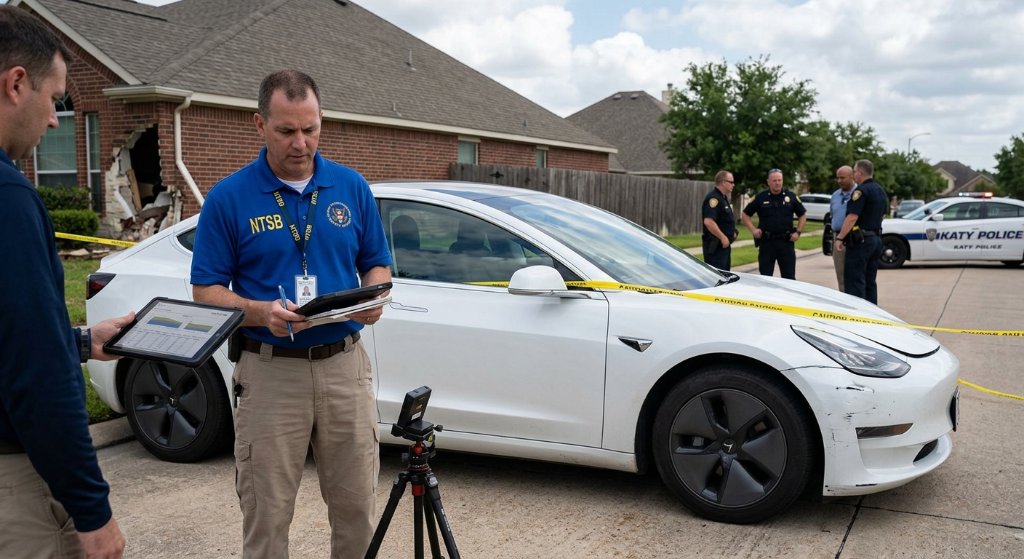
On June 21, 2026, a horrific crash in Katy, Texas, claimed the life of 76-year-old grandmother Martha Avila when a 2025 Tesla Model 3 plowed through her home at over 70 mph. While the driver immediately pointed the finger at Tesla’s controversial Full Self-Driving (FSD) software, a preliminary report from the National Transportation Safety Board (NTSB) has delivered a definitive blow to those claims. The agency’s findings confirm that driver action—not a failure of the vehicle's automated systems—caused the fatal collision.
The NTSB's swift investigation highlights a long-standing tension in the electric vehicle sector: the gap between public perception of autonomous technology and the reality of human error. For years, Tesla's Autopilot and FSD systems have remained under an intense regulatory microscope, with critics and legal teams quick to blame the tech for high-profile incidents. However, the telemetry in this case reveals a much older, highly familiar culprit: severe pedal misapplication masked as a technological malfunction.
Telemetry Exposes 100% Accelerator Override
According to the NTSB’s preliminary report, the 44-year-old driver, Michael Butler, had engaged FSD (Supervised) while traveling down Rose Hollow Lane, a residential street with a posted speed limit of 30 mph. However, the vehicle’s black box data tells a damning story of what happened next. Butler manually overrode the system by flooring the accelerator pedal, driving the electric sedan to speeds exceeding 70 mph before veering off the road and crashing.
The key findings from the NTSB's telemetry retrieval paint a clear picture of the final seconds before impact:
- Total Driver Override: The driver fully depressed the accelerator pedal to 100%, which instantly overrode FSD's speed controls.
- Extreme Residential Speed: The Model 3 reached a peak speed of 73 mph in a 30 mph zone prior to crashing into the front room of the Avila residence.
- Persistent Pedal Input: Telemetry indicates the driver kept the accelerator pressed even after the vehicle departed the roadway and began its trajectory toward the house.
- Pending Criminal Liability: Following the data release, authorities charged Butler with manslaughter. He also faces a civil lawsuit from the victim's family, which initially targeted both the driver and Tesla.
The Mirage of 'Sudden Unintended Acceleration'
This case is a textbook example of "sudden unintended acceleration" (SUA)—a phenomenon that has plagued the automotive industry for decades, famously targeting Toyota in the late 2000s. In almost every major federal investigation into SUA, regulators have found that drivers mistakenly stomped on the accelerator thinking it was the brake.
Because Tesla's FSD is classified as a Level 2 advanced driver assistance system (ADAS), the driver remains the primary operator. Legally and mechanically, the driver can override FSD at any moment by turning the steering wheel or pressing the pedals. This override capability is a critical safety design, allowing human drivers to take evasive action if the system miscalculates. However, as this tragedy proves, it also means a panicked or negligent driver can easily overpower the vehicle's built-in safety parameters, leaving the software powerless to prevent a catastrophe.
Why This Matters:
- A Massive Legal Shield for Tesla: This report is a monumental win for Tesla’s legal and engineering teams. In the court of public opinion, Tesla is often guilty until proven innocent when Autopilot or FSD is involved. The NTSB’s data-backed exoneration protects Tesla from what could have been a devastating product liability ruling and severely weakens the family's $1 million civil lawsuit against the automaker.
- The Reality of Level 2 Tech: For buyers and EV enthusiasts, this incident is a stark reminder of what "Supervised" actually means. FSD is not a hands-off, eyes-off system. If you mash the pedal, the car will accelerate, ignoring any forward obstacles because it assumes the human operator has a deliberate reason for overriding the system.
- Regulators' Next Battleground: While Tesla is cleared of software malfunction, this crash will likely shift the regulatory debate. Watch for the National Highway Traffic Safety Administration (NHTSA)—which is currently conducting a broader probe into FSD safety—to ask a harder question: Should a Level 2 vehicle allow a driver to override the system and accelerate to 100% in a recognized residential zone? We may see future mandates requiring automatic emergency braking (AEB) to permanently override driver inputs if a collision is imminent, restricting a driver's absolute control over the vehicle.
The tragic loss of Martha Avila underscores the dangerous learning curve of modern driver-assist systems. While Elon Musk and Tesla's AI team have successfully proven their software did not cause this crash, the industry still faces a massive education hurdle. Until the public fully respects the division of labor between human and machine, advanced software will continue to be a scapegoat for tragic human error.