Oregon's New EV Road Tax: Individual Owners Hit Hard, Corporate Fleets Get a Free Pass
Oregon is set to implement a controversial new transportation funding law next year that will levy hundreds of dollars in new taxes and fees on many e...
Editorial Team
World Of EV
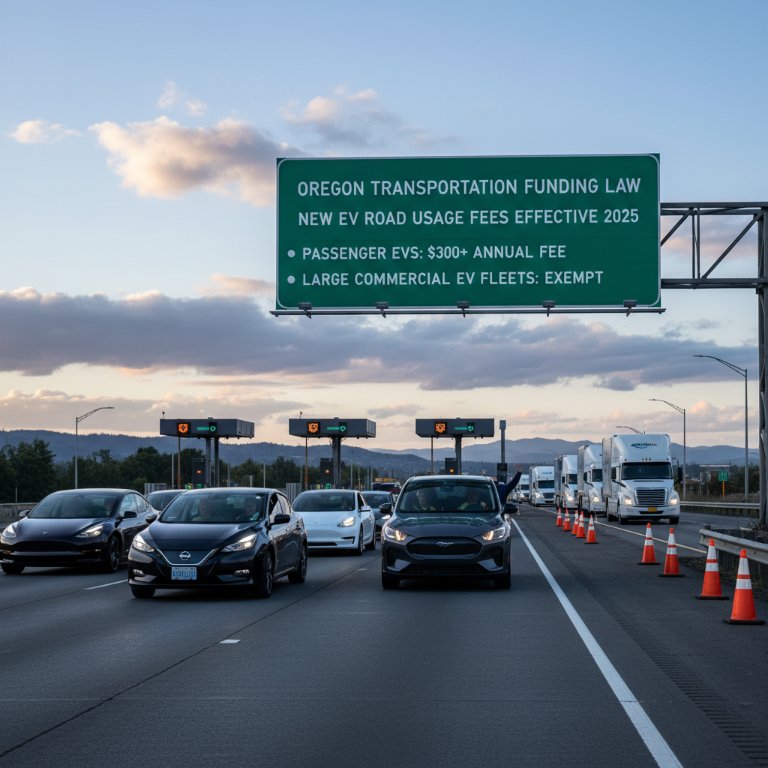
Oregon is set to implement a controversial new transportation funding law next year that will levy hundreds of dollars in new taxes and fees on many electric vehicle (EV) owners. This aggressive move aims to shore up the state's road maintenance budget, a critical issue as declining gasoline tax revenues, traditionally the lifeblood of infrastructure funding, continue to shrink with the rising adoption of electric vehicles. However, the legislation has sparked immediate concern and criticism due to a glaring exemption: large corporate fleets of medium-duty electric vehicles, a category that notably includes a significant portion of Amazon's burgeoning delivery fleet in Oregon, will be entirely exempt from these new charges.
The New Financial Burden on Oregon's EV Drivers
Starting next year, EV owners across Oregon will face a new financial reality. The specific details of the charges are still being formalized, but the expectation is that these new taxes and fees will amount to hundreds of dollars annually for many electric vehicle drivers. This direct increase in the cost of EV ownership is a significant shift, especially for early adopters who may have been drawn to EVs partly by the promise of lower operating costs and a reduced tax burden compared to their gasoline counterparts. It represents a tangible hit to the wallet for environmentally conscious consumers who have embraced sustainable transportation.
The Revenue Shift Imperative
The rationale behind Oregon's new law is undeniably rooted in a real and growing fiscal challenge. States across the U.S. have historically relied on gasoline taxes as their primary funding mechanism for road construction and maintenance. As EV sales surge—a welcome development for environmental goals—this traditional revenue stream inevitably dwindles. Oregon is not alone in grappling with this conundrum; many states are actively exploring or have already implemented various road usage charges or special EV fees to create a more sustainable funding model for their infrastructure in the age of electrification. This legislation is Oregon's answer to a pervasive problem, attempting to ensure that all road users contribute equitably to the upkeep of the infrastructure they utilize, regardless of their fuel source.
Corporate Exemption Sparks Equity Debate
While the need for new funding sources is clear, the specific design of Oregon's law raises serious questions about fairness and equity. The decision to exempt large corporate fleets of medium-duty electric vehicles from these new taxes and fees is particularly contentious. Companies like Amazon, which are rapidly deploying electric delivery vans and other medium-duty EVs, will seemingly get a free pass, avoiding the financial contributions required of individual EV owners. This exemption creates a two-tiered system where private citizens and potentially smaller businesses bear the brunt of the new taxes, while large, profitable corporations benefit from infrastructure without contributing proportionally to its maintenance. It raises the specter of corporate lobbying influencing policy in a way that disadvantages the average consumer.
Why This Matters:
Individual EV Owners Lose: The most immediate losers are Oregon's private EV owners, who will see their operating costs increase significantly. This financial hit could serve as a disincentive for prospective individual buyers, slowing consumer EV adoption in the state. It essentially penalizes those who have embraced cleaner transportation.
The State Wins (Short-Term): Oregon's transportation budget will receive a much-needed boost, addressing the immediate shortfall from declining gas tax revenues. This provides a temporary solution to a persistent funding problem.
Corporate Fleets Win Big: Large corporations operating medium-duty EV fleets, such as Amazon, are the clear winners. They benefit from public road infrastructure without incurring the new fees, effectively subsidizing their operational costs and further accelerating their fleet electrification efforts without the added tax burden. This exemption potentially distorts the market by favoring large corporate operations over individual or smaller commercial EV users.
Signals a Flawed Funding Approach: This policy highlights the ongoing struggle states face in equitably funding infrastructure in an electrified future. While the intent to offset gas tax losses is valid, exempting large corporate fleets undermines the principle of a fair and universal road usage charge. It sets a concerning precedent for future state-level EV taxation, suggesting that corporate influence can shape policy to their advantage.
Potential for Broader Impact: This move could influence how other states consider their own EV taxation strategies. If similar exemptions become common, it could create an uneven playing field nationwide, potentially hindering broader EV adoption by individuals while disproportionately benefiting large commercial entities.
In essence, Oregon's new law represents a clumsy attempt to solve a legitimate funding crisis. By disproportionately burdening individual EV owners while letting corporate giants off the hook, it risks alienating the very consumers crucial to the EV transition. This approach not only raises questions of fairness but also potentially undermines the long-term goal of widespread EV adoption by making ownership less appealing for many. As other states watch closely, the hope is that more equitable and sustainable solutions emerge that truly reflect the spirit of shared responsibility for our essential infrastructure.