Prius Battery Module 'Hack': A Temporary Fix or a Risky Bet for Aging Hybrids?
The Toyota Prius, a trailblazer in hybrid technology, cemented its legacy by proving the viability of electrification for the masses. For decades, its...
Editorial Team
World Of EV
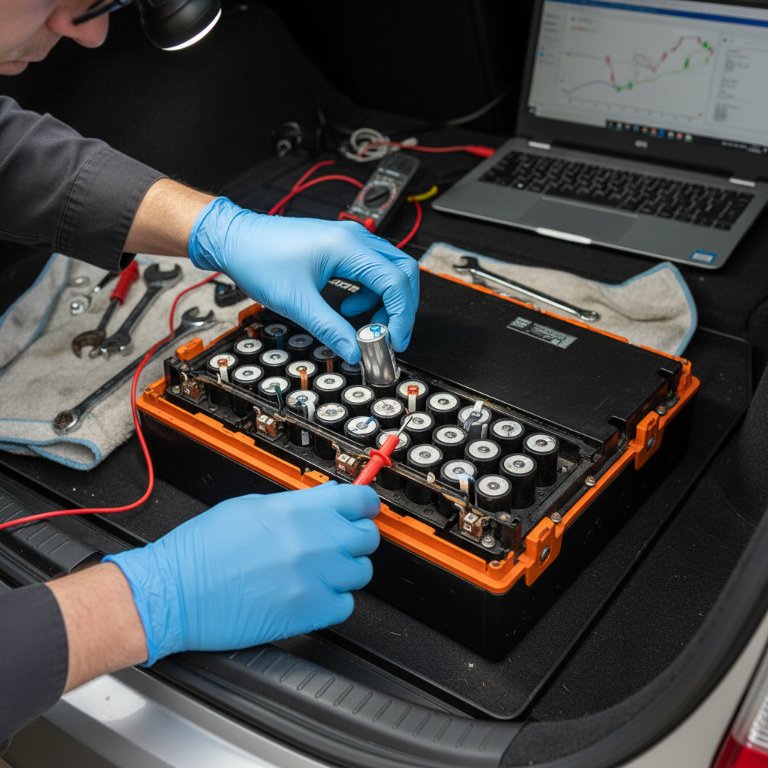
The Toyota Prius, a trailblazer in hybrid technology, cemented its legacy by proving the viability of electrification for the masses. For decades, its nickel-metal hydride (NiMH) battery packs have been the quiet workhorses, but as these pioneering vehicles age, their original batteries inevitably approach the end of their useful life. Facing exorbitant costs for full battery replacements, a burgeoning 'hack' culture has emerged, focusing on replacing individual NiMH modules. This seemingly ingenious solution, while offering a cheaper, quicker fix, ignites a critical debate about practicality, sustainability, and the long-term health of our aging hybrid fleet.
Toyota's Unintended DIY Repairability
Unlike the monolithic, often sealed battery packs found in most modern Battery Electric Vehicles (BEVs) – think Tesla's structural 4680 packs or BYD's Blade Battery – the Toyota Prius's NiMH battery was designed with a more modular approach. This inherent design has inadvertently made it a prime candidate for amateur and independent repairs. The core appeal of this 'hack' is undeniable, particularly for budget-conscious owners seeking to extend the life of their otherwise reliable vehicles.
- Accessible Architecture: Individual NiMH modules are relatively easy to access within the Prius pack, a stark contrast to the complex, integrated systems of full BEVs.
- Simplified Tooling: The repair often requires only basic hand tools, putting it within reach of mechanically inclined owners or smaller independent shops.
- Reduced Upfront Cost: Replacing a single faulty module or a handful is significantly cheaper than sourcing an entirely new or reconditioned battery pack from Toyota.
The Ghost in the Machine: Voltage Drift and Domino Failures
While the immediate gratification of a revived battery pack is tempting, the long-term effectiveness of replacing just a single NiMH module is fraught with peril. The fundamental challenge lies in the inherent characteristics of battery cells and packs. Even new modules will possess slightly different internal resistance and capacity compared to their aged brethren. When a fresh module is introduced into an old pack, it creates an imbalance that can lead to accelerated degradation of the remaining older cells.
- Voltage and State-of-Charge Imbalance: A new module will likely operate at a different voltage and state of charge, causing the older modules to work harder or become stressed as the Battery Management System (BMS) tries to balance the pack.
- Accelerated Degradation: The 'healthy' new module can mask the underlying weakness of other modules, potentially leading to a cascade of failures in the near future. Owners might find themselves replacing modules repeatedly.
- Diminished Performance: The overall performance and efficiency of the battery pack, even with a new module, may remain compromised due to the weakened state of the older cells.
Why This Matters:
This single-module replacement hack for the Toyota Prius isn't just a technical curiosity; it's a microcosm of the broader challenges facing vehicle longevity and sustainable repair in an electrified future. For Prius owners, it represents a calculated gamble – a potential short-term financial reprieve against the risk of ongoing, incremental failures and suboptimal performance. While it keeps cars on the road, it often defers, rather than solves, the inevitable need for a more comprehensive battery solution. This situation highlights the importance of cost-effective, factory-backed repair options, which have historically been a significant barrier for hybrid and EV owners.
For the aftermarket, this niche service market thrives on the modular design of older hybrids. However, as the industry transitions overwhelmingly to lithium-ion batteries and increasingly integrated, non-modular pack designs, this form of 'hackability' will largely disappear. Modern BEV packs, like those from Tesla or BYD, are designed as sealed units, making individual cell or module replacement by the end-user virtually impossible and typically voiding warranties. This forces full pack replacement, often at costs that can approach the value of the vehicle itself. The Prius 'hack' thus serves as a nostalgic echo of a repair paradigm that is quickly fading, underscoring the critical need for automakers to prioritize repairability and diagnosability in future EV battery architectures to truly promote sustainable transport.
Ultimately, while a single module replacement can offer a temporary reprieve for an ailing Toyota Prius battery, it's often a stop-gap measure that delays the inevitable. The allure of a quick, cheap fix must be weighed against the significant likelihood of recurring issues and compromised long-term performance. As the EV revolution accelerates, the industry and consumers alike will continue to grapple with the complex economics and environmental implications of battery longevity and repairability, moving beyond simple 'hacks' towards truly sustainable solutions.