Proterra's Legacy of Failure: Miami-Dade's $60 Million EV Bus Fleet Grounded, Legal Action Looms
The ghost of Proterra, once hailed as a pioneer in electric bus manufacturing, continues to haunt public transit agencies, with Miami-Dade County now ...
Editorial Team
World Of EV
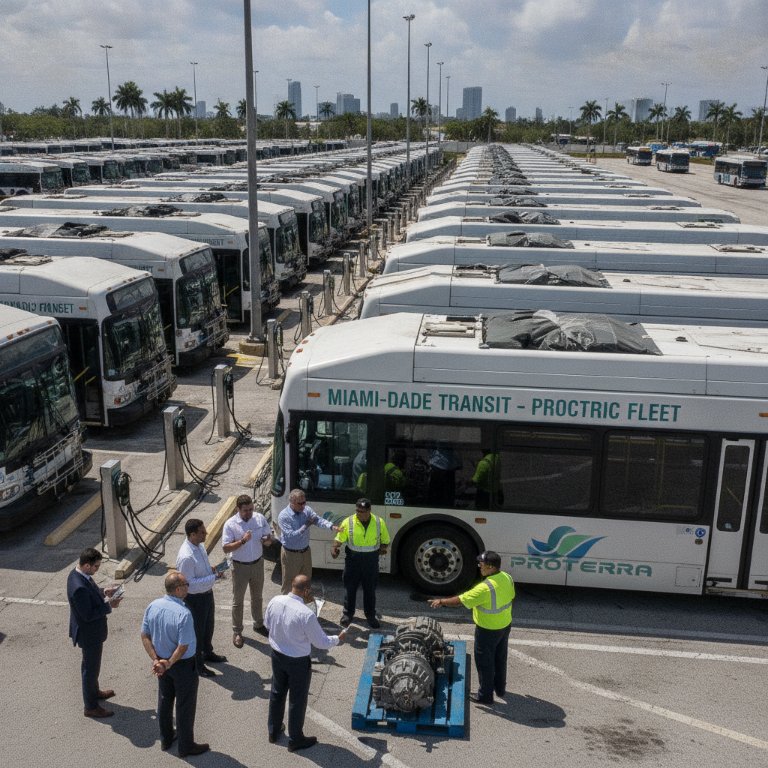
The ghost of Proterra, once hailed as a pioneer in electric bus manufacturing, continues to haunt public transit agencies, with Miami-Dade County now considering legal action over a fleet of 69 electric buses and their charging infrastructure that sit largely inoperable. Three years after the company’s dramatic bankruptcy, Miami-Dade faces a crippling $60 million investment effectively sidelined, prompting a critical re-evaluation of EV procurement strategies and the inherent risks of relying on nascent, albeit innovative, suppliers.
A $60 Million Bet Goes Sour
Miami-Dade County’s ambitious move towards electrifying its public transport system has hit a major roadblock. The vast majority of its 69 Proterra electric buses, along with their dedicated charging ports, are currently inoperable. This represents a staggering loss exceeding $60 million, an investment intended to usher in a new era of sustainable urban mobility. The primary culprit is a glaring lack of essential support:
- No Service or Maintenance: Without an active manufacturer, routine servicing and critical repairs have become impossible.
- Spare Parts Scarcity: The supply chain for proprietary Proterra components has evaporated, leaving transit officials unable to source vital replacement parts.
Proprietary Tech Creates Repair Nightmare
Compounding the operational paralysis is Proterra's reliance on proprietary technology. Unlike more standardized vehicles, these buses require specialized mechanics and unique components, effectively locking Miami-Dade into a single, now defunct, supplier ecosystem. A subsequent attempt to salvage the situation through a contract with Phoenix proved futile. Phoenix, tasked with providing necessary components, ultimately failed to deliver crucial parts like batteries and gearboxes, leading Miami-Dade to terminate their contract this past April. The predicament in Miami-Dade mirrors challenges faced elsewhere; Broward County, another Proterra customer, has already made the difficult decision to revert to a predominantly diesel fleet due to similar maintenance and parts issues. In a desperate bid to mitigate further losses and restore operational capacity, Miami-Dade is now planning to petition the Federal Transit Administration (FTA) to retire and replace these buses prematurely, well before their mandated 12-year lifespan expires.
Why This Matters:
This unfolding crisis in Miami-Dade County is far more than a local transportation snafu; it’s a stark warning for the entire public transit sector and the broader electric vehicle industry.
- The Losers: Taxpayers in Miami-Dade bear the brunt of a squandered $60 million, facing disruptions to public service and the costs of early replacement. The reputation of electric buses in public transit takes a significant hit, potentially slowing adoption in other municipalities. Proterra’s legacy is further cemented as a cautionary tale of rapid expansion without sustainable long-term support.
- The Crucial Lesson: This saga underscores the absolute necessity for robust long-term support, parts availability, and transparent technology from EV manufacturers, especially when dealing with public funds. The allure of cutting-edge tech must be balanced with the practicality of maintenance over a vehicle’s decades-long service life. Proprietary systems, while potentially offering performance advantages, become liabilities when a company falters.
- Market Signal: The move by Broward County back to diesel and Miami-Dade’s plea to the FTA signal increased scrutiny for EV bus procurement. Future contracts will undoubtedly include more stringent requirements for vendor stability, escrow accounts for spare parts, and potentially open-source or standardized component clauses to prevent similar collapses. This could create opportunities for established players with robust global supply chains or new entrants who prioritize comprehensive aftermarket support.
Miami-Dade's unfortunate experience with its Proterra fleet serves as a sobering reminder that innovation must be coupled with resilience. While the push for electrification in public transit remains vital, this incident highlights that successful deployment hinges not just on initial vehicle performance, but on the enduring commitment and viability of the suppliers behind them. The path forward for public transit electrification must prioritize not just the 'what,' but the 'how' – ensuring reliable, supportable solutions that don't leave counties in a multi-million-dollar lurch.