Reeves Moves to Level the Charging Field: VAT Cut Aims to Shield EV Drivers from Road Tax Impact
The UK government is reportedly considering a critical policy shift that could significantly ease the financial burden on electric vehicle (EV) driver...
Editorial Team
World Of EV
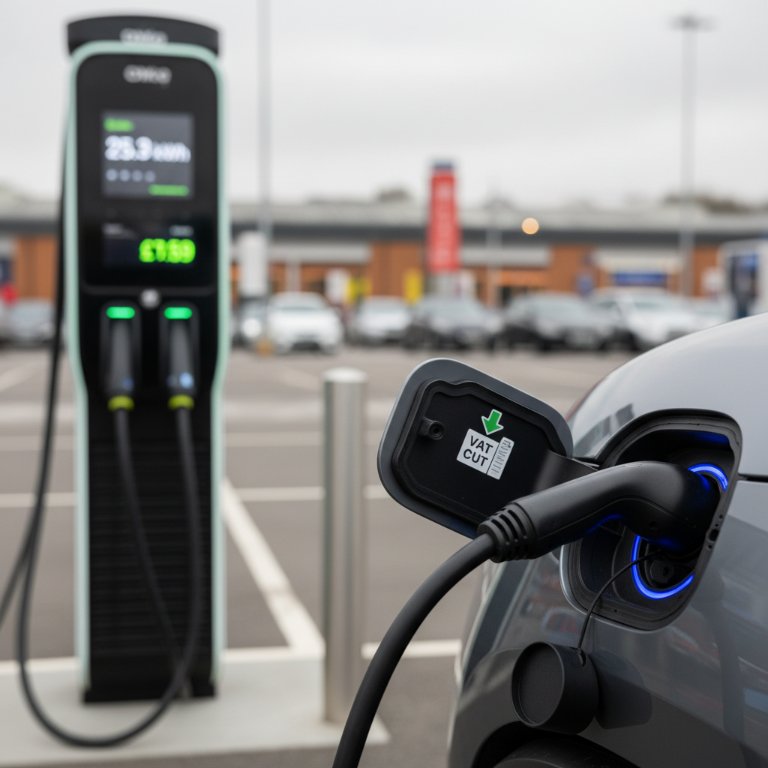
The UK government is reportedly considering a critical policy shift that could significantly ease the financial burden on electric vehicle (EV) drivers, particularly those reliant on public charging infrastructure. Chancellor Rachel Reeves is mulling a reduction of VAT on public EV charging from the current 20% to a more palatable 5%. This strategic move is poised to align public charging costs with the lower rate enjoyed by home chargers, directly addressing mounting concerns over the impending 3p-per-mile road tax slated for April 2028.
This proposed adjustment comes at a pivotal moment for the UK's burgeoning EV market. While home charging has always benefited from the standard 5% VAT on domestic electricity, public charging networks have been subject to the full 20% business rate, creating a clear cost disparity and an inherent inequity for drivers without off-street parking. This disparity, coupled with the looming road tax, threatened to undermine consumer confidence and potentially decelerate the nation's ambitious EV adoption targets.
A Direct Response to the Looming Road Tax
The government's proactive consideration of this VAT reduction is a clear acknowledgment of the financial anxieties among EV drivers. The upcoming 3p-per-mile road tax on electric cars, set to commence in April 2028, has cast a shadow over the long-term cost benefits of EV ownership, especially for high-mileage users. By slashing VAT on public charging, the Chancellor aims to create a crucial offset:
- Mitigating Cost Increases: The reduced VAT directly lowers the per-kWh cost at public chargers, partially cushioning the impact of the new road tax.
- Promoting Equity: This policy specifically targets drivers who lack home charging access—predominantly urban residents and those in apartments—who often face higher charging costs and have fewer options for managing their energy expenses.
- Sustaining Demand: Concerns that the new tax could dampen EV demand and negatively affect customer experience are directly addressed by making public charging more affordable and predictable. This ensures that the transition to EVs remains financially attractive for a broader segment of the population.
Why This Matters:
This potential VAT reduction is far more than a mere fiscal adjustment; it's a significant strategic signal from the government regarding its commitment to a smooth and equitable EV transition. It acknowledges a critical flaw in the current charging ecosystem—the penalization of those without driveways—and takes concrete steps to rectify it.
- Winners: Primarily, EV drivers without home charging access stand to gain immensely, as their per-mile running costs become more competitive and predictable. Charging network operators may also see increased utilization as public charging becomes more appealing. The broader EV market wins by maintaining consumer confidence and momentum towards electrification.
- Losers: Traditional internal combustion engine (ICE) vehicles indirectly lose ground as the total cost of EV ownership becomes even more attractive relative to their petrol and diesel counterparts.
- Market Signal: This move signals that the government is listening to industry and consumer concerns. It demonstrates a willingness to adapt policy to support the EV transition, even while introducing new taxation measures. It could bolster investor confidence in public charging infrastructure and provide much-needed stability to the used EV market.
- Long-term Implications: While not entirely negating the impact of the 3p-per-mile road tax for all drivers, this VAT cut is a powerful step towards leveling the playing field. It helps ensure that the benefits of EV ownership are accessible to a wider demographic, crucial for achieving widespread adoption and meeting ambitious climate targets. It mitigates the risk of a two-tiered EV society, where only those with home charging truly reap the full financial rewards.
This proposed VAT cut on public EV charging represents a shrewd and necessary intervention by Chancellor Reeves. It’s a clear indication that the government understands the nuances of the EV transition, recognizing that infrastructure and equitable access are just as critical as the vehicles themselves. As the UK accelerates towards its net-zero goals, policy decisions like this will be instrumental in ensuring that no driver is left behind in the journey to an electric future. The automotive world will be watching closely to see if this consideration translates into concrete policy.