Renault’s Circular Revolution: Remanufactured EV Motors Promise To Slash Maintenance Costs By 30%
As the first generation of mainstream electric vehicles slides out of factory warranties, a dark cloud has hung over the used EV market: the terrifyin...
Editorial Team
World Of EV
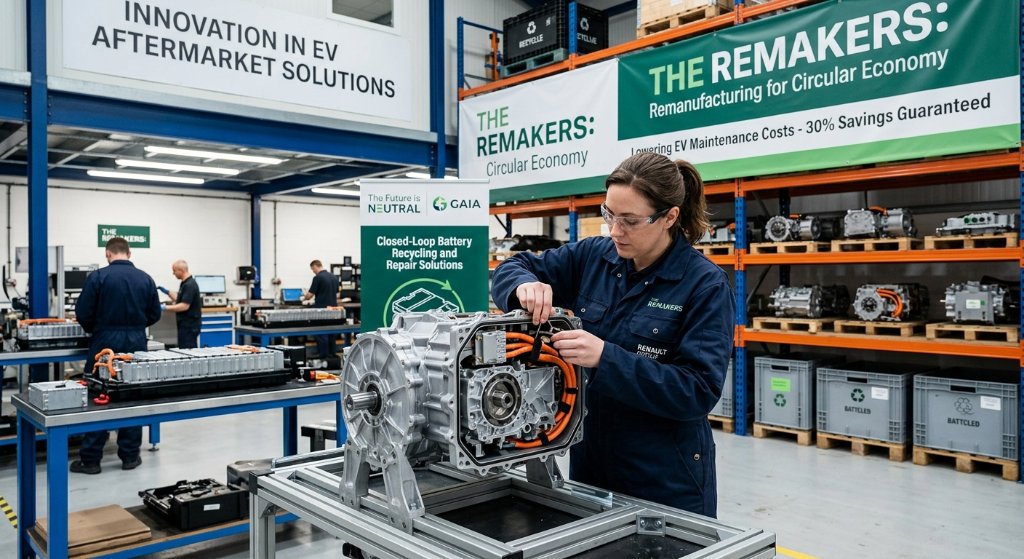
As the first generation of mainstream electric vehicles slides out of factory warranties, a dark cloud has hung over the used EV market: the terrifying cost of out-of-warranty repairs. Replacing a degraded battery pack or a failed electric drive unit has historically meant writing off the entire vehicle. However, Renault Group is attempting to rewrite this narrative. Ahead of the prestigious Automechanika Frankfurt 2026 trade fair, the French automaker's dedicated circular economy subsidiary, The Future is NEUTRAL, has unveiled a suite of aftermarket solutions designed to radically lower EV maintenance costs and establish a truly sustainable second-life ecosystem.
Through its specialized subsidiaries—including THE REMAKERS, GAIA, INDRA, and OPISTO—Renault is proving that circular automotive ecosystems are no longer an environmentalist pipe dream, but a highly competitive industrial reality. By offering remanufactured electric motors and power electronics that perform like new at a fraction of the price, Renault is tackling the Achilles' heel of EV ownership: long-term affordability and residual value.
The Flins Refactory and "As Good as New" Motors
At the heart of this initiative is THE REMAKERS, operating out of Renault’s historic Flins Refactory—a former vehicle assembly plant in France that has been brilliantly repurposed into Europe's premier circular economy hub. Rather than simply recycling metal, THE REMAKERS utilize advanced reverse engineering to rebuild high-value EV components.
The highlight of their Automechanika showcase is the rollout of a European electric motor remanufacturing service. THE REMAKERS are delivering refurbished electric motors that carry a 100% "as good as new" manufacturer guarantee, yet cost an average of 30% less than a brand-new factory unit.
Key highlights of this remanufacturing ecosystem include:
- Massive Cost Savings: Electric motors and power electronics are remanufactured to OEM standards, saving consumers and fleet operators an average of 30% compared to new parts.
- Extreme Resource Efficiency: The industrial refurbishment process is so precise that it retains up to 99% of the original electric motor's weight, keeping valuable raw materials out of landfills.
- Power Electronics Integration: In partnership with tier-one suppliers Valeo and Continental, the program has expanded to remanufacture complex inverters and converters, providing a complete powertrain solution.
- A Massive Catalogue: THE REMAKERS’ portfolio now spans over 11,000 reference parts, catering to internal combustion, hybrid, and fully electric powertrains.
Cracking the Battery Repair Code with GAIA and OPISTO
While the electric motor represents the muscle of an EV, the battery pack is its expensive heart. To address this, Renault’s subsidiary GAIA is bringing specialized battery diagnostic, repair, and closed-loop material recycling expertise to the aftermarket. Instead of replacing an entire depleted battery pack—a cost that can easily exceed $10,000—GAIA’s techniques allow technicians to swap out individual faulty modules, restoring the battery's health at a fraction of the cost.
Supporting this ecosystem is INDRA Automobile Recycling (which will present its "Valeur 2030" circular value strategic plan) and the digital platform OPISTO. OPISTO, in which INDRA is the principal shareholder, operates a vast online marketplace providing repair shops with access to millions of traced, inspected, and guaranteed reused parts. By sourcing salvaged components from end-of-life vehicles, OPISTO can offer replacement parts at an average of 70% cheaper than brand-new equivalents, completely changing the economics of repairing older electric vehicles.
Why This Matters:
Renault's aggressive push into circular manufacturing is a strategic masterstroke that addresses the biggest barrier to mainstream EV adoption: unpredictable long-term ownership costs.
- The Winners: Used EV buyers, fleet operators, and insurance companies are the ultimate victors here. Currently, insurers write off EVs for minor battery casing damage because they lack certified, cost-effective repair pathways. GAIA’s modular battery repair and THE REMAKERS' 30% cheaper motors will dramatically lower insurance premiums and prevent premature vehicle scrappage. It also significantly boosts the residual value of used EVs, making leasing rates more attractive.
- The Losers: Traditional aftermarket parts distributors who rely on high margins for new OEM components will find themselves squeezed. Furthermore, rival automakers who treat EVs as disposable, unrepairable consumer gadgets will look increasingly out of touch as European circular economy regulations tighten.
- The Market Signal: This is a definitive signal that the "Right to Repair" era has arrived for high-voltage electric vehicles. By treating the electric powertrain as a rebuildable asset rather than a sealed, disposable black box, Renault is setting a benchmark that Tesla, BYD, and legacy German rivals will eventually be forced to emulate.
Verdict: A Sustainable Lifeline for the EV Era
Renault's "The Future is NEUTRAL" initiative proves that the transition to electric mobility cannot stop at the factory gate. For EVs to truly deliver on their environmental promise, they must be maintainable, repairable, and affordable over a multi-decade lifecycle. By transforming the historic Flins plant into a high-tech refurbishment center, Renault is not only slashing the total cost of ownership for EV drivers but also establishing a resilient, closed-loop supply chain that insulates Europe from volatile raw material markets. This is exactly the kind of industrial pragmatism the EV transition desperately needs.