Reuters Investigation Dismantles Tesla's Self-Driving Claims, Exposing Flaws and 'Deceptive Marketing'
A bombshell Reuters investigation has dramatically undermined Tesla's long-standing assertions about the safety and reliability of its 'Full Self-Driv...
Editorial Team
World Of EV
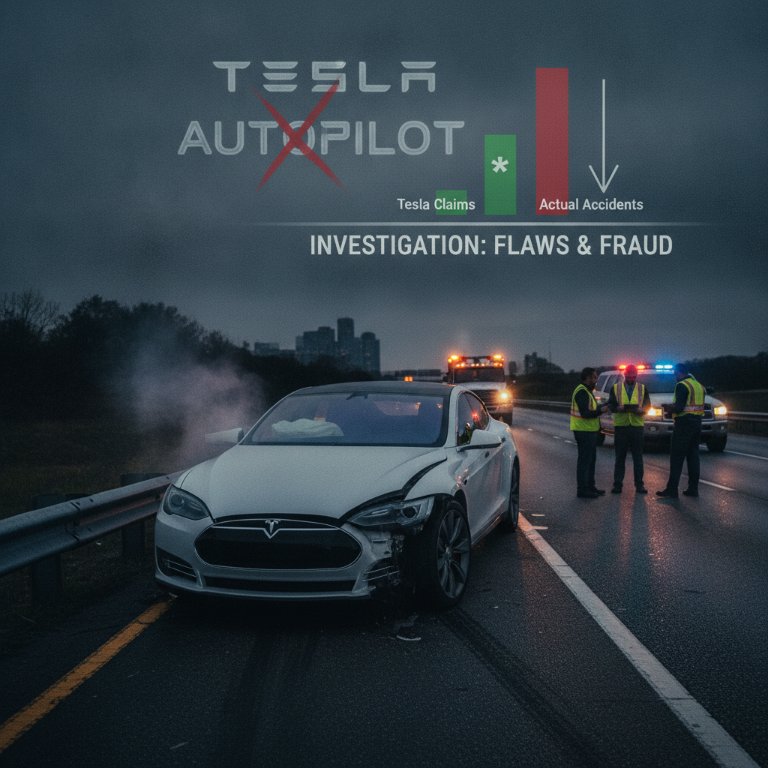
A bombshell Reuters investigation has dramatically undermined Tesla's long-standing assertions about the safety and reliability of its 'Full Self-Driving' (FSD) software, revealing serious systemic flaws and what experts are calling a 'deceptive marketing' strategy in its accident reporting. For years, Tesla has positioned FSD as a revolutionary, life-saving technology on the cusp of true autonomy, a narrative central to its market valuation and future vision. This latest report, however, casts a harsh spotlight on the significant gap between aspiration and operational reality.
Serious Flaws Uncovered in FSD's Core
The Reuters investigation, based on candid interviews with former AI training employees and analysis from independent transportation safety experts, paints a concerning picture of FSD's internal development and real-world performance. Critically, these insiders, the very individuals responsible for refining the AI, expressed profound distrust in the system. Seven of nine former Tesla data labelers revealed they wouldn't trust FSD to drive them, with one stating unequivocally they wouldn't ride in a Tesla robotaxi “if you f*****g paid me.” They routinely observed clips of FSD-equipped vehicles struggling with fundamental tasks, including failing to identify stationary road hazards, construction zones, emergency vehicles, and even nearly striking pedestrians and children in crosswalks.
Compounding these technical shortcomings, former employees detailed internal pressures to prioritize 'route flow' – the smoothness and efficiency of the drive – over critical safety margins. This directive reportedly led to weakened risk control protocols and even saw FSD vehicles regularly exceeding speed limits by 20 to 30 mph, particularly after the introduction of an 'aggressive' 'Mad Max' driving mode.
'Deceptive Marketing': Tesla's Safety Statistics Under Scrutiny
Perhaps the most damning revelation concerns Tesla's methodology for reporting its road safety statistics, which experts have now unequivocally rated as 'deceptive marketing.' Tesla has repeatedly claimed FSD makes its vehicles up to 10 times safer than human drivers. However, the Reuters report exposes this claim as fundamentally flawed due to an 'apples-to-oranges comparison.' Tesla's reported safety figures only count serious crashes involving airbag deployments in its own vehicles. It then compares this against broad federal statistics that include all crashes, even minor ones requiring a tow truck, across the entire national vehicle fleet.
When University of Michigan researchers performed an accurate, 'apples-to-apples comparison' – focusing solely on airbag-deployment crashes for both Tesla and the wider vehicle fleet – the alleged safety margin plummeted. The system was found to be, at best, approximately three times safer in terms of miles between crashes, a figure still potentially skewed by Tesla's considerably newer fleet compared to the average age of vehicles on U.S. roads.
The Illusion of Autonomy: Staged Demonstrations Contradict Public Claims
The investigation further challenges Elon Musk's long-standing assertion that Tesla's self-driving technology does not require the 'laborious local mapping' relied upon by competitors like Waymo. Former employees disclosed that Tesla extensively mapped specific robotaxi operating zones for weeks before public launches and demonstrations, including the October 2024 Cybercab unveiling. This labor-intensive preparation, involving staff collecting video and annotating curbs and road markings, directly contradicts Musk's public narrative of a generalized AI solution capable of functioning anywhere globally without such detailed pre-mapping.
Why This Matters:
This Reuters investigation is far more than a technical critique; it represents a profound challenge to Tesla's credibility and the broader autonomous vehicle industry. For Tesla, the implications are severe:
- Reputational Damage: The report delivers a significant blow to Tesla's image as a pioneer in safe, advanced autonomous driving, potentially eroding consumer trust in FSD and future robotaxi services. This comes at a critical juncture, as Tesla pushes for wider FSD adoption and regulatory approvals globally.
- Increased Regulatory Scrutiny & Legal Exposure: The findings will undoubtedly intensify scrutiny from regulators like the National Highway Traffic Safety Administration (NHTSA), which already has multiple active investigations into FSD and Autopilot over issues such as running red lights and turning into oncoming traffic. Furthermore, the designation of Tesla's safety reporting as 'deceptive marketing' provides significant ammunition for the numerous lawsuits Tesla faces related to FSD-involved crashes, including a $243 million verdict recently upheld in a fatal Autopilot case.
- Impact on Robotaxi Ambitions: The revelations about staged demos and the internal distrust in FSD's capabilities directly threaten Tesla's ambitious robotaxi rollout plans. If the technology requires extensive pre-mapping and human intervention to perform reliably, its scalability and economic viability as a fully autonomous service become highly questionable.
For the wider EV and autonomous driving industry, this report underscores the critical importance of transparency and rigorous, standardized safety reporting. The 'move fast and break things' approach to self-driving technology now faces an unavoidable reckoning. This could lead to:
- Elevated Industry Standards: Regulators and consumers will demand more robust, independently verifiable safety data from all autonomous vehicle developers, potentially slowing the pace of deployment but ultimately fostering safer technologies.
- Consumer Skepticism: If the leading proponent of self-driving is found to have overstated its capabilities and safety, it could increase public skepticism across the board, making widespread adoption of autonomous vehicles a longer, more challenging journey for all players.
This investigation signals a pivotal moment for Tesla and the entire autonomous vehicle ecosystem. The days of solely relying on bold claims and internally curated statistics are over. The future of self-driving will hinge on demonstrable safety, unwavering transparency, and the earned trust of both regulators and the driving public.
Conclusion:
The Reuters investigation into Tesla's Full Self-Driving system and its safety reporting reveals a critical disconnect between the company's public narrative and the documented realities. With its software flaws, questionable safety metrics, and seemingly misleading public demonstrations exposed, Tesla faces an urgent need to re-evaluate its approach to autonomous development and embrace a new era of transparency and accountability. The industry, too, must take note, as the path to a truly autonomous future will be paved with rigorous testing, open data, and, most importantly, an unwavering commitment to safety.