Rivian Charts Ambitious New Course: Licensing EV Architecture & Software While R2 Prepares for Mass Market Assault
Rivian, once seen primarily as a niche player in the premium electric truck and SUV market, is now signaling a significant strategic pivot that could ...
Editorial Team
World Of EV
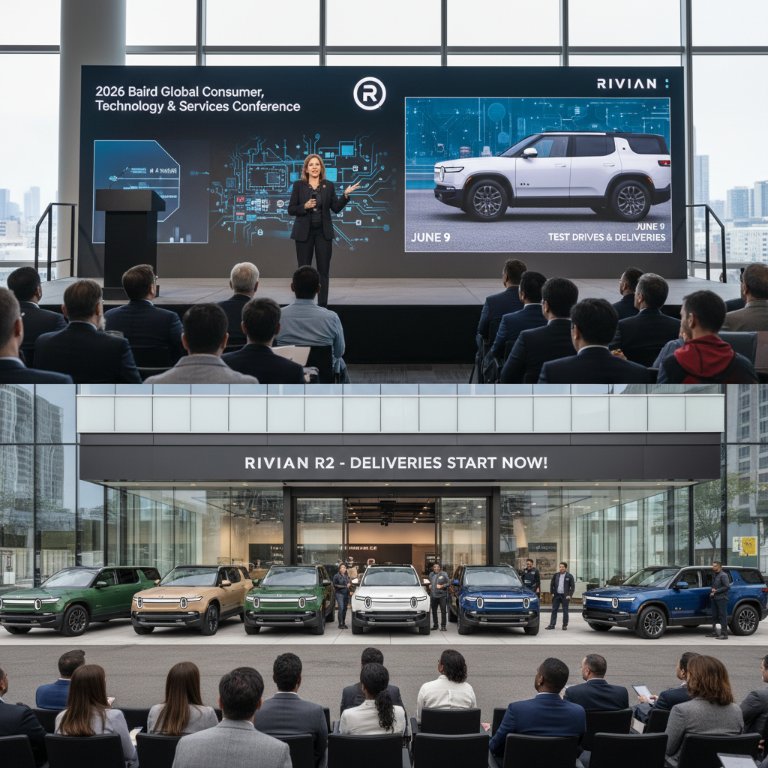
Rivian, once seen primarily as a niche player in the premium electric truck and SUV market, is now signaling a significant strategic pivot that could redefine its role in the broader automotive landscape. At the 2026 Baird Global Consumer, Technology & Services Conference, Rivian’s CFO, Claire McDonough, unveiled the company’s intent to aggressively pursue licensing opportunities for its highly regarded electrical architecture, advanced software, and autonomous-driving hardware and software to other automakers. This move represents a profound shift from a pure-play OEM to a potential technology provider, aiming to leverage its substantial R&D investments beyond its own vehicle lineup.
This announcement arrives just as Rivian prepares for another monumental step: the imminent market launch of its R2 mid-size SUV. External customer deliveries and crucial test drives of the R2 are slated to commence on June 9, directly from Rivian showrooms and service centers across the United States. The concurrent push into tech licensing and the aggressive rollout of its more accessible R2 model signals a dual-pronged strategy designed to accelerate growth, diversify revenue streams, and firmly establish Rivian as a major force in the evolving EV ecosystem.
Rivian's Tech Takes Center Stage: A New Revenue Stream?
Rivian’s decision to open its proprietary technology for licensing is a bold play in a fiercely competitive industry. For years, the company has invested heavily in developing a robust, vertically integrated electrical architecture and software stack that underpins the critically acclaimed R1T and R1S. Rather than letting this intellectual property remain exclusively within its own vehicles, Rivian now sees a significant opportunity to monetize these assets.
Key components Rivian aims to license include:
- Electrical Architecture: The foundational wiring and power delivery systems that form the backbone of an EV.
- Proprietary Software: Everything from infotainment systems to battery management and vehicle control software.
- Autonomous-Driving Hardware and Software: The sensors, processors, and algorithms that enable advanced driver-assistance systems and, eventually, full self-driving capabilities.
This strategy mirrors, in some ways, moves by established tech giants, suggesting Rivian views itself not just as a carmaker, but as a technology company with automotive applications. For other automakers struggling with the immense cost and complexity of developing a ground-up EV platform, licensing Rivian's proven tech could offer a significant shortcut, potentially accelerating their own EV roadmaps and reducing development expenditures.
R2's Imminent Debut: Rivian's Volume Play Begins
While the licensing talks unfold behind the scenes, the tangible reality of Rivian’s expansion will be on full display starting June 9 with the R2. This mid-size SUV is critical for Rivian’s ambition to move beyond its premium, lower-volume R1 platform and capture a larger share of the mainstream EV market. Test drives and initial deliveries will offer the public their first real-world experience with a vehicle designed to be more accessible in terms of price point and size than its R1 siblings.
The R2 represents Rivian's strategic entry into the highest-volume segment of the EV market, aiming to capitalize on strong demand for compact and mid-size SUVs. Its success is paramount for scaling production volumes and achieving long-term profitability, especially as the company navigates the capital-intensive world of automotive manufacturing. This vehicle will be a litmus test for Rivian’s ability to translate its premium brand appeal into a broader consumer offering.
Why This Matters:
This dual announcement from Rivian signals a pivotal moment for the company and potentially the wider EV industry. For Rivian, it's a clear move to diversify its revenue streams beyond vehicle sales, which is crucial for achieving sustained profitability in a sector known for its tight margins and high capital requirements. Licensing its technology could turn its R&D investments into a significant asset, validating its engineering prowess and creating a 'picks and shovels' play in the EV gold rush.
Who Wins? Rivian stands to gain significantly, potentially unlocking new, high-margin revenue streams and solidifying its financial footing. Other automakers struggling with EV development could win by gaining access to a mature, robust EV platform, saving billions in R&D and years of development time. This could accelerate the overall transition to EVs across the industry. Consumers might also win, as a broader range of robust, advanced EVs could hit the market faster.
Who Loses? Traditional Tier 1 suppliers specializing in component development might face increased competition from OEMs like Rivian offering integrated solutions. Furthermore, EV startups that solely rely on developing their own unique platforms without a licensing strategy might find themselves at a disadvantage, especially if they struggle to scale production and achieve profitability. The competitive landscape for proprietary EV architecture could intensify, putting pressure on those without a clear monetization strategy for their tech.
What does this signal? It signals a maturation of the EV platform market. As early leaders emerge with proven technology, the industry may see more vertical integration and strategic partnerships, moving away from purely bespoke platform development for every new entrant. It also underscores Rivian's deep confidence in its technological stack, positioning itself not just as an automaker, but as a critical technology enabler for the future of mobility.
This isn't merely a strategic option for Rivian; it's a critical path forward. The significant investment in its Normal, Illinois plant and the upcoming Georgia facility demand scale that vehicle sales alone might not deliver quickly enough. Technology licensing offers a powerful avenue to leverage intellectual property and generate revenue independently of production bottlenecks or fluctuating consumer demand, transforming Rivian's growth trajectory from linear to potentially exponential.
Rivian’s aggressive push into technology licensing, coupled with the critical R2 launch, paints a picture of a company evolving rapidly beyond its initial startup phase. This dual strategy is a calculated move to secure its financial future and cement its position as a leading innovator, poised to influence not just the vehicles on the road, but also the underlying technology that powers them. The coming months, particularly post-June 9, will be crucial in demonstrating the market's reception to both Rivian's accessible R2 and its ambitious tech-sharing vision.