Rivian Declares CarPlay 'Obsolete,' Bets Big on Deep AI Integration
While much of the automotive industry scrambles to integrate Apple CarPlay and Android Auto as a must-have feature, Rivian, the innovative electric ve...
Editorial Team
World Of EV
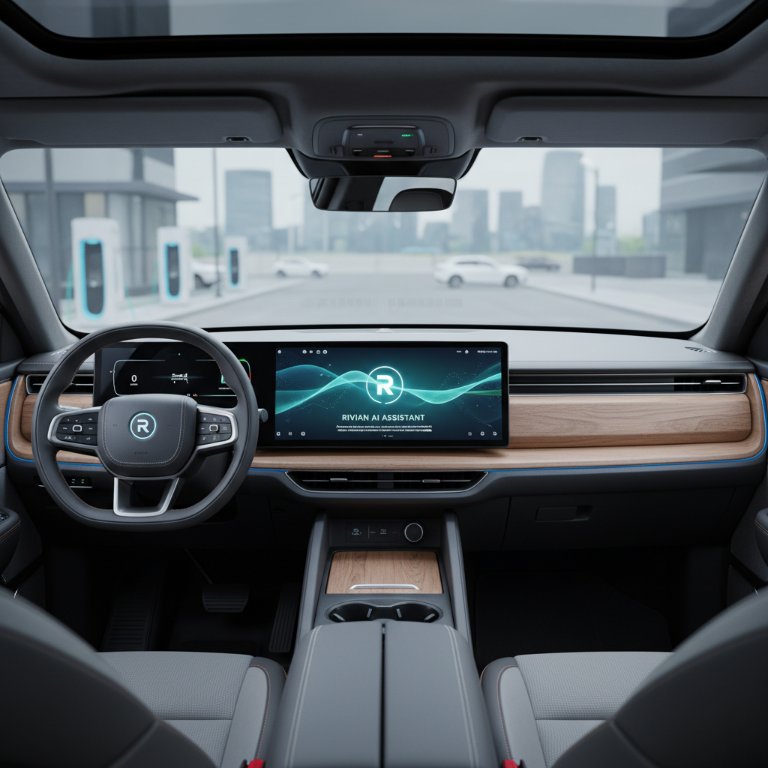
While much of the automotive industry scrambles to integrate Apple CarPlay and Android Auto as a must-have feature, Rivian, the innovative electric vehicle manufacturer, is doubling down on its proprietary software. In a candid interview on The Verge's Decoder podcast, Wassym Bensaid, Rivian's software chief, firmly articulated the company's continued refusal to adopt Apple CarPlay, signaling a bold and potentially polarizing direction for the brand. This isn't merely a feature omission; it's a strategic declaration in the ongoing battle for the digital cockpit, aligning Rivian with a select few, most notably Tesla, in prioritizing an end-to-end integrated user experience over smartphone mirroring.
The Vision: End-to-End Control vs. Screen Mirroring
Bensaid's explanation cuts to the core of Rivian's philosophy: a preference for 'end-to-end integration' that offers seamless harmony between hardware and software. He argues that screen mirroring solutions like CarPlay 'take over every single pixel in the car,' diluting the automaker's ability to craft a cohesive and deeply integrated experience. This stance stands in stark contrast to the majority of manufacturers, who have largely capitulated to consumer demand for familiar smartphone interfaces in their vehicles. Rivian's approach implies a fundamental belief that the in-car experience should be an extension of the vehicle's unique capabilities, not merely a projection of a mobile device.
The Future is AI, Not Apple
Looking ahead, Bensaid envisions a future where the entire debate over CarPlay becomes 'completely obsolete.' Rivian's long-term strategy hinges on 'deep AI integration into the car,' where owners will access app functionality not through a mirrored phone interface, but directly through an advanced AI agent embedded within the vehicle's operating system. This ambitious vision suggests a move towards a more intuitive, voice-activated, and context-aware system that understands user intent and integrates seamlessly with vehicle functions, potentially offering a richer experience than current smartphone projection technologies. However, the execution of such a sophisticated AI agent will be critical in justifying the absence of a beloved feature like CarPlay.
Shifting Customer Perceptions
Perhaps the most surprising revelation from Rivian's software chief concerns evolving customer interest. Bensaid reported that Rivian's internal statistics show a significant drop in customer desire for CarPlay. When their vehicles first launched, over 70% of customers reportedly wanted it. Today, that figure has plummeted to less than 25%. This data suggests a potential shift within Rivian's customer base, or perhaps a growing satisfaction with Rivian's native infotainment system and its ongoing improvements. It also raises questions about whether early adopters are simply more willing to embrace proprietary solutions, or if Rivian's own system has genuinely matured enough to mitigate the perceived need for smartphone integration.
Why This Matters:
This isn't just a technical decision; it's a profound strategic gamble by Rivian that carries significant implications for the EV market and beyond.
Who Wins:
Rivian (Potentially): If their 'deep AI integration' delivers on its promise of a superior, truly integrated, and intuitive user experience, Rivian could establish a significant competitive advantage. Full control over the software stack allows for unparalleled customization, data ownership, and potential new revenue streams. It solidifies their brand identity as a tech-forward innovator.
The Connected Car Industry: This move could accelerate the development of more sophisticated, AI-driven in-car operating systems across the industry, pushing boundaries beyond mere screen mirroring.
Who Loses:
Apple and Google (Potentially): If more automakers follow Rivian's lead, the influence of Apple CarPlay and Android Auto in the automotive sector could wane, limiting their reach into the lucrative connected car ecosystem.
Consumers (If Rivian's AI Fails): If Rivian's AI agent doesn't live up to the hype, or if it lacks the robust app ecosystem and seamless familiarity offered by CarPlay, customers could face frustration and a lack of desired functionality, potentially hurting Rivian's sales and brand loyalty in the long run.
Market Signal: Rivian's stance sends a clear signal that not all premium EV manufacturers are willing to cede control of their digital cockpits to tech giants. It highlights a growing confidence among some automakers in their ability to develop compelling in-house software experiences. This is a high-stakes bet, challenging the conventional wisdom that smartphone integration is non-negotiable for modern car buyers. For Rivian, this is a do-or-die moment for its software strategy; its success hinges entirely on delivering an AI experience that genuinely surpasses the convenience and familiarity of CarPlay.
Rivian's unwavering commitment to its proprietary software and its bold vision for AI integration represent a significant fork in the road for the automotive industry. While it carries inherent risks, particularly concerning user acceptance and the sheer complexity of delivering on such an ambitious AI promise, it also positions Rivian as a potential trailblazer in defining the next generation of in-car user interfaces. The coming years will reveal whether this calculated gamble pays off, ultimately shaping customer expectations and influencing the trajectory of connected vehicle technology for all.