Rivian Shifts Into High Gear: Doubling Down on Service Ahead of Critical R2 Launch
For too long, the promise of adventure and sustainable mobility offered by Rivian's impressive R1T and R1S has been shadowed by a persistent and frust...
Editorial Team
World Of EV
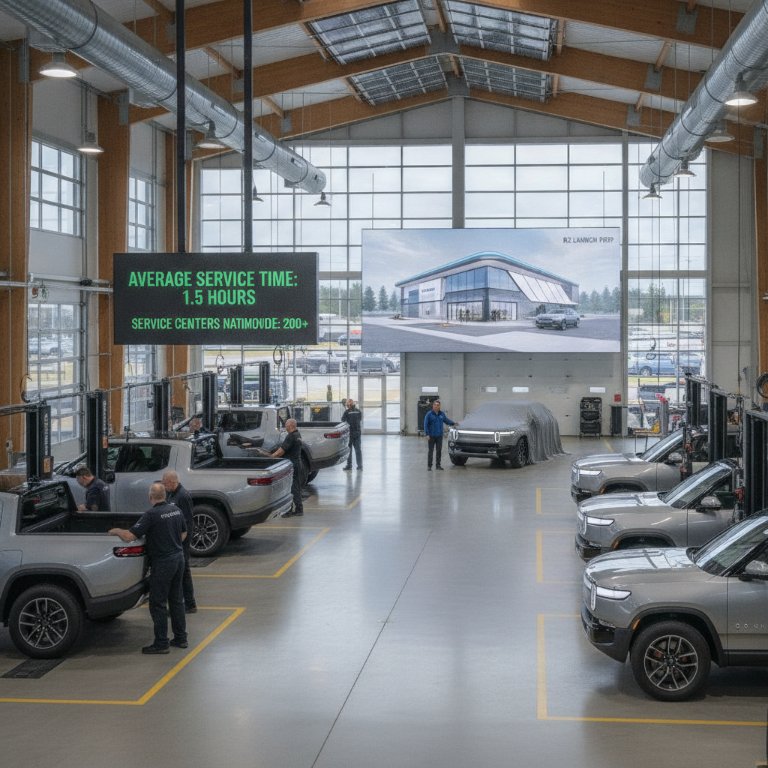
For too long, the promise of adventure and sustainable mobility offered by Rivian's impressive R1T and R1S has been shadowed by a persistent and frustrating reality for many owners: the arduous wait for service. Now, in a decisive move signaling maturity and a strategic pivot, Rivian is aggressively tackling its service bottleneck, a critical step as the company prepares for the mass-market introduction of its highly anticipated R2 model.
Rivian’s journey, much like many innovative EV startups, has been a rollercoaster of soaring highs and significant learning curves. While the R1T and R1S garnered widespread acclaim for their groundbreaking design, capability, and technology, the Achilles' heel for many early adopters quickly became the sparse and often overwhelmed service infrastructure. CEO RJ Scaringe himself candidly acknowledged this oversight, admitting the lack of sufficient service centers was a “blind spot” during the R1’s initial rollout. This admission is not merely an apology; it’s an urgent call to action, reflecting a company determined to rectify past missteps before its next major chapter unfolds.
Confronting Past Challenges: Acknowledging the Service Shortfall
Rivian’s initial success was undeniably hampered by a fundamental mismatch between vehicle delivery and service capacity. Owners, many of whom were early adopters eager to embrace the brand, found themselves facing extended wait times, significant travel distances for repairs, and a general sense of unease regarding the long-term support for their premium vehicles. This friction eroded some of the goodwill built by the R1 lineup's innovative features and performance. For an emerging brand in a fiercely competitive market, customer satisfaction, particularly post-purchase, is paramount.
A Two-Pronged Strategy: Speed and Scale
Rivian's response is a comprehensive, two-pronged attack designed to drastically improve the customer service experience. The strategy focuses on both efficiency within existing operations and a significant expansion of its physical footprint:
- Accelerating Service Times: This initiative goes beyond simply scheduling appointments. It implies a holistic approach to improving throughput, including enhanced technician training, optimized diagnostic tools, more efficient parts management, and streamlined workflows. The goal is to get vehicles in and out of service centers faster, minimizing downtime for owners.
- Doubling Service Centers: This is perhaps the most impactful element for prospective R2 buyers. By significantly increasing its brick-and-mortar presence, Rivian aims to drastically reduce the geographical barriers to service. More locations mean less travel for owners, greater convenience, and ultimately, a substantial reduction in appointment wait times. This expansion is crucial for supporting a much larger and more geographically diverse customer base.
The R2 Imperative: Scaling for Mainstream Success
This aggressive push for service expansion is not merely an act of contrition; it is a strategic imperative directly tied to the impending launch of the R2. The R2 is designed to be Rivian's volume seller, targeting a broader market segment with a more accessible price point. Unlike the niche, premium R1 vehicles, the R2 will require a robust and reliable service network from day one to truly succeed. Without it, the company risks alienating a much larger potential customer base, jeopardizing its long-term growth ambitions and market position.
Why This Matters:
This isn't just news; it's a critical inflection point for Rivian. For existing R1 owners, this move signals a much-needed commitment to improving their ownership experience, potentially alleviating long-standing frustrations and enhancing resale values. For prospective R2 buyers, it offers a crucial layer of confidence, knowing that the company is proactively addressing a fundamental concern before their vehicles even hit the road. This strategy signals a maturation of Rivian as a company, demonstrating its ability to listen to customer feedback and make significant investments in foundational infrastructure. It's a proactive measure that could define the success of the R2 launch, preventing the kind of growing pains (like those experienced by Tesla in its earlier scaling phases) that can sour a brand's reputation. Ultimately, this move positions Rivian more favorably against established automotive giants entering the EV space, proving it's not just about innovative vehicles but also about comprehensive customer support. The winners are undoubtedly current and future Rivian owners, as well as the company itself, which stands to gain significant customer loyalty and market confidence by getting this right. Failing to address service could have been a 'do-or-die' moment for the R2's long-term viability, but Rivian appears to be making the right moves to solidify its future.
Conclusion:
Rivian's concerted effort to rectify its service woes marks a pivotal moment for the burgeoning EV manufacturer. By speeding up service and doubling its physical footprint, the company is not just fixing a problem; it's laying essential groundwork for the success of its mass-market R2 model. This proactive investment in customer experience is a testament to Rivian's commitment to long-term growth and its understanding that, in the competitive EV landscape, robust support is as crucial as cutting-edge engineering. The road ahead for R2 looks significantly smoother now that Rivian is finally putting its service infrastructure into high gear.