Rivian's AI Gambit: Is CarPlay's Reign Over as Midsize SUV Nears Deliveries?
Rivian, the burgeoning electric vehicle manufacturer, is poised to redefine the in-car experience, with its Chief Software Officer, Wassym Bensaid, de...
Editorial Team
World Of EV
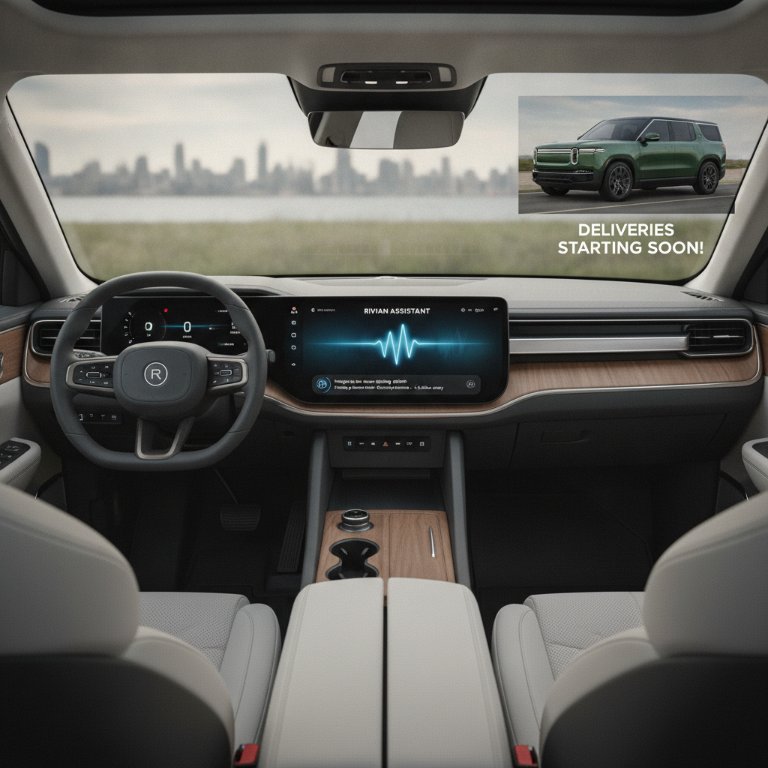
Rivian, the burgeoning electric vehicle manufacturer, is poised to redefine the in-car experience, with its Chief Software Officer, Wassym Bensaid, declaring that deeply integrated AI systems are set to supersede popular screen-mirroring solutions like Apple CarPlay and Android Auto. This bold pronouncement comes as the company's new midsize electric SUV, crucial for broader market penetration, prepares for customer deliveries, signaling a pivotal moment for Rivian's long-term strategy.
This isn't merely a philosophical stance; it's a strategic move already in motion. Rivian launched its 'Rivian Assistant' AI-powered voice tool in May, laying the groundwork for a more intuitive and integrated vehicle interaction. The company's vision isn't about replacing a phone with a car, but rather deeply embedding intelligent functionality directly into the vehicle's core operating system, moving beyond the phone-as-hub paradigm that CarPlay and Android Auto represent.
The AI Revolution Takes Hold
Bensaid's assertion challenges the established order of in-car infotainment. For years, OEMs have grappled with the user experience gap, often ceding control to tech giants like Apple and Google, who provide familiar, phone-based interfaces. While convenient for consumers, this approach limits an automaker's ability to truly differentiate its digital cockpit and integrate vehicle-specific functions seamlessly. Rivian's counter-narrative posits that a deeply integrated AI can:
- Personalize the driving experience: Tailoring settings, navigation, and entertainment based on driver preferences and habits.
- Optimize vehicle performance: Proactively suggesting routes based on charging needs, traffic, and battery status.
- Enhance safety and convenience: Integrating vehicle controls, diagnostics, and advanced driver-assistance systems (ADAS) directly into the AI assistant.
This isn't a new concept for the industry; Tesla, for instance, has always maintained its proprietary infotainment system, eschewing CarPlay and Android Auto entirely. However, Rivian's explicit declaration of AI as the replacement rather than just an alternative highlights a growing confidence in its in-house software capabilities and a clear intent to own the digital relationship with its customers.
Expanding Rivian's Reach
Simultaneously, Rivian is on the cusp of a significant expansion of its market footprint with the imminent launch of its new midsize electric SUV. This vehicle is critical for the brand, designed to attract a broader customer base beyond the niche adventure segment served by the R1T pickup and R1S SUV. The midsize SUV market is fiercely competitive, dominated by established players and highly successful models like the Tesla Model Y, Hyundai IONIQ 5, and Ford Mustang Mach-E. To succeed, Rivian needs to offer a compelling package of performance, utility, and, crucially, a differentiated user experience. The integrated AI system could be a key component of that differentiation, offering a premium, seamless interaction that stands apart from the smartphone-mirroring solutions prevalent in many competitors.
Why This Matters:
Rivian and OEM Control: By developing its own AI, Rivian gains greater control over the user experience, brand identity, and — crucially — valuable driver data. This allows for deeper integration of vehicle functions and services, potentially creating a more cohesive and distinctive product. This move signals to the market that Rivian is betting big on vertical integration, not just in hardware but in critical software too.
Apple and Google's Challenge: The widespread adoption of OEM-specific AI systems could erode the dominance of CarPlay and Android Auto, forcing Apple and Google to rethink their automotive strategies. While they offer convenience, their 'mirroring' nature inherently limits true vehicle integration. This is a clear threat to their aspirations of being the central hub for the connected car experience.
Consumer Impact and Fragmentation: For prospective buyers, this push away from familiar mirroring systems could be a double-edged sword. While Rivian promises a more integrated and personalized experience, it also means learning a new interface. If multiple OEMs pursue disparate proprietary AI systems, it could lead to fragmentation in the in-car user experience, potentially frustrating customers who prefer a consistent interface across different vehicles. However, a truly superior integrated experience could easily win over users looking for innovation.
A 'Do-or-Die' Moment? For Rivian, this isn't a do-or-die moment in terms of immediate survival, but it is a critical strategic gamble for long-term growth and market leadership. Successfully delivering on the promise of a superior, AI-driven experience in its high-volume midsize SUV will be instrumental in distinguishing itself from a crowded field and attracting a mainstream audience. Failure to execute flawlessly, however, could alienate potential buyers accustomed to the familiarity and reliability of existing solutions. It signals Rivian's ambition to be a full-stack technology company, not just an automaker.
Rivian's dual offensive – a bold vision for AI-driven infotainment and the expansion into the critical midsize SUV segment – marks a decisive push for market relevance and technological leadership. As customer deliveries for the new SUV approach, all eyes will be on whether Rivian can deliver on its ambitious promises and truly usher in a new era of deeply integrated, AI-powered vehicles, potentially leaving CarPlay and Android Auto in the rearview mirror.