Rural America Hits the Brakes on EV Adoption: A Deep Dive into Perception vs. Reality
A recent University of Michigan survey of 1,000 rural Michigan residents delivers a sobering reality check for the electric vehicle industry: only a m...
Editorial Team
World Of EV
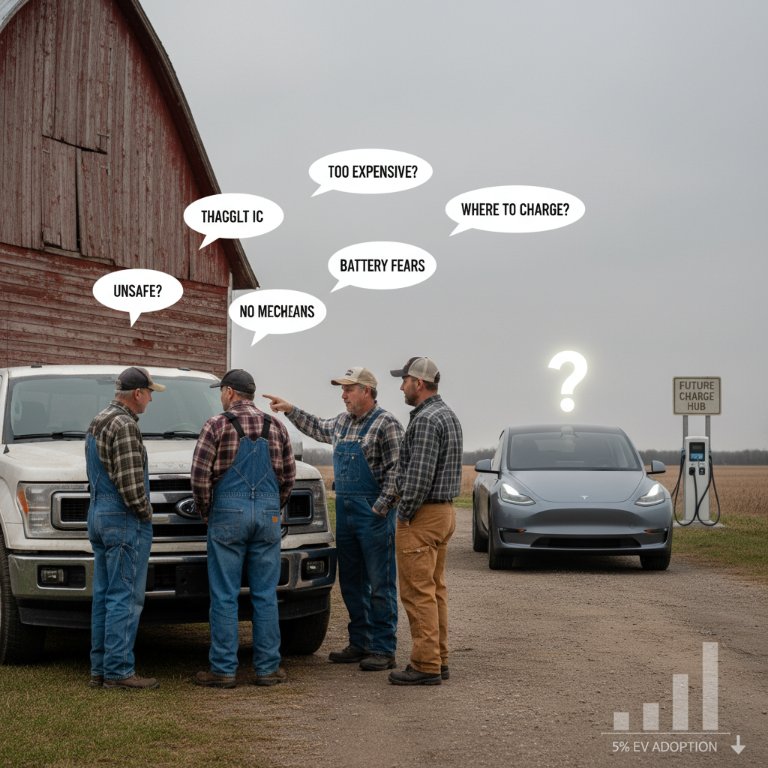
A recent University of Michigan survey of 1,000 rural Michigan residents delivers a sobering reality check for the electric vehicle industry: only a mere 5% would choose an EV as their next vehicle. This figure dramatically undercuts national averages, where EV sales as a percentage of new vehicle sales hover around 10.6% as of Q3 2024, and have even reached over 20% in the EU and nearly 50% in China. The study, published in Scientific Reports, meticulously unpacks the chasm between the burgeoning EV market and the persistent skepticism in rural America, revealing that a potent cocktail of cost concerns, limited real-world exposure, and pervasive misconceptions are actively stifling adoption.
The Stark Reality of Rural Aversion
The 5% adoption intent in rural Michigan highlights a critical blind spot for automakers and policymakers alike. While urban and suburban areas show increasing interest and sales, rural communities remain largely unconvinced. This isn't just about a lack of charging stations, though that remains a significant hurdle. The survey identified a broader spectrum of concerns that go to the heart of trust and understanding:
- Upfront Cost Concerns: EVs often carry a higher initial purchase price than comparable gasoline vehicles, a significant barrier for rural households where transportation costs can represent a larger portion of the budget.
- Limited Exposure and Familiarity: Many rural residents simply haven't had the opportunity to experience EVs firsthand. Only 27% of rural dwellers surveyed had seen an EV in their neighborhood in the past month, compared to over half of urban dwellers. This lack of exposure breeds unfamiliarity with the fundamentals of EV ownership.
- Misconceptions and Information Vacuum: Deep-seated misinformation about EV safety, maintenance requirements, and resale value continues to thrive in the absence of reliable, trustworthy information. This is a critical point, as misconceptions about battery performance in winter or vehicle clearance for rural driving conditions are often cited.
Beyond the Range Anxiet
While range anxiety is a commonly cited barrier to EV adoption, particularly in areas with sparse charging infrastructure, the University of Michigan study points to deeper, more systemic issues. Rural drivers average longer trips and rely heavily on personal vehicles due to limited public transportation options. This makes concerns about vehicle reliability, longevity, and the financial implications of ownership paramount. Automakers like Ford and Rivian have begun to address the demand for trucks and SUVs, which are cultural and functional staples in rural America, but model availability is still a barrier. Furthermore, the perceived complexity of EV maintenance or the uncertainty surrounding long-term battery health can deter potential buyers who cannot afford unexpected ownership costs.
Bridging the Divide: Solutions from the Source
The researchers offer a clear roadmap to navigate these challenges, emphasizing a multi-pronged approach that extends beyond simply building more chargers:
- Robust Charging Infrastructure: While not the sole solution, expanding charging networks, especially DC fast charging along rural corridors, remains crucial. Federal initiatives like the Infrastructure Investment and Jobs Act have allocated billions for EV charging, with a focus on rural and hard-to-reach communities.
- Clear Communication and Education: There's an urgent need for campaigns that demystify EV capabilities, address safety and maintenance concerns head-on, and provide transparent information about battery health and longevity. This information must come from trusted sources to counter misinformation.
- Targeted Outreach and Incentives: Programs designed to overcome the upfront cost barrier, such as income-eligible purchase incentives and point-of-sale rebates, are vital. Educating local automobile dealers and providing them with incentives to sell EVs could also significantly boost sales and customer satisfaction in rural areas.
Why This Matters:
This University of Michigan study is more than just a regional snapshot; it's a stark warning and a call to action for the entire EV ecosystem. For automakers, it signals that a one-size-fits-all strategy for electrification is failing in a significant segment of the market. Companies relying solely on urban-centric marketing or sedan-heavy lineups risk missing out on a massive untapped demographic. The ongoing push for electric trucks and SUVs, from players like Ford with its F-150 Lightning and GM with its Silverado EV, becomes not just an expansion strategy but a critical necessity for rural penetration.
For charging infrastructure developers, it underscores that simply deploying chargers isn't enough; understanding user behavior, perceived reliability, and the need for clear signage and user-friendly interfaces in rural settings is paramount.
For policymakers and environmental advocates, this data highlights that achieving ambitious national EV adoption and emissions reduction goals hinges on equitable access and overcoming cultural and informational barriers, not just technological ones. If the unique needs and concerns of rural communities are not adequately addressed, the overall pace of the EV transition in the U.S. could be significantly hampered, creating a persistent urban-rural divide in sustainable transportation.
Conclusion:
The path to widespread EV adoption in rural America is clearly paved with challenges, but also with immense opportunity. Overcoming the perception gap and building trust through clear, consistent communication, coupled with strategic infrastructure development and targeted financial incentives, will be crucial. The insights from rural Michigan provide a vital blueprint for the industry to move beyond its current urban strongholds and truly electrify the nation, ensuring that the benefits of EVs are accessible to all, regardless of zip code.