Safety Scrutiny Mounts: Tesla Recalls Over 125,000 Vehicles for Critical Seat Belt Warning Flaw
Tesla, a brand synonymous with technological innovation and over-the-air (OTA) updates, faces renewed scrutiny as it initiates a significant recall af...
Editorial Team
World Of EV
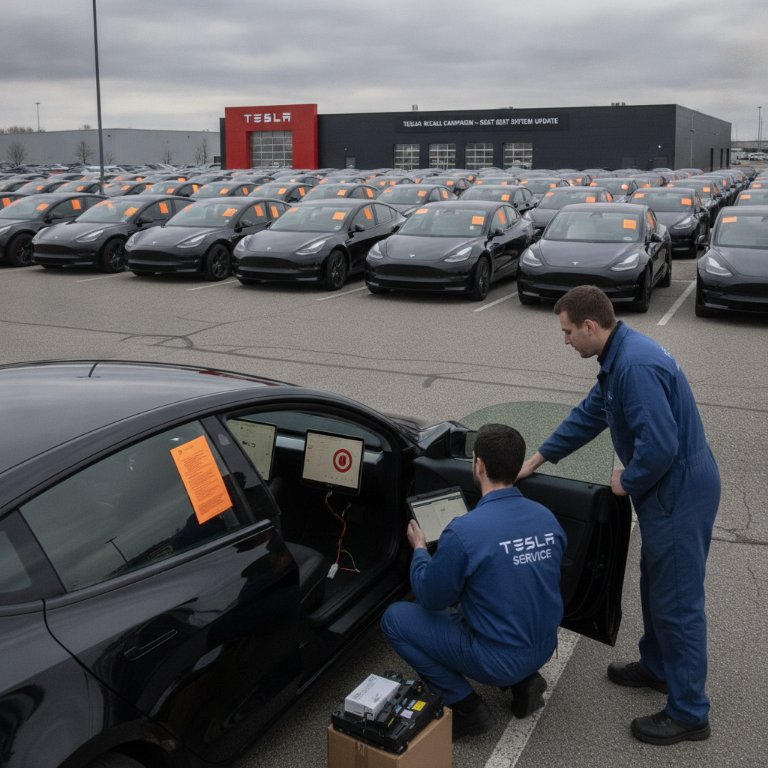
Tesla, a brand synonymous with technological innovation and over-the-air (OTA) updates, faces renewed scrutiny as it initiates a significant recall affecting more than 125,000 vehicles. This widespread action addresses a critical safety issue: a malfunctioning seat belt notification system that may fail to properly alert occupants about unbuckled seat belts. For an automaker that often champions its advanced safety features, this recall highlights the ongoing challenges in perfecting software-defined vehicle systems and ensuring fundamental safety protocols remain uncompromised.
This isn't an isolated incident for the EV giant. Tesla has, like many modern automakers, leveraged its sophisticated software capabilities for numerous fixes and enhancements, often delivered seamlessly via OTA updates. However, the recurring nature of recalls, some impacting core safety functions, prompts questions about the robustness of their validation processes before vehicles reach customers. The automotive industry, even for its most forward-thinking players, remains governed by stringent safety standards, and fundamental warnings like seat belt alerts are non-negotiable.
The Flawed Notification System
The core of this recall lies in a software glitch preventing the seat belt notification system from operating as intended. Specifically, the system may not properly alert occupants about unbuckled seat belts. While the seat belts themselves function correctly, the crucial auditory and visual warnings, designed to prompt occupants to buckle up, could be absent or delayed. This issue directly impacts a fundamental layer of vehicle safety, as seat belt usage is paramount in mitigating injury during a collision. The recall encompasses over 125,000 vehicles, a substantial portion of Tesla's fleet, underscoring the broad impact of such a software oversight.
Tesla is expected to rectify this issue through an OTA software update, a method they've pioneered and utilized extensively. This approach allows for rapid deployment of fixes without requiring owners to visit service centers, minimizing inconvenience. However, it also underscores the paradoxical nature of software-defined vehicles: the same flexibility that enables swift corrections can also introduce widespread vulnerabilities if not meticulously tested.
Why This Matters:
- Erosion of Trust: While OTA updates are convenient, frequent recalls, especially concerning basic safety features, can erode consumer trust. Tesla has built its brand on cutting-edge technology and perceived safety, but these incidents challenge that perception. Prospective buyers might begin to question the reliability of a vehicle where even foundational safety alerts can be compromised by software.
- Regulatory Scrutiny Intensifies: Regulatory bodies worldwide, such as the National Highway Traffic Safety Administration (NHTSA) in the U.S., keep a close watch on recalls. Each incident adds to the dossier, potentially leading to increased oversight, deeper investigations into Tesla's software development and quality control processes, and even fines. This is particularly relevant given ongoing scrutiny into features like Autopilot and Full Self-Driving (FSD) beta.
- The Software Paradox: Tesla champions its software-first approach, which allows for unparalleled vehicle evolution. Yet, this recall illustrates the flip side: a single software bug can affect hundreds of thousands of vehicles instantly. It emphasizes the immense responsibility that comes with software-defined cars and the critical need for infallible validation protocols before deployment.
- Competitive Landscape: In an increasingly competitive EV market, rivals like BYD, General Motors, and Hyundai are rapidly closing the technological gap. While no automaker is immune to recalls, recurring safety-related software issues in Tesla vehicles could provide a subtle advantage to competitors seeking to highlight their own reliability and robust engineering.
This recall serves as a potent reminder that even the most innovative automakers must prioritize foundational safety features above all else. While Tesla's ability to deploy OTA fixes is commendable, the focus must shift towards preventing such widespread issues in the first place. For buyers, it reinforces the need to stay informed about vehicle safety updates, even from brands perceived as industry leaders.
The swift resolution via OTA update will undoubtedly be a relief for affected owners. However, the long-term impact on Tesla's brand perception and its relationship with regulators will depend on its proactive measures to prevent similar incidents. The EV world watches closely as Tesla navigates the complex balance between rapid innovation and unwavering safety assurance in an era of software-driven vehicles.