Shattering the Cold Myth: How a $60 Canadian Winter Road Trip Proves EVs Are Ready for the Deep Freeze
Winter range anxiety remains the ultimate psychological barrier to widespread electric vehicle adoption. For years, skeptics have pointed to freezing ...
Editorial Team
World Of EV
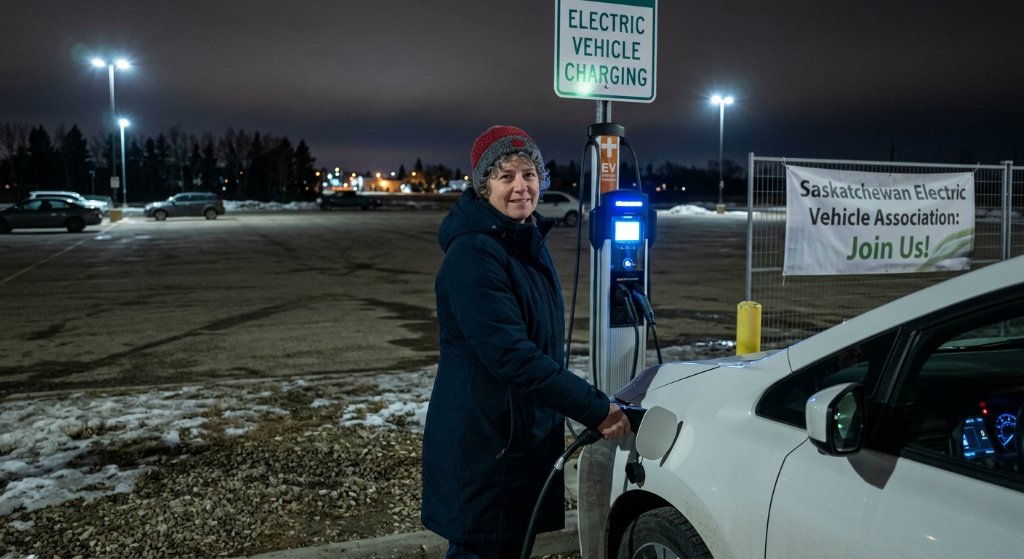
Winter range anxiety remains the ultimate psychological barrier to widespread electric vehicle adoption. For years, skeptics have pointed to freezing temperatures as the Achilles' heel of lithium-ion technology, claiming that sub-zero climates render EVs impractical for anything beyond short city commutes.
But real-world experience is rapidly dismantling these doubts. Jerilyn Nixon, a nine-year EV veteran and president of the Saskatchewan Electric Vehicle Association (SEVA), recently proved that extreme northern winters are no match for smart preparation. Nixon successfully completed a grueling round-trip journey from Regina to Edmonton—braving the Canadian Prairies—for a staggering total charging cost of just $60 CAD.
The Regina-to-Edmonton Proof of Concept
Driving from Regina, Saskatchewan, to Edmonton, Alberta, and back is a demanding 1,560-kilometer (nearly 1,000-mile) trek. In a traditional gas-powered midsize SUV averaging 8.5 liters per 100 kilometers, a driver would easily spend between $170 and $210 CAD in fuel, depending on provincial averages. Nixon bypassed these volatile fuel costs entirely, leveraging Canada's growing fast-charging infrastructure to power her journey for a fraction of the price.
Key takeaways from Nixon's winter journey highlight the massive economic advantages of electric transit:
- Unbeatable Economics: A total charging bill of $60 CAD translates to roughly $3.80 per 100 kilometers—a cost-to-distance ratio that no internal combustion engine (ICE) vehicle can match.
- The Charging Landscape: The success of the route relies heavily on the expansion of Level 3 DC fast chargers along the Trans-Canada and Yellowhead Highway corridors.
- Zero Incidents: Despite challenging prairie winter conditions, the trip was completed without a single software failure, mechanical hiccup, or charging-queue crisis.
Taming the Winter Range Drop with Smart Tech
It is an undeniable scientific fact that cold weather impacts EV performance [1]. Sub-zero temperatures slow down the chemical reactions inside lithium-ion battery cells and demand significant energy to keep the cabin warm. Nixon acknowledges that cold weather can degrade battery range by 10% to 30% [1]. However, she stresses that this degradation is a manageable variable rather than a dealbreaker [1].
To mitigate winter range anxiety, savvy EV drivers rely on a combination of vehicle technology and strategic habits:
- Proactive Route Planning: Utilizing smart navigation tools like A Better Routeplanner (ABRP) or built-in vehicle navigation to pre-determine charging stops based on real-time weather and topography [1].
- Battery Preconditioning: Warming the battery while the vehicle is still plugged into the grid. This ensures the pack operates at peak thermal efficiency from the moment the wheels turn and allows for faster DC charging rates upon arrival at a station.
- Optimized Cabin Heating: Utilizing energy-efficient heat pumps (increasingly standard in modern EVs) and relying on heated seats and steering wheels to reduce the draw on the main traction battery.
Why This Matters:
This real-world testimonial is a critical milestone in the narrative battle over EV adoption. For years, legacy automotive stakeholders and fossil fuel advocates have weaponized winter range loss to sow doubt among buyers in northern climates. Nixon's journey proves that the "winter problem" is no longer an engineering roadblock, but a minor planning exercise [1].
Who wins? Everyday consumers looking to slash their road-trip expenses. The math is simple: saving $150 on a single road trip is a powerful incentive, especially during inflationary times. Furthermore, this serves as a massive validation for regional charging networks, proving that strategic infrastructure investments in rural and inter-provincial corridors yield immediate utility.
Who loses? The narrative of the "impractical EV." As solid-state batteries and advanced thermal management systems become standard over the next few years, the 10% to 30% range dip will shrink even further. Dealerships and manufacturers who fail to educate their customers on preconditioning and route planning will lose buyers to savvier competitors who demystify the winter driving experience. This is a clear signal to the market: the infrastructure is ready, the tech is capable, and the financial savings are too massive to ignore.
Conclusion
Jerilyn Nixon’s $60 winter trek across the Canadian Prairies is a masterclass in modern EV ownership [1]. It demonstrates that with minimal preparation and a basic understanding of battery thermodynamics, long-distance winter travel is not only possible but incredibly cost-effective [1]. As charging infrastructure continues to densify, the excuse of the "frozen EV" will finally be laid to rest, paving the way for mainstream adoption in even the coldest corners of the globe.