Singapore's EV Rebate Cliff: 2026 Marks Final Opportunity for Maximum Savings on Affordable Electric Cars
Singapore's electric vehicle (EV) market is currently a hotbed of activity, but a significant shift is on the horizon. 2026 stands as the crucial last...
Editorial Team
World Of EV
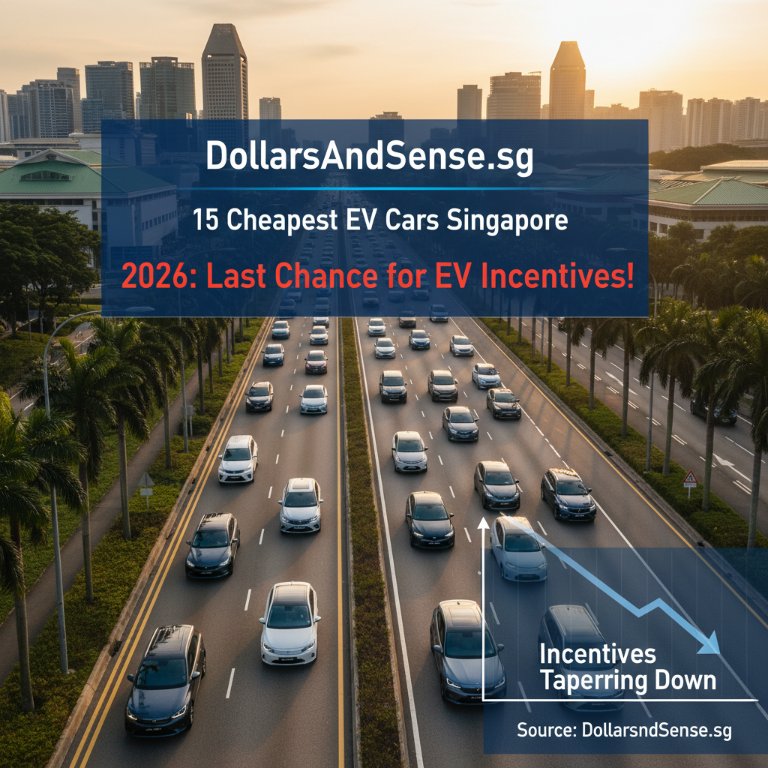
Singapore's electric vehicle (EV) market is currently a hotbed of activity, but a significant shift is on the horizon. 2026 stands as the crucial last year for prospective EV owners to capitalize on the full scope of the EV Early Adoption Incentive (EEAI) rebates. This impending reduction in financial incentives creates an urgent window for savvy buyers, driving a surge in interest for the most affordably priced electric vehicles available in the city-state.
After years of strategic government push to accelerate EV adoption, the landscape is now maturing. The Land Transport Authority (LTA) and National Environment Agency (NEA) have confirmed that while the Vehicular Emissions Scheme (VES) will continue with revisions, the EEAI will be significantly tapered in 2026 before ceasing entirely on January 1, 2027.
The Incentive Cliff Edge: What Changes in 2026
For years, Singapore's robust incentive schemes have been instrumental in making EV ownership more accessible in a market traditionally characterized by high car ownership costs, primarily due to the Certificate of Entitlement (COE) system. The EEAI, in conjunction with the VES, has offered substantial rebates, bringing the upfront cost of EVs closer to their internal combustion engine (ICE) counterparts.
However, the benefits are now winding down:
- EEAI Rebate Halved: For 2026, the EEAI rebate for newly registered fully-electric cars and taxis will be capped at S$7,500, a significant reduction from the previous S$15,000. This incentive will then be fully withdrawn from January 1, 2027.
- VES Rebates Adjusted: The VES Band A rebate for cars will also see a reduction, dropping to S$22,500 in 2026 and further to S$20,000 in 2027.
- Combined Savings Decrease: This means that the combined cost savings from EEAI and VES for eligible electric cars will be capped at S$30,000 in 2026, falling further to S$20,000 in 2027.
- S$0 ARF Floor Maintained: Crucially, the S$0 Additional Registration Fee (ARF) floor for electric cars and taxis will be maintained until December 31, 2027, offering some continued relief.
Navigating Singapore's Evolving EV Landscape
Despite the tapering incentives, Singapore's EV adoption rates continue their meteoric rise. Electric vehicles accounted for a remarkable 57.6% of new car registrations in the first quarter of 2026, signaling a definitive shift in consumer preference. Chinese brands, in particular, are leading this charge, with BYD, GAC, MG, and Chery establishing themselves among the top-selling marques. Their competitive pricing and increasingly sophisticated offerings are appealing to a market eager for value, especially within the context of rising COE premiums. Models like the Smart Fortwo EQ, MG4 Electric, BYD Dolphin Electric Dynamic, Seres 3, GAC Aion UT, and Omoda E5 are frequently cited as the most affordable options, often coming in under S$160,000 with COE and rebates applied.
Why This Matters:
This tapering of incentives is more than just a reduction in rebates; it's a recalibration of Singapore's EV strategy and a critical inflection point for the market. Here's why it matters:
- Urgency for Buyers: For prospective buyers who have been on the fence, 2026 is the undeniable last call to maximize their savings. Delaying a purchase beyond this year means facing significantly higher upfront costs, potentially pushing many budget-conscious individuals out of the market for new EVs. This pressure could lead to a final surge in sales in late 2026 for eligible models.
- Market Maturation Signal: The government's decision signals confidence in the self-sustaining growth of the EV market. It suggests that EVs are no longer niche products requiring heavy subsidies, but rather mainstream options that can stand on their own economic merits, supported by a growing charging infrastructure and increasing fuel costs for ICE vehicles.
- Shift in Competitive Dynamics: The competitive landscape will undoubtedly intensify. Brands that relied heavily on the larger incentives to sweeten their deals will need to re-evaluate their pricing strategies. Chinese manufacturers, already adept at offering compelling value, may further solidify their dominance by offering attractive price points even with reduced rebates. This could challenge traditional automakers who are slower to bring competitive, affordably priced EVs to market, much like how the MX-30's limited range and premium pricing hindered Mazda's initial EV foray in other markets.
- Focus on Total Cost of Ownership: Beyond 2026, the focus for consumers will shift even more sharply to the Total Cost of Ownership (TCO), including running costs, maintenance, and evolving battery technology. This puts pressure on manufacturers to innovate not just in purchase price, but in overall value proposition. Brands with efficient powertrains and long-lasting battery chemistries, like BYD's Blade battery, will hold a distinct advantage.
In conclusion, 2026 is a pivotal year for Singapore's EV journey. While the reduction in incentives marks the end of an era of maximum government support, it also ushers in a new phase of market-driven competition and a greater emphasis on inherent EV value. Prospective owners have a clear, albeit narrowing, window to secure significant savings, while the industry braces for a more competitive environment where innovation and intrinsic value will increasingly dictate success.