Smart Charging Revolution: How Pod's Overnight Hack Slashes EV Fueling Costs by Over 70%
As the global transition to electric vehicles shifts from early adopters to the cost-conscious mainstream, the cost of fueling has taken center stage....
Editorial Team
World Of EV
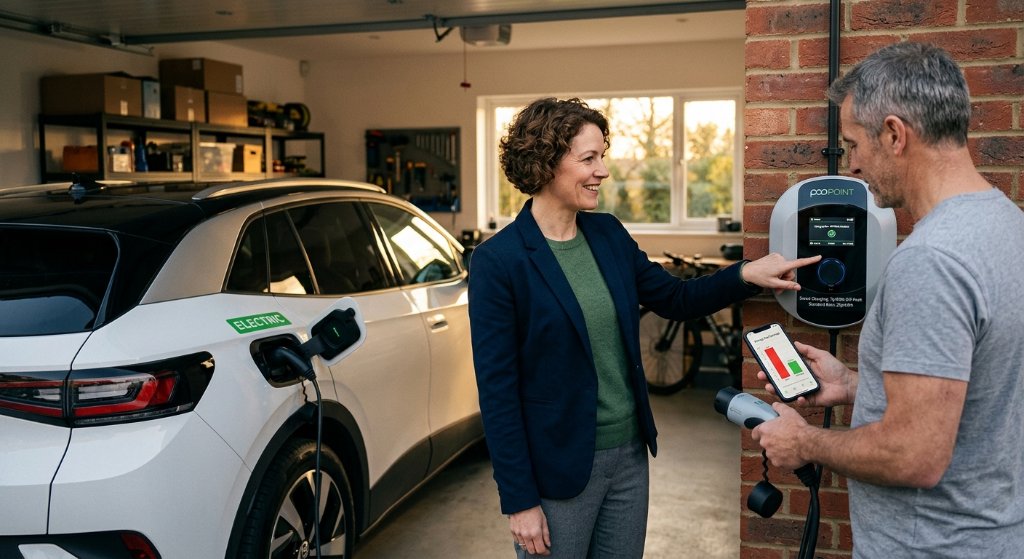
As the global transition to electric vehicles shifts from early adopters to the cost-conscious mainstream, the cost of fueling has taken center stage. Driving an EV has always promised lower running costs, but standard daytime utility rates have increasingly blurred that financial advantage. Now, Melanie Lane, CEO of UK charging provider Pod (formerly Pod Point, now a core part of the EDF family), has spotlighted a critical, automated charging strategy that restores the economic promise of electric driving: "smart charging".
By leveraging automated, grid-synced software to program overnight top-ups during low-demand periods, EV owners can bypass standard peak tariffs and tap into heavily discounted utility rates. With the energy transition undergoing pivotal infrastructure strain, this simple shift in charging behavior isn't just a minor optimization—it's an essential strategy for making EV ownership undeniably cheaper than running an internal combustion engine (ICE) vehicle.
The Mechanics of the Smart Charging "Hack"
At its core, smart charging is an automated system that connects an EV, a home charger, and the local electricity grid to optimize charging times. Instead of initiating high-cost charging the moment a driver plugs in after work, a smart charger communicates with utility providers to schedule charging when overall grid demand is lowest—typically between midnight and early morning.
- Automated Scheduling: Integrates directly with home chargers to automatically start and stop charging based on pre-set parameters.
- Grid Load Balancing: Shifts power draw away from peak evening hours (5 PM to 8 PM), easing strain on local grid infrastructure.
- Dynamic Tariff Tracking: Communicates with time-of-use tariffs to dynamically capture the cheapest rates available each night.
The Massive Math: 7p vs. 25p per kWh
According to Melanie Lane, the financial impact of this simple configuration is staggering. By scheduling charging during overnight, off-peak hours, drivers can access highly discounted tariffs as low as 7p per kWh. When compared to the standard UK daytime rate of around 25p per kWh, this represents a cost reduction of over 70%.
For an average EV with a 60-kWh battery pack, the differences are stark:
- Standard Daytime Charge (at 25p/kWh): £15.00 for a full charge.
- Overnight Smart Charge (at 7p/kWh): £4.20 for a full charge.
- Annual Savings (for 10,000 miles): Over £500 saved annually simply by shifting the charging schedule.
This massive price delta effectively neutralizes one of the primary hurdles holding back prospective buyers: the fear of high public or standard domestic energy bills.
Why This Matters:
This is a defining moment for the mainstream adoption of electric vehicles, moving the narrative from "eco-friendly" to "unquestionably economical."
- The Big Winner: The Mainstream Consumer and the Grid. For buyers on the fence, a 70% drop in running costs provides the clear, undeniable financial incentive needed to abandon fossil fuels. Concurrently, National Grid operators win because shifting gigawatts of EV demand to the middle of the night prevents costly peak-load grid upgrades.
- The Losers: Public Charging Networks and Traditional Oil Majors. As home charging becomes incredibly cheap, public charging operators charging up to 70p–80p per kWh for rapid charging will face severe pressure. Consumers will optimize their habits to charge almost exclusively at home, using public infrastructure only for rare, long-distance road trips.
- What this Signals to the Market: Melanie Lane's strategy underscores Pod's pivot under EDF from a mere hardware manufacturer to an integrated energy services provider. In the EV charging war, hardware is becoming a commoditized product; the real battleground is now smart energy management and software ecosystem integration. If legacy charging companies cannot offer automated smart-tariff syncing, they risk becoming obsolete.
Ultimately, the transition to EVs cannot rely solely on the environmental conscience of buyers—it must win on economics. Smart charging is the bridge that turns the EV from a standard consumer appliance into an active, cost-saving asset. As grid integration becomes more sophisticated and vehicle-to-grid (V2G) technology matures, those who master smart overnight charging today will be the ones driving practically for free tomorrow.