Software Glitches and Charging Failures Drag Prominent EVs Down to Consumer Reports' 'Least Reliable' List
Consumer Reports has released its highly anticipated 2026 predicted reliability ratings, and the verdict is clear: despite promises of simpler mechani...
Editorial Team
World Of EV
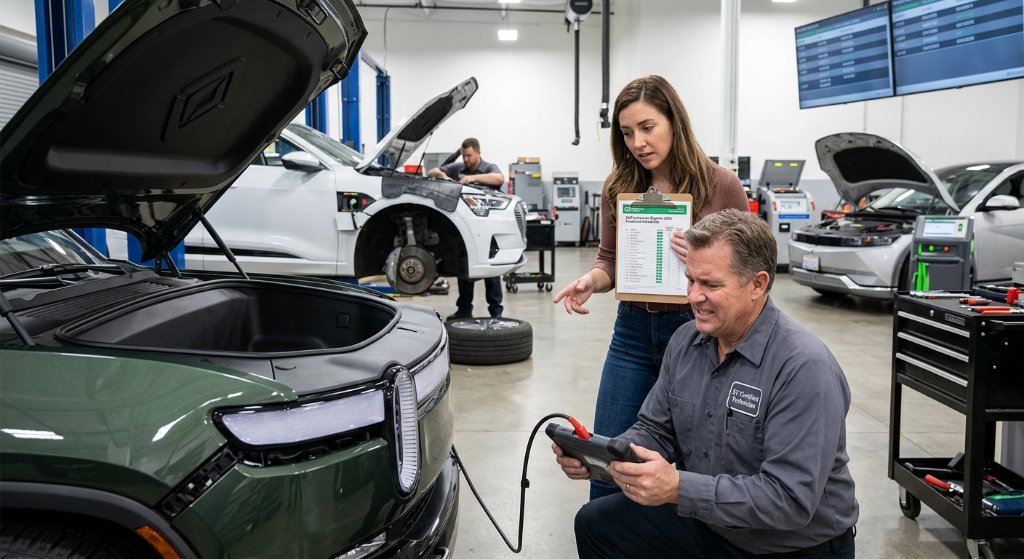
Consumer Reports has released its highly anticipated 2026 predicted reliability ratings, and the verdict is clear: despite promises of simpler mechanical architecture, today's electric vehicles are still plagued by persistent software and hardware defects. Prominent EVs from legacy giants and ambitious startups alike are dragging down ownership satisfaction, proving that cutting-edge technology remains a double-edged sword for early adopters who expected seamless, maintenance-free driving.
These struggles represent a systemic challenge for an industry transitioning from combustion engines to rolling computers. Legacy automakers like GM and Hyundai-Kia have invested billions into bespoke EV architectures, yet they continue to be haunted by early engineering missteps. Instead of these issues being ironed out, Consumer Reports' latest data shows that hardware bottlenecks like ICCU failures and buggy infotainment software continue to disrupt the owner experience. For prospective buyers, these persistent defects are shifting the conversation from "how far can it go on a charge?" to "will it actually turn on in the morning?"
E-GMP Platforms Haunted by Charging Hardware Failures
Hyundai, Kia, and Genesis have spent the last few years winning awards for their fast-charging E-GMP platform, but a critical hardware vulnerability continues to tarnish their reputation:
- The Integrated Charging Control Unit (ICCU): This crucial component controls power flow to both the high-voltage battery and the 12V auxiliary battery.
- The Failure Point: ICCU failures lead to sudden power loss or a complete inability to charge, leaving drivers stranded on the highway.
- The Ownership Impact: Models like the Hyundai Ioniq 5, Kia EV6, EV9, and Genesis GV60 have seen high rates of failure. Although manufacturers have issued voluntary recalls and software updates, many owners still face excruciatingly long waits at dealerships due to physical replacement parts being backordered.
Software Meltdowns Plague GM's Ultium and Audi's e-tron
While Hyundai struggles with power hardware, General Motors and Audi are fighting a war against their own code.
- Chevrolet Blazer EV: Despite GM issuing a high-profile, multi-month "stop-sale" in late 2023 to patch its Ultium-based software, the Blazer EV remains at the bottom of the reliability barrel for 2026. Owners report a litany of errors, from high-voltage system faults to frozen infotainment screens and failed DC fast-charging handshakes.
- Audi e-tron Series (Q4 & Q6 e-tron): Audi's premium cabins are being undone by its glitchy Multi Media Interface (MMI). Users frequently experience blacked-out touchscreens, failed over-the-air (OTA) updates, and erratic sensor warnings that force unscheduled dealer visits.
Rivian's R1 Series Faces Startup Build-Quality Bottlenecks
Even high-end startups are not immune. Rivian's highly capable R1T and R1S have found themselves on the "least reliable" list due to more traditional automotive growing pains:
- Auxiliary Faults: Owners continue to complain about erratic headlight seals, failing HVAC (heating and cooling) systems, and persistent suspension squeaks.
- The Infrastructure Bottleneck: While a legacy dealer might easily swap out a faulty headlight, Rivian owners must rely on a highly centralized, growing service network. This means a minor climate-control or lighting issue can take weeks to resolve, significantly hurting the daily ownership experience.
Why This Matters:
This reliability data is a critical warning sign for the entire EV industry.
- The Losers: Legacy automakers trying to court mainstream, risk-averse buyers. If a consumer trades a bulletproof Toyota RAV4 or Honda CR-V for a $60,000 EV and is immediately hit with charging failures or screen blackouts, they will likely flee back to internal combustion engines (ICE) or traditional hybrids—which are currently seeing a massive surge in sales. GM's highly controversial decision to ditch Apple CarPlay in favor of its proprietary software now looks like a major self-inflicted wound.
- The Winners: Tesla, which—despite its own historical build-quality issues—has spent over a decade perfecting its vertical software integration and OTA stability. Hybrid vehicles also emerge as major victors, offering a safe, reliable halfway house for consumers spooked by EV gremlins.
- The Market Signal: The transition to electric mobility is no longer an engineering race for battery range or straight-line speed; it is now a battle of software QA and supply chain quality control. If legacy brands cannot build EVs that are as reliable as their gas-powered predecessors, they risk stalling the EV transition entirely.
In conclusion, the 2026 Consumer Reports reliability data serves as a stark reminder that removing the complexity of an internal combustion engine does not automatically guarantee a trouble-free ownership experience. Until automakers treat software and power electronics with the same rigorous quality control they historically applied to engines and transmissions, EVs will remain a tough sell for the mass market. For now, buyers must choose between cutting-edge technology and predictable reliability.