Southeast EV Market Shatters 1 Million Sales Milestone as Used Car Surge and Rising Driver Satisfaction Defy Investment Chill
For years, the American Southeast has been at the center of a profound EV paradox. It is a region that eagerly welcomed tens of billions of dollars in...
Editorial Team
World Of EV
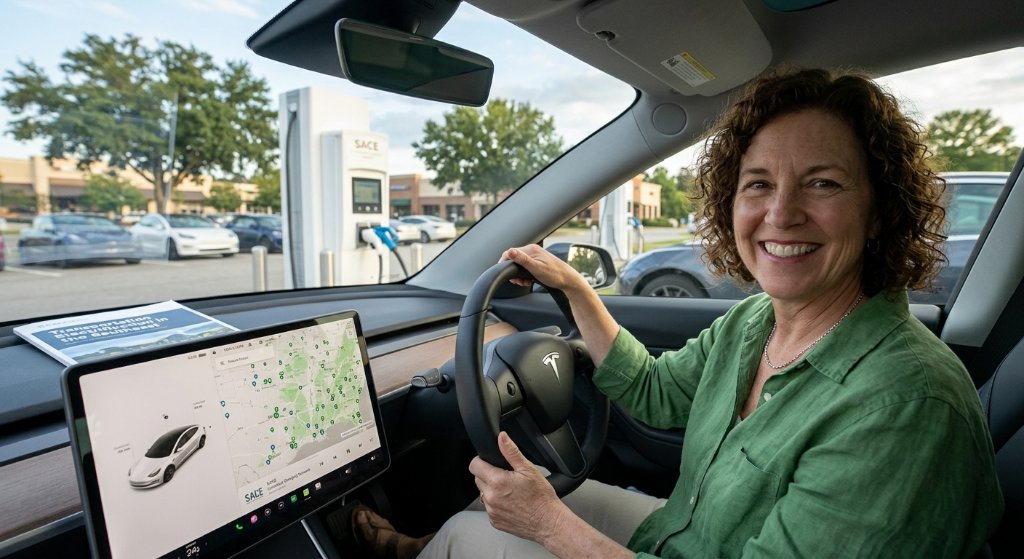
For years, the American Southeast has been at the center of a profound EV paradox. It is a region that eagerly welcomed tens of billions of dollars in private manufacturing investments and federal incentives post-Inflation Reduction Act (IRA) to build out a massive "Battery Belt" across Georgia, Tennessee, and North and South Carolina—all while local political leaders and sluggish state utilities often worked to slow down consumer adoption. Yet, according to the newly released seventh annual Transportation Electrification in the Southeast report from the Southern Alliance for Clean Energy (SACE) and Atlas Public Policy, the region’s EV momentum is proving highly resilient. Despite high-profile factory scale-backs and ongoing policy headwinds, the Southeast has officially crossed the monumental threshold of 1 million electric passenger vehicles sold, driven by skyrocketing consumer satisfaction and a massive appetite for used EVs.
A Dichotomy of Factory Scale-Backs and Consumer Milestones
The SACE report, which monitors EV indicators across Alabama, Florida, Georgia, North Carolina, South Carolina, and Tennessee, paints a fascinating picture of a market maturing in the face of macro-adversity. On one hand, the Southeast remains the nation’s absolute leader in EV manufacturing, amassing nearly $74 billion in private-sector investment (40% of the U.S. total) and over 61,300 anticipated jobs. On the other hand, the corporate gold rush is cooling off. The past 12 months saw a staggering $4.5 billion in canceled or scaled-back manufacturing investments and more than 9,700 lost anticipated jobs. Yet, despite these supply-side corrections, the demand side is roaring:
- The 1 Million Milestone: The Southeast has officially crossed the historic threshold of 1 million cumulative passenger EVs sold, showing that regional consumer interest is far from dead.
- New Sales Resilience: Regional sales of new passenger EVs grew by 25% year-over-year, with 225,000 new units sold.
- Market Share Rebound: The Southeast's regional EV market share climbed to 7.4% by the end of Q2 2026—a powerful recovery after hitting a low of 5.5% in Q3 2025.
- The Florida Exception: Florida continues to act as the region's powerhouse, with its local EV market share climbing to 9.4%, comfortably beating the national average of 7.9%.
The Secondary Market and Customer Satisfaction Take Center Stage
While automakers are slowing down multi-billion-dollar factory expansions to realign their balance sheets, everyday drivers in the Southeast are quietly voting with their wallets. The 2026 report highlights a massive shift in how people are accessing EVs, highlighted by an extraordinary boom in secondary market sales and unprecedented customer loyalty.
- Used EV Boom: Used EV sales in the Southeast skyrocketed to 140,800 units over the past year—a massive 34% increase compared to the previous 12 months.
- All-Time High Satisfaction: Despite ongoing debates over the pace of charging infrastructure, regional EV driver satisfaction reached an all-time high, signaling that once consumers switch to electric, they rarely look back.
- Utility Investment Uptick: Regional investor-owned utilities (IOUs) boosted their EV infrastructure investments by 14% year-over-year, though the region still dramatically lags behind the national average for utility support.
Why This Matters:
This report highlights a critical shift in the EV narrative: the transition of electric vehicles from a top-down, government-incentivized corporate project into a bottom-up, consumer-driven reality. For years, skeptics argued that EV demand in red and purple states was artificially inflated and bound to crash as soon as political headwinds gathered or tax incentives fluctuated. Instead, we are seeing the opposite. The Southeast's 34% spike in used EV sales and the rebound in market share to 7.4% prove that the public's desire for electrification is organic, robust, and driven by real-world economic advantages, not just political ideology.
Who Wins?
- The Used Car Market and Budget-Conscious Buyers: With reliable, modern EVs now trickling down to second and third owners at highly depreciated prices—bolstered by the used EV federal tax credit—electrification is finally becoming accessible to middle-and-lower-income drivers.
- Florida and Georgia: Florida remains a dominant demand center, while Georgia continues to leverage its status as a manufacturing titan, cementing the Southeast's place as a core pillar of the global EV transition.
Who Loses?
- Dithering Utilities and State Regulators: Southeastern utilities and local governments continue to lag behind national averages for public EV funding and infrastructure deployment. By failing to keep pace with the massive consumer demand, they risk creating charging bottlenecks that could throttle future regional growth.
- Automakers That Overpromised: The $4.5 billion in scaled-back investments shows that the OEMs who rushed to announce multi-billion-dollar gigafactories without secure, near-term supply chains and realistic vehicle pricing are paying the price for overestimating short-term adoption speeds.
Ultimately, this data signals to the market that the EV transition is no longer a speculative bubble. While the corporate "hype cycle" is facing a harsh dose of reality with canceled factory plans, the consumer transition is firmly underway. If you are an EV enthusiast or prospective buyer in the Southeast, the message is clear: the infrastructure is catching up, the used market is ripe with deals, and your neighbors are more satisfied with their EVs than ever before.
Conclusion
The 7th annual Transportation Electrification in the Southeast report serves as a stark reminder that consumer adoption of technology rarely follows a smooth, linear corporate projection. Even as automakers pull back on aggressive capital expenditures and grapple with regional political friction, the sheer volume of EV sales—both new and used—demonstrates that electric drivetrains are winning on their own merits. The Southeast has crossed its 1 million passenger EV milestone, proving that the electric revolution has officially moved from a coastal phenomenon to a regional certainty.