Stellantis's Secret Weapon: How the Alfa Romeo-Tuned Leapmotor B05 Shatters the Budget EV Playbook
### The Euro-Chassis Intervention For years, established European automakers have warned of an incoming wave of cheap Chinese electric vehicles. The ...
Editorial Team
World Of EV
The Euro-Chassis Intervention
For years, established European automakers have warned of an incoming wave of cheap Chinese electric vehicles. The narrative was simple: these cars would be packed with tech and dirt-cheap, but they would handle like wet sponges, suffer from atrocious cabin materials, and float aimlessly on demanding roads.
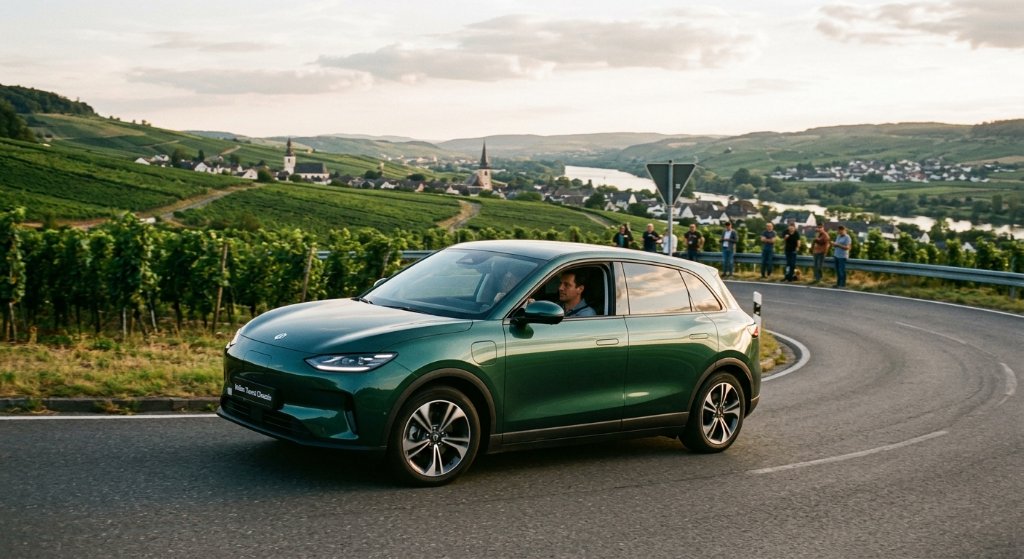
Stellantis—the powerhouse behind brands like Peugeot, Jeep, and Alfa Romeo—decided that if you can't beat them, you partner with them. In a brilliant strategic play, Stellantis acquired a 51% controlling stake in Leapmotor’s international division. Their first major joint offensive is the new Leapmotor B05 hatchback. Tested on the unforgiving, cobblestoned, and winding roads of the Rheingau region in Germany, the B05 is the ultimate proof of what happens when Chinese battery efficiency is married to legendary Italian chassis engineering.
A Stiff, 'Cell-to-Chassis' Backbone
At the heart of the B05 lies Leapmotor’s cutting-edge LEAP 3.5 architecture. Rather than adapting a legacy internal combustion engine (ICE) frame—a mistake that hobbled early electric efforts like the Mazda MX-30—the B05 is built from the ground up as a pure EV.
Crucially, it utilizes a stiff Cell-to-Chassis (CTC) platform. Much like Tesla’s structural battery packs or BYD’s Cell-to-Body (CTB) technology, the B05 integrates the battery cells directly into the vehicle's structural frame. This eliminates the heavy casing of traditional battery packs, radically increasing torsional rigidity while keeping the center of gravity incredibly low.
Here is how the B05 stacks up mechanically:
- The Powerhouse: A rear-mounted 160 kW (215 hp) electric motor delivering 240 Nm of torque.
- The Battery Trims: A choice between a 56.2 kWh LFP pack (approx. 249 miles WLTP range) and a larger 67.1 kWh LFP pack yielding up to 300 miles of range.
- Fast Charging: A 400V architecture capable of taking the larger pack from 10% to 80% in a swift 24 minutes, peaking at over 168 kW.
- Balanced Dynamics: A perfect 50:50 weight distribution paired with a sophisticated multi-link rear suspension.
Italian Dynamics Meet First-Gen Software Quirks
The real magic of the B05 is how it drives. Stellantis handed the development mules over to Alfa Romeo’s chassis wizards in Italy, and that DNA is immediately obvious. Where typical budget Chinese imports feel soft, disconnected, and nervous, the B05 remains remarkably flat through corners, demonstrating superb body control and class-leading road-noise isolation.
However, the B05 is not a flawless victory. While the hardware is world-class, the Chinese-developed software still feels half-baked for Western tastes:
- The Cockpit: A massive, minimalist 14.6-inch central display paired with an 8.8-inch driver's cluster. It looks premium, but the Leap OS 4.0 Plus interface is laggy and unintuitive.
- Nervous Safety Tech: The suite of 21 Advanced Driver Assistance Systems (ADAS) is plagued by overly sensitive 'bings and bongs' and highly aggressive, intrusive lane-keep corrections.
- The Packaging Compromise: Despite the spacious cabin, the structural battery layout compromises luggage space. The trunk is a meager 10.4 cubic feet (295 liters), and there is no front trunk (frunk) to speak of.
Why This Matters:
This is a geopolitical and commercial masterstroke by Stellantis, and a devastating wake-up call for the rest of the industry.
- The Winners: Stellantis and Leapmotor. Stellantis bypasses years of expensive R&D to field a highly competitive, €26,900 C-segment EV in Europe. Leapmotor gets instant access to Stellantis's massive European dealer network and manufacturing plants (with production eventually moving to Spain to dodge EU tariffs). Consumers also win, finally getting a sub-€30,000 EV that doesn't feel cheap and rides like an expensive European hatchback.
- The Losers: Volkswagen. The VW ID.3 is suddenly in deep trouble. It is more expensive, has historically struggled with software, and lacks the premium-feeling ride quality and design flare of the B05. Established Chinese rivals like MG and BYD also lose out; the MG4 has long ruled the budget RWD segment, but the B05 matches it on price while offering a vastly superior, Alfa-tuned ride and quieter cabin.
- What It Signals: This partnership signals a massive shift in the global EV chess game. We are moving away from simple tariff wars toward deep cross-border alliances. By leveraging Chinese battery integration with Western driving dynamics, Stellantis has created a blueprint for how legacy auto survives the electric transition.
Moving Into the Future
When the Leapmotor B05 lands in global markets later in 2026, it won’t just be another option on the showroom floor—it will represent a massive paradigm shift. If Leapmotor can refine its hyperactive safety software via over-the-air updates before the official launch, the B05 has all the ingredients to become the benchmark for affordable electric mobility. The budget EV is no longer a compromise; it's a genuine contender.