Stop Chasing Max Range: Real-World Data Proves EV Success Is About Charging Habits, Not Massive Batteries
The golden era of "range panic" marketing is officially hitting a wall. For a decade, legacy automakers and premium EV startups pushed a singular, exp...
Editorial Team
World Of EV
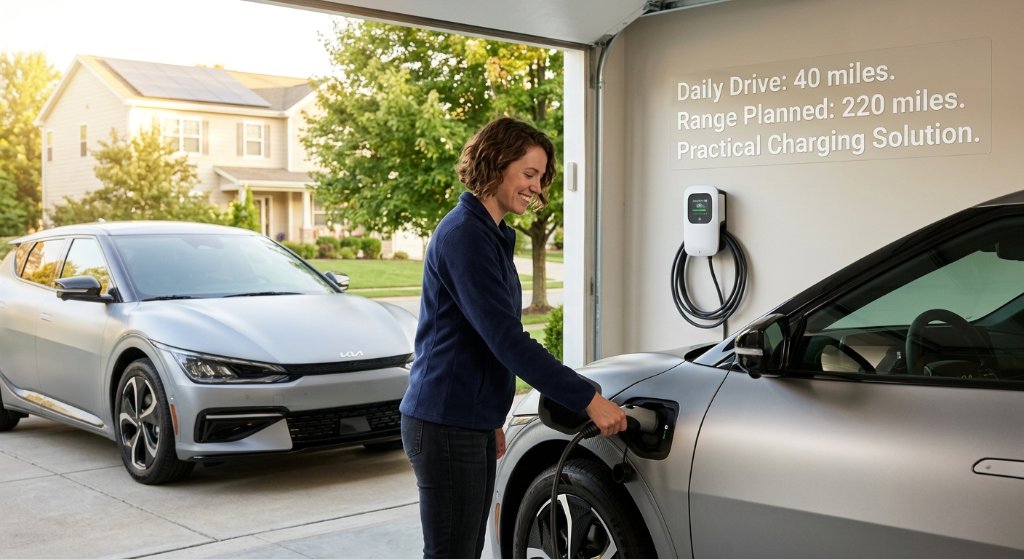
The golden era of "range panic" marketing is officially hitting a wall. For a decade, legacy automakers and premium EV startups pushed a singular, expensive narrative to win over skeptics: more miles per charge is always better. This arms race resulted in bloated, heavy, and hyper-expensive battery packs designed to soothe a psychological phantom known as "range anxiety". Yet, a groundbreaking new field analysis from automotive publication Zero2Turbo reveals a stark, refreshing reality. Transitioning to an EV is dramatically simpler than most buyers anticipate—provided they stop overpaying for batteries they do not need and pivot their focus toward the true cornerstone of EV satisfaction: convenient home charging.
The Myth of the 400-Mile Battery and the "Weight Penalty"
Automakers have spent years treating EVs like internal combustion engine (ICE) cars, attempting to replicate the 400-to-500-mile gas tank. In doing so, they have saddled buyers with massive, heavy batteries that are rarely utilized. According to the Zero2Turbo analysis, most new owners quickly realize that buying an EV with the maximum possible range is a costly mistake. Instead, matching battery capacity to actual daily commutes—which hover well under 40 miles for the average driver—yields a far superior, more cost-effective ownership experience.
- The Average Commute Reality: Overpaying for a 100+ kWh battery pack is financially counterproductive when a lighter, cheaper 60 kWh battery effortlessly covers 95% of daily driving needs.
- The Heavy Deadweight Penalty: Carrying massive batteries degrades vehicle handling, accelerates tire wear, and decreases overall drivetrain efficiency. Every extra pound of lithium-ion cell requires more energy to move.
- The Chemistry Advantage: The rise of Lithium Iron Phosphate (LFP) batteries (found in standard-range Tesla Model 3s and various BYD models) showcases this shift. LFPs are cheaper, more durable, and thrive when charged to 100% daily, rendering oversized, expensive Nickel-Cobalt-Manganese (NCM) packs obsolete for everyday commuting.
Ditching the "Gas Station Mindset" for Level 2 Home Charging
For more than a century, driving has meant running a fuel tank down to empty and then taking a detour to fill up. First-time EV owners often try to replicate this behavior by relying solely on public DC fast-charging networks. However, the happiest EV drivers are those who completely bypass public stations by establishing a dedicated Level 2 home-charging setup.
- The "Smartphone" Paradigm Shift: Instead of dedicated fueling trips, owners plug in overnight. Driving off every morning with a "full tank" turns vehicle fueling into a seamless background task.
- Bypassing Fragile Public Infrastructure: Relying on home charging shields drivers from the common frustrations of broken public chargers, long queues, and fragmented payment apps.
- Unbeatable Operating Economics: Charging at home allows owners to exploit low, overnight off-peak utility rates. This slashes per-mile operating costs to a fraction of equivalent gasoline costs.
Why This Matters:
This shift in consumer behavior signals a massive, structural transition from the "early adopter spec wars" to "mass-market maturity." The market is finally moving away from pure, unadulterated range chasing to practical utility, and this reshapes the entire EV landscape.
- Who Wins: Automakers who master vehicle efficiency and cost-effective battery packaging (like Hyundai/Kia's ultra-efficient E-GMP platform or Tesla's entry-level trims) stand to win big. By convincing buyers that smaller, LFP-powered batteries are sufficient, they can dramatically lower vehicle prices, drive mass adoption, and finally unlock true EV profitability.
- Who Loses: Public charging networks that rely on everyday city commuters rather than highway road-trippers will struggle as drivers increasingly opt to charge at home. Furthermore, legacy brands stuck building oversized, inefficient electric behemoths (like humongous electric trucks with 200+ kWh packs) will face agonizing profit margins and niche sales volumes.
- The Market Signal: The narrative that EVs are "too complicated" is dead. The real-world data demonstrates that EV ownership is shockingly simple—but only if buyers are educated to invest in their garage infrastructure rather than an oversized battery.
Conclusion
As the electric vehicle sector matures, the metric of success is shifting from maximum theoretical range to real-world charging efficiency. For prospective buyers, the ultimate takeaway is clear: stop buying into the range anxiety myth. Ditch the costly, oversized battery, invest those savings into a robust Level 2 home charger, and enjoy the easiest, most cost-effective automotive transition of your life.