Stop Unplugging Your EV: Why the 'Always Be Charging' Rule is the Ultimate Battery Life Hack
For years, a persistent myth has circulated in online EV forums: the moment your electric vehicle finishes charging, you must yank the plug to prevent...
Editorial Team
World Of EV
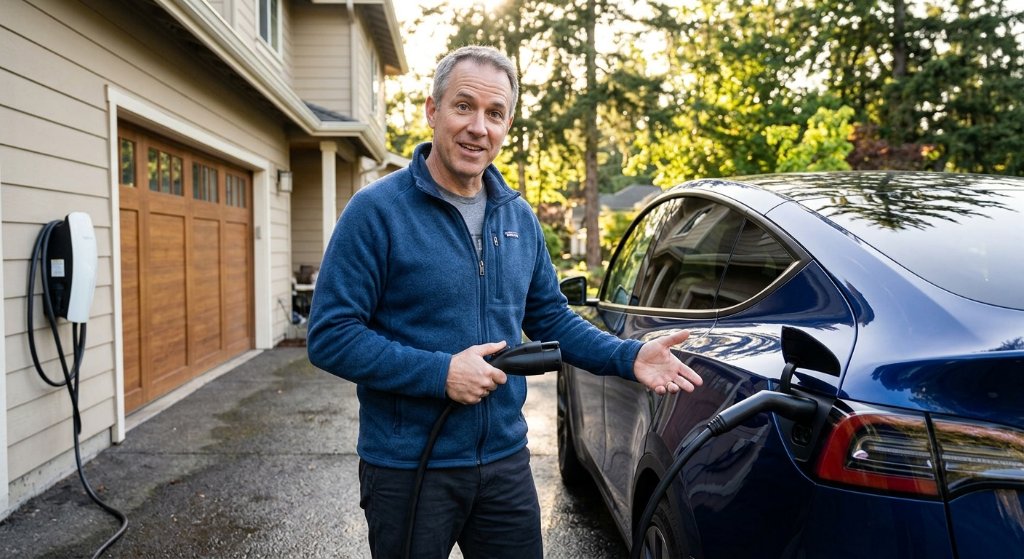
For years, a persistent myth has circulated in online EV forums: the moment your electric vehicle finishes charging, you must yank the plug to prevent catastrophic battery degradation. It is a hangover from the early days of consumer electronics, where leaving a smartphone or laptop plugged in indefinitely could cook the battery. However, EV content creator Jim of 'Jim's EV Adventures' recently debunked this practice, highlighting a fundamental truth of modern electric mobility that every owner needs to understand: leaving your EV plugged in is actually the best thing you can do for its battery health.
This 'always be charging' philosophy is not just a casual tip; it is a vital operational strategy supported by automotive engineers. For years, industry pioneers like Tesla have famously advised owners that 'a plugged-in Tesla is a happy Tesla.' Yet, as millions of mainstream buyers transition from internal combustion engines to electric vehicles, old consumer habits and misinformation continue to trigger unnecessary battery anxiety.
The Myth of the Instant Unplug
The urge to unplug stems from a fundamental misunderstanding of how modern lithium-ion batteries function. Unlike a decade-old laptop, a modern electric vehicle is a highly sophisticated, software-defined machine. When you leave your EV plugged in, it does not continuously force electricity into a full pack. Instead, the vehicle's onboard computer takes over, managing energy flow with extreme precision.
Unplugging your vehicle prematurely actually deprives it of its most valuable asset: a direct line to grid power. Here is what happens when you adopt the 'always be charging' approach:
- Grid-Powered Thermal Management: EVs must keep their battery packs within an optimal temperature window. If plugged in, the car draws power directly from your home grid to run its heaters or cooling pumps. If unplugged, it must drain its own internal battery reserves to protect itself, resulting in phantom drain.
- Active Cell Balancing: Battery packs consist of thousands of individual cells that can become slightly uneven in voltage over time. The Battery Management System (BMS) performs critical cell-balancing routines at the end of a charge cycle, a process that relies on a continuous, stable connection to a power source.
- The 80% Golden Rule: For standard Nickel Manganese Cobalt (NMC) or Nickel Cobalt Aluminum (NCA) batteries, setting a daily charge cap of 80% while keeping the vehicle plugged in ensures the pack never sits at a high state of charge, which is the real culprit behind degradation. (Note: While Lithium Iron Phosphate, or LFP, batteries are happier being charged to 100% regularly, they still benefit immensely from remaining plugged in).
Why This Matters:
This revelation goes far beyond basic vehicle maintenance; it highlights a critical education gap in the EV transition.
- The Winners: EV owners who embrace this practice will enjoy significantly slower battery degradation, preserving their vehicle's range and boosting long-term resale value.
- The Losers: Battery anxiety myths and legacy habits. Drivers who constantly worry about babysitting their chargers are wasting time and causing unnecessary stress.
- The Industry Signal: Automakers must do a better job of educating buyers at the point of sale. While tech-savvy early adopters understand the nuances of BMS and thermal management, the mass market does not. If brands want to build trust and protect their warranty bottom lines, clear communication on 'always be charging' must become standard dealership delivery protocol.
Ultimately, treating an EV like a smartphone is a mistake. Your car is a thermally regulated power station on wheels, and letting it sip power from the grid to maintain its own health is the smartest way to future-proof your investment.