Subaru Uncharted: Hardware Hits the Mark, But the EV Experience Remains Navigational Challenge
The 2026 Subaru Uncharted, a new compact electric crossover, rolls into a fiercely competitive market with promising specifications, yet initial revie...
Editorial Team
World Of EV
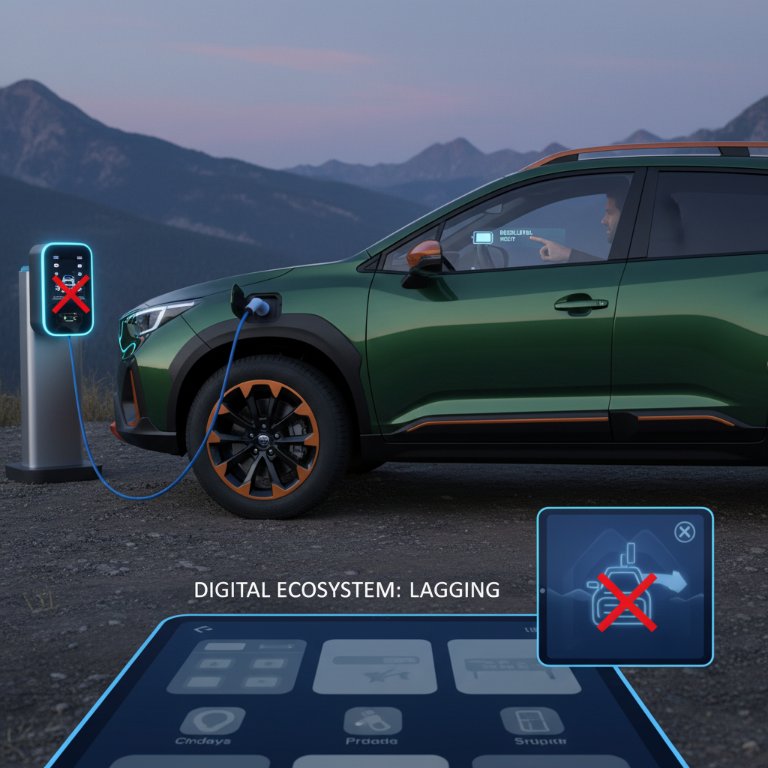
The 2026 Subaru Uncharted, a new compact electric crossover, rolls into a fiercely competitive market with promising specifications, yet initial reviews suggest Subaru still grapples with delivering a fully integrated electric vehicle ownership experience. For a brand historically known for its rugged reliability and all-wheel-drive prowess, the Uncharted represents a critical step in its electrification journey, moving beyond the shared platform approach seen with the Solterra and its Toyota bZ4X sibling.
Subaru’s entry into the burgeoning compact electric crossover segment with the Uncharted signals a more serious commitment to an EV future. After a somewhat tentative start with the Solterra, which, while capable, felt more like a cautious toe-dip than a full plunge, the Uncharted arrives as a potentially more independent statement. It faces an uphill battle against established players like Hyundai’s Ioniq 5, Kia EV6, and an increasing array of compelling options from both legacy automakers and EV-native brands.
A Solid Foundation: Performance, Range, and Efficiency
On paper, the 2026 Subaru Uncharted boasts a highly competitive package, particularly for a compact crossover. Its specifications position it well within the subcompact segment, addressing many of the core concerns of prospective EV buyers:
- Impressive Range: Up to 308 miles on a single charge for the Front-Wheel Drive (FWD) variant. This figure places it firmly among segment leaders, alleviating range anxiety for most daily commutes and even longer journeys.
- Competitive Efficiency & Output: The vehicle demonstrates solid efficiency metrics and power output, ensuring a responsive and enjoyable driving experience without sacrificing range.
- Capable Charging: Its charging capabilities are in line with current industry standards, allowing for reasonably quick top-ups at public fast chargers.
From an engineering standpoint, the Uncharted appears to be a competent vehicle, offering the practical utility and perceived durability Subaru buyers expect. The hardware is undeniably there, suggesting that Subaru can indeed build a competitive electric powertrain.
The Glaring Gaps in the EV Experience
However, despite its strong foundational engineering, the Uncharted's 'broader electric ownership experience feels incomplete.' This crucial observation highlights a growing chasm between merely having competitive specs and delivering a truly modern, seamless EV user interface. Key areas where the Uncharted falls short include:
- Inconsistent Regenerative Braking: The regenerative braking levels frustratingly revert to a default setting after each vehicle restart. This necessitates manual re-adjustment for drivers who prefer a specific level of regen, disrupting the driving flow and consistency.
- Absence of True One-Pedal Driving: Unlike many leading EVs that allow for full one-pedal operation down to a complete stop, the Uncharted requires manual brake input to halt entirely and exhibits a 'creep' behavior similar to an internal combustion engine vehicle. This design choice detracts from the intuitive and energy-recovering benefits of a true one-pedal system.
- Lagging Digital Ecosystem: The vehicle's digital interface and infotainment system are noted as lagging behind segment leaders. In an era where software defines much of the in-car experience, a less-than-stellar digital environment can significantly impact user satisfaction and perceived modernity.
Why This Matters:
The 2026 Subaru Uncharted's debut is a critical inflection point for the brand. While its impressive range and competent engineering lay a strong groundwork, the identified shortcomings in the user experience could severely impact its market appeal among discerning EV buyers. This isn't just about technical specifications anymore; it's about the holistic ownership journey. Rivals like Hyundai, Kia, and Tesla have consistently pushed the boundaries of intuitive EV operation, making features like configurable regen and true one-pedal driving standard expectations, not premium options. When a vehicle requires the driver to re-engage preferred settings constantly, or doesn't deliver on the convenience promised by modern EVs, it signals a brand still catching up to the nuanced expectations of the electric age. For Subaru, a company that has built its reputation on reliability and a unique driving character, failing to prioritize the software and user interface side of the EV equation risks alienating a new generation of buyers who demand a truly integrated and sophisticated electric experience. This isn't a do-or-die moment for Subaru entirely, given their robust ICE lineup, but it is a pivotal opportunity missed to truly differentiate and establish themselves as a leader, rather than a follower, in the rapidly evolving EV landscape. Failing to rapidly address these 'experience' gaps could relegate the Uncharted, despite its hardware prowess, to a niche player in a mainstream segment.
Conclusion:
The 2026 Subaru Uncharted presents a compelling argument on paper, particularly with its competitive range and underlying engineering. However, the review's insights underscore a persistent challenge for many legacy automakers: while they can build competent EV hardware, mastering the software-defined user experience remains a hurdle. For Subaru, evolving beyond strong engineering to embrace a truly modern and seamless EV ownership experience will be paramount for the Uncharted to navigate successfully in the crowded electric vehicle market of tomorrow.