Tesla Attacks EV Depreciation Head-On with New 'Guaranteed Future Value' Program
Tesla is taking direct aim at one of the biggest hurdles facing electric vehicle adoption: rapid depreciation. In a move designed to restore buyer con...
Editorial Team
World Of EV
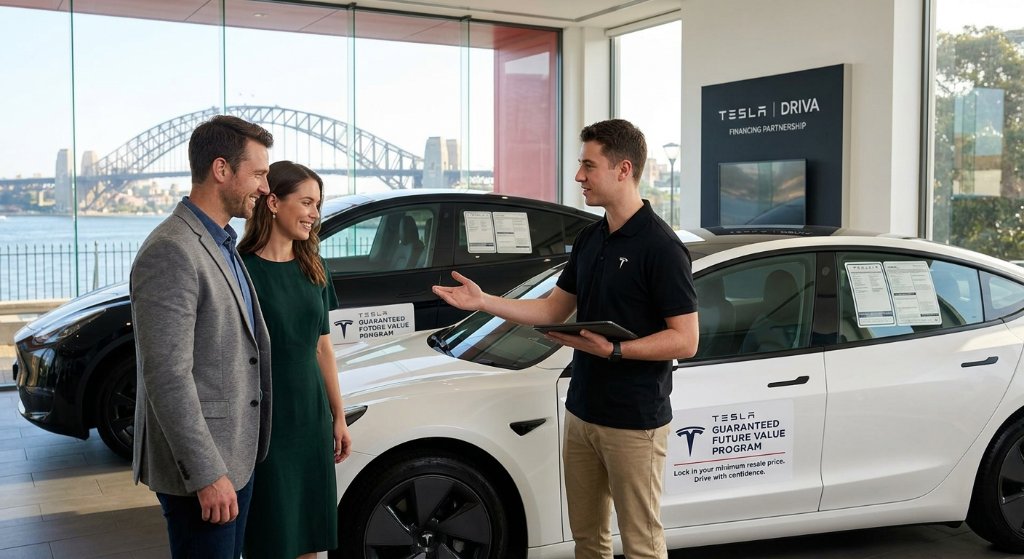
Tesla is taking direct aim at one of the biggest hurdles facing electric vehicle adoption: rapid depreciation. In a move designed to restore buyer confidence after years of unpredictable pricing, the EV titan has launched a new "Guaranteed Future Value" (GFV) program in Australia. Partnering with local financing firm Driva, the initiative allows buyers of the Model 3 and Model Y to lock in a minimum buyback price at the start of their loan, shifting the risk of residual value drops from the customer's wallet back to the manufacturer.
This strategic deployment comes at a critical juncture. While Tesla has recently enjoyed a massive sales resurgence in Australia—with first-half 2026 sales skyrocketing 66.7% year-on-year—the ghost of 2023 and 2024 still haunts prospective buyers. During those years, Tesla's aggressive, unpredictable global price cuts sent used EV values into a tailspin, leaving early adopters deeply underwater. The GFV program is Tesla’s financial shield to ensure this hard-won momentum is not derailed by depreciation anxiety.
How the Guaranteed Future Value Program Works
Under the new initiative, which is seamlessly integrated into the Tesla app during the financing process, buyers financing a new Model 3 or Model Y can see their minimum resale value locked in from day one. Calculated based on the loan term and projected annual mileage, this pre-determined figure serves as a financial safety net.
Because the buyer does not need to finance the full cost of the vehicle down to zero over the term of the loan, monthly repayments are also reduced. At the end of the financing period, the guaranteed value matches the final "balloon" payment, effectively guaranteeing that the owner can walk away without any out-of-pocket expense to settle the debt.
The Fine Print: Flexibility and Restrictions
While the program offers much-needed peace of mind, it is not a free-for-all. Tesla and Driva have established strict guardrails to protect their own balance sheets:
- The Wear-and-Tear Clause: To receive the full guaranteed value, the vehicle must meet strict "fair wear-and-tear" guidelines. Significant cosmetic or mechanical damage will detract from the final payout.
- Strict Kilometre Limits: Buyers must agree to a set annual mileage limit at the start of the contract. Exceeding this limit will trigger penalties that reduce the guaranteed value.
- No Rideshare Allowed (For Now): Uber and rideshare drivers are currently excluded from this GFV offering, though Driva and Tesla plan to launch a dedicated product for rideshare operators later this month.
- End-of-Term Versatility: At the end of the loan, owners have four paths: hand the car back to clear the remaining balance, upgrade to a newer Tesla, pay out the remaining balance to keep the car, or sell it privately to pocket any upside if the market value exceeds the GFV.
Why This Matters:
This is a masterstroke in psychological marketing, and it signals a major shift in how Tesla operates. For years, Tesla behaved like a tech startup, prioritizing rapid scaling and using price cuts as a blunt-force instrument to drive volume. But that strategy had collateral damage: it torched residual values. Between January 2024 and January 2025, the average Model Y lost roughly 25.5% of its value, leaving buyers who paid premium prices in 2022 holding the bag. By introducing GFV, Tesla is acknowledging that to win over the mainstream, risk-averse buyer, it must offer the same financial safety blankets that legacy automakers have used for decades.
Who wins? Prospective buyers get a low-risk entry point into EV ownership and lower monthly repayments. Tesla wins by insulating its sales volume from the chilling effect of depreciation headlines, maintaining its dominance over rivals like BYD in key growth markets.
What is the catch? The risk is now on Tesla and Driva. If EV battery tech leaps forward dramatically over the next three to five years, rendering current Model 3 and Model Y models obsolete, Tesla could be forced to buy back thousands of vehicles at prices far above their actual market value. However, as a defensive play to sustain its 2026 sales rebound, it's a risk Tesla is clearly willing to take. Expect this pilot to serve as a blueprint for European and North American markets if it succeeds.
Conclusion
Ultimately, the GFV program is a sign of maturity for both Tesla and the broader EV market. By removing the financial gamble from EV ownership, Tesla is transitioning from a brand bought on hype to one secured by financial sanity. If you've been sitting on the fence, terrified of your shiny new EV losing half its value overnight, Tesla just removed your biggest excuse not to buy.