Tesla Cybertruck Hits Urban Wall: 'Unbindable' Insurance and Parking Bans Threaten City Ownership
Tesla's highly anticipated Cybertruck, a vehicle touted for its futuristic design and rugged capabilities, is encountering significant real-world chal...
Editorial Team
World Of EV
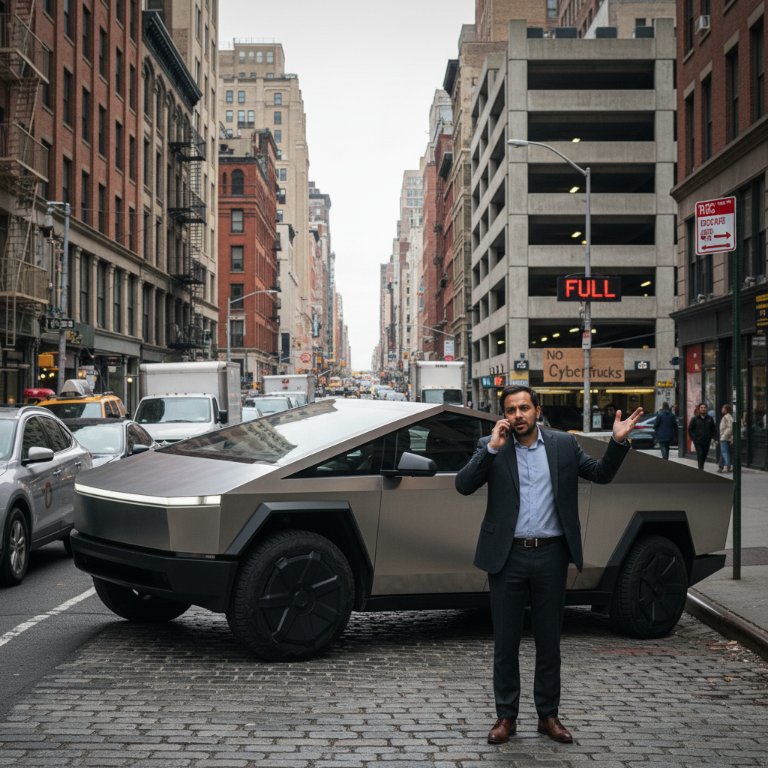
Tesla's highly anticipated Cybertruck, a vehicle touted for its futuristic design and rugged capabilities, is encountering significant real-world challenges in dense urban environments, particularly in Manhattan. Owner Atul Sharma recently highlighted a troubling predicament: major insurance providers like Geico and Liberty Insurance have reportedly labeled his Cybertruck 'Unbindable,' refusing to offer coverage. Compounding this issue, Manhattan parking garages are allegedly denying entry to Cybertrucks, leaving owners with vehicles that are both uninsurable and unparkable.
This isn't just an isolated incident for one frustrated owner; it signals a potential systemic clash between the Cybertruck's radical design and existing urban infrastructure and regulatory frameworks. The situation casts a long shadow over the practicality and total cost of ownership for prospective buyers, especially those residing in cities.
The Manhattan Conundrum: Insurance and Parking Lockouts
Atul Sharma's experience reveals a dual assault on Cybertruck ownership in New York City. Upon moving to Manhattan, he faced immediate rejection from prominent insurers. Geico and Liberty Insurance reportedly deemed his Cybertruck "Unbindable," a severe classification suggesting the vehicle is too high-risk or unconventional for standard policies. Other reports indicate that Geico began terminating Cybertruck policies in late 2024, citing the vehicle's unique design and high repair costs. Owners have also reported monthly premiums reaching exorbitant levels, sometimes over $1,000, or annual costs significantly higher than national averages, reflecting the perceived financial liability. If a monthly premium is $1,393, that means an annual cost of over $16,700, which is prohibitive for most consumers.
Simultaneously, parking has become a nightmare. Sharma claims that Manhattan parking garages are refusing Cybertrucks, with some operators reportedly attributing this ban to recommendations from their liability insurance providers. While the Cybertruck's substantial dimensions—measuring 223.7 inches long and 86.6 inches wide with mirrors folded—undoubtedly present a challenge for the often-tight spaces of older urban garages, the suggestion of a coordinated ban by insurers is unprecedented.
Design Meets Urban Reality: The 'Why'
The Cybertruck's highly distinctive design, with its stainless-steel exoskeleton and angular lines, is a key factor in these emerging issues. Unlike conventional vehicles, the Cybertruck's construction material and unique body panels necessitate specialized repair techniques and equipment, potentially driving up repair costs and complexity. Insurers, who rely on actuarial data to assess risk and predict repair expenses, find themselves in uncharted territory with the Cybertruck. The limited production volume also makes it difficult for insurance companies to adequately rate and underwrite the vehicle.
Furthermore, its sheer size, while making it a formidable presence on the road, directly conflicts with the spatial constraints of urban infrastructure. Standard parking spaces in the US are typically 9 feet wide and 18-20 feet long, and while the Cybertruck's 18.65 feet (223.7 inches) length might technically fit lengthwise, its width (86.6 inches or 7.2 feet with mirrors folded) and turning radius make maneuvering in tight garages exceptionally difficult. Some parking garages, particularly older ones, may also have weight restrictions, and the Cybertruck's substantial weight (around 3 tons or 6,000-7,000 lbs) could be a concern for their structural integrity.
Why This Matters: A Crossroads for Tesla and Urban EV Adoption
This unfolding saga represents a critical juncture for both Tesla and the broader electric vehicle industry, particularly regarding urban integration.
For Current and Prospective Cybertruck Owners: The inability to secure affordable insurance or reliable parking fundamentally undermines the usability and value proposition of an $80,000+ vehicle. For many urban dwellers, a car that cannot be legally insured or easily parked is an expensive paperweight. This directly impacts the total cost of ownership, pushing it far beyond the sticker price.
For Tesla's Brand and Sales Strategy: The Cybertruck's struggles in major urban centers like New York City could significantly hamper its sales potential in other dense metropolitan areas globally. Tesla's bold design choices, while creating a distinctive brand image, are now creating practical liabilities. This situation might force Tesla to re-evaluate its design philosophy for future vehicles or develop specific urban-friendly solutions. The reported decline in Cybertruck sales, with over 10,000 unsold units accumulating in lots, further underscores market challenges.
For the EV Industry: This highlights a critical, often overlooked, aspect of EV adoption beyond range and charging infrastructure: how radical designs integrate with established urban ecosystems. Insurers and urban planners are still catching up with the rapid evolution of EV technology and design. This case could spur new industry standards or force insurers to innovate their risk assessment models for unconventional vehicles.
Conclusion
The Tesla Cybertruck's journey from concept to consumer has been anything but conventional. The 'Unbindable' insurance status and pervasive parking rejections in Manhattan are stark reminders that revolutionary design, no matter how compelling, must ultimately contend with the practicalities of real-world ownership. Tesla faces a crucial challenge: addressing these fundamental issues to ensure the Cybertruck is not just a technological marvel, but a usable and sustainable option for its owners, regardless of their zip code.