Tesla Evades Model 3 Door Release Probe—But NHTSA Is Rewriting Rules for the Whole Industry
Tesla has dodged a potentially damaging federal safety probe, but the EV giant’s victory may prove bittersweet. The National Highway Traffic Safety Ad...
Editorial Team
World Of EV
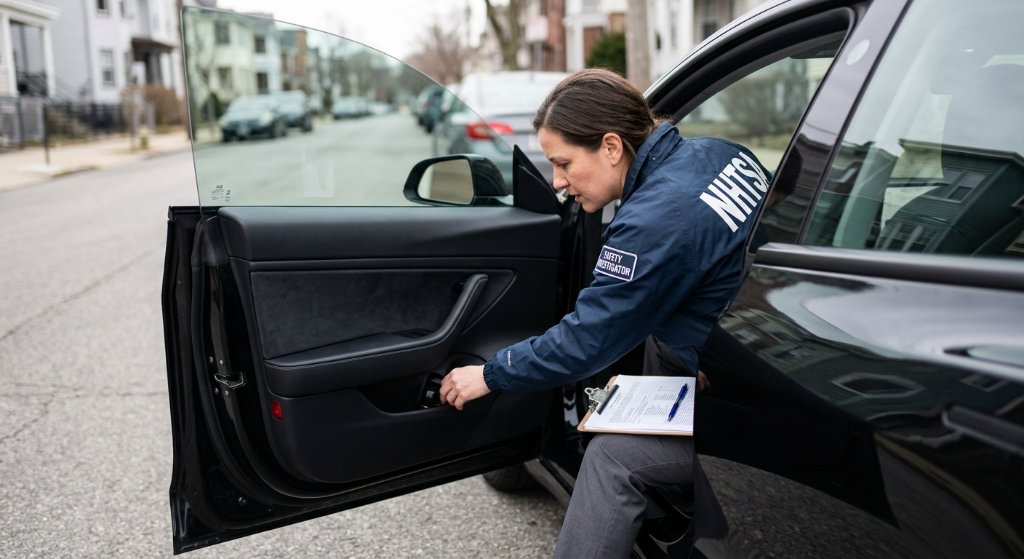
Tesla has dodged a potentially damaging federal safety probe, but the EV giant’s victory may prove bittersweet. The National Highway Traffic Safety Administration (NHTSA) officially denied a petition seeking a safety defect investigation into the emergency mechanical door releases of roughly 180,000 model-year 2022 Tesla Model 3 sedans.
While Tesla has sidestepped an expensive recall and a public relations nightmare, the regulatory relief is only temporary. By dismissing this highly localized complaint, federal regulators have simultaneously exposed a gaping hole in automotive safety standards. In a move that will send shockwaves through design studios across the industry, NHTSA has initiated a new rulemaking process to mandate highly visible, standardized emergency exit controls for all vehicles sold in the United States.
The Escape That Triggered the Petition
The saga began with a terrifying crash in November 2025. Tesla Model 3 owner Kevin Clouse experienced a head-on collision that severed the vehicle's electrical system, rendering the primary electric door-release buttons useless. As the EV’s cabin began to fill with smoke and fire, Clouse panicked; he could not find the unmarked manual mechanical door override, which is subtly integrated into the window switch panel. Facing immediate danger, he was forced to climb into the rear of the cabin and scramble out of a broken window.
Clouse subsequently petitioned NHTSA, claiming that the Model 3’s lack of clearly labeled and easily accessible manual releases violated Federal Motor Vehicle Safety Standard (FMVSS) 206.
Why Tesla Escaped the Crosshairs
In its technical review, NHTSA's Office of Defects Investigation (ODI) opted to deny the petition based on two primary factors:
- The Numbers Game: Out of nearly 180,000 Model 3s on U.S. roads from the 2022 model year, NHTSA's databases contained exactly one complaint matching this issue—and it was Clouse’s own incident. Under federal guidelines, a single isolated incident does not represent a systemic physical defect.
- A Lack of Rules to Enforce: NHTSA pointed out that FMVSS 206 was originally written to keep doors shut during crashes to prevent occupant ejection. It contains absolutely zero language governing how emergency backup door releases must be labeled, illuminated, or positioned. Legally, Tesla did not violate any established standard.
The Catch-22 of "Minimalist" EV Cabin Design
For years, premium EV makers have prioritized ultra-clean, minimalist interior aesthetics. The result has been the wholesale elimination of mechanical interior door handles in favor of slick, electronically actuated push-buttons.
While these electric latches allow for sleek door panels and software-driven features, they introduce a distinct safety vulnerability:
- Total Reliance on Power: If a collision or flood destroys the low-voltage battery system, the primary door-opening mechanism is dead.
- The Hidden Lever Problem: Federal rules require manual mechanical overrides, but they do not dictate how obvious they must be. In the Model 3 and Model Y, the front manual release is a flush lever on the armrest that blends seamlessly into the plastic trim, while the rear manual release is often buried under a rubber mat inside the door pocket. In a pitch-black cabin filling with smoke, locating these hidden levers is nearly impossible for a panicked passenger or an untrained first responder.
Why This Matters:
The denial of this petition is a short-term win for Tesla, saving the brand from a costly retrofit of 180,000 cars. However, the long-term impact on the broader automotive industry is immense. By granting a separate, parallel petition to begin drafting new federal safety standards, NHTSA has made its intentions clear: the era of hidden, unlabeled emergency door releases is officially ending.
Who Wins: Passengers and first responders are the undisputed winners. Within a few years, any vehicle equipped with electronic door latches will likely be legally required to feature highly visible, standardized, and possibly self-illuminated mechanical overrides.
Who Loses: Automotive design teams. Sleek, uninterrupted door card layouts will have to give way to federally mandated safety labels and distinct, highly tactile physical levers. Automakers like Tesla, who have aggressively bet on hyper-minimalist cockpits, will have to re-engineer their current and future door architectures to comply with the upcoming rules.
Conclusion
NHTSA rulemaking is notoriously slow and often takes several years to go from proposal to a codified law. However, now that the regulatory wheels are in motion, expect forward-looking automakers to start proactively self-regulating. Rather than waiting for a federal mandate, savvy OEMs will likely begin adding clear iconography and intuitive placements to their manual door overrides in upcoming vehicle refreshes. For Tesla, this ruling is a warning shot—and a clear sign that minimalism must never override basic human survival instincts in a crisis.