Tesla Faces Reckoning in China: FSD Lawsuit Threatens Brand Trust and Autonomy Ambitions
Beijing's judicial system has opened a significant new chapter in the ongoing saga of autonomous driving claims, with a local court holding its initia...
Editorial Team
World Of EV
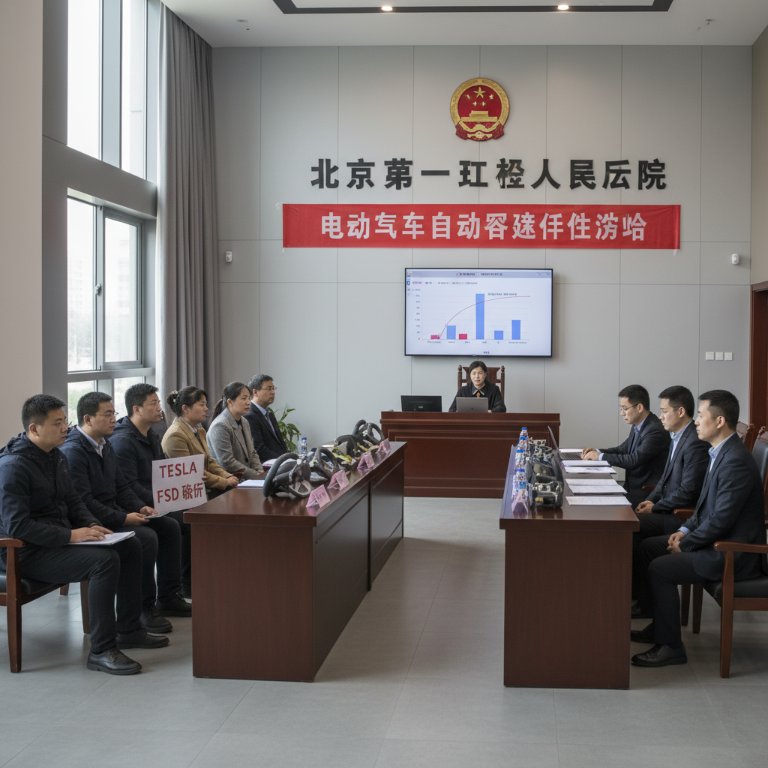
Beijing's judicial system has opened a significant new chapter in the ongoing saga of autonomous driving claims, with a local court holding its initial hearing in China's first-ever group legal challenge against Tesla regarding its 'Full Self-Driving' (FSD) capabilities. Ten Tesla owners are collectively demanding over 3.95 million yuan (approximately $583,000 USD) in damages, igniting a crucial legal battle that could redefine consumer protection and regulatory oversight in the rapidly evolving EV landscape.
This isn't merely a localized dispute; it's a pivotal moment in the global debate surrounding the ambitious, often controversial, marketing of advanced driver-assistance systems. For years, Tesla has been at the forefront of pushing FSD, with CEO Elon Musk frequently hinting at its imminent 'full' autonomy. However, the reality of FSD's capabilities, particularly in markets with stringent regulations like China, has frequently fallen short of these lofty promises, leading to a growing chasm between expectation and experience for many owners.
The Allegations Unpacked: A Breach of Trust
The plaintiffs' case centers on three core allegations that strike at the heart of Tesla's FSD marketing strategy in China:
- Unapproved Capabilities: Owners claim Tesla marketed FSD features that had not received the necessary regulatory approval for use in China. This is a critical point in a market known for its strict data localization and mapping requirements for autonomous driving functions.
- Failure to Perform: The lawsuit alleges that FSD could not perform as advertised. This directly challenges the 'Full Self-Driving' moniker, suggesting the system did not deliver the level of autonomous functionality consumers were led to expect.
- Undisclosed Hardware Limitations: A significant aspect of the complaint is the accusation that Tesla sold FSD without clearly disclosing hardware limitations. Many owners who purchased FSD between 2019 and 2021 found that when Tesla finally began rolling out its advanced assisted-driving software in China, it was often limited to newer vehicles equipped with HW4.0 hardware, effectively excluding those with older HW3.0 systems from experiencing the full suite of promised features.
These allegations are further bolstered by reports that Tesla recently renamed its FSD system to 'Tesla Assisted Driving' in the Chinese market, a move some see as a tacit admission that the original branding was misleading.
Tesla's FSD Journey in the Dragon's Den
China represents a colossal market for Tesla, both in sales and production. The company has consistently aimed to expand its software and driver-assistance offerings in the country amidst escalating competition from domestic EV manufacturers like Nio, XPeng, and BYD, all of whom are rapidly advancing their own ADAS solutions. However, the regulatory environment for autonomous driving in China is uniquely complex, often characterized by a cautious and phased approach to approving advanced functionalities. Terms like 'autonomous driving' or 'full self-driving' have faced scrutiny from authorities, with calls for companies to avoid exaggeration or false advertising.
Tesla's global FSD ambitions have frequently run into the realities of local regulatory frameworks and technological readiness. While the company has aggressively pushed FSD Beta in North America, its rollout and capabilities in China have been comparatively more constrained, exacerbating the frustration of owners who invested significant sums into the premium software package.
Why This Matters:
- A Precedent for Transparency: This lawsuit could set a powerful precedent for greater transparency from all automakers regarding the actual capabilities and limitations of their ADAS systems. A ruling in favor of the plaintiffs would send a clear message: marketing hype must align with real-world performance and regulatory approval. For savvy EV enthusiasts and prospective buyers, this means potentially clearer disclosures and a more honest assessment of what they're truly purchasing.
- Reputational Damage in a Critical Market: China is indispensable to Tesla's global strategy. A negative legal outcome, especially one involving consumer fraud, could significantly damage Tesla's brand trust and reputation in a market where competition is already fierce. This could directly impact sales and Tesla's ability to navigate China's complex regulatory landscape for future technologies. The company is already facing global lawsuits totaling up to $14.5 billion related to Autopilot and FSD.
- Heightened Regulatory Scrutiny: This case will undoubtedly draw intense scrutiny from Chinese regulators. A consumer-friendly verdict could trigger broader investigations into ADAS marketing practices across the industry, potentially leading to new, stricter guidelines for how these systems are advertised and sold. Other OEMs offering similar advanced features will be watching closely.
- Empowering the Consumer: For consumers, this lawsuit represents a potential victory for their rights. If successful, it could embolden EV owners worldwide to challenge misleading claims about autonomous capabilities, forcing manufacturers to be more accountable for their marketing.
- The 'Full Self-Driving' Illusion Under Fire: Ultimately, this case spotlights the inherent tension and potential legal vulnerability in labeling a Level 2 driver-assistance system as 'Full Self-Driving.' The ongoing legal challenges, including this one in China, may force the industry to adopt more accurate and less ambiguous terminology, fostering greater trust between automakers and their customers.
Conclusion:
The initial hearing in Beijing marks a significant moment for Tesla and the broader EV industry. The outcome of this group legal challenge will not only shape Tesla's future in its critical Chinese market but also send ripples across the global automotive landscape, potentially ushering in an era of enhanced transparency and accountability for the promises made in the race towards autonomous driving.