Tesla FSD (Supervised) v14.3.3: The End of the Nag, A New Era of Driver Monitoring
For years, Tesla Full Self-Driving (Supervised) users have navigated the complex dance between groundbreaking autonomous capabilities and the persiste...
Editorial Team
World Of EV
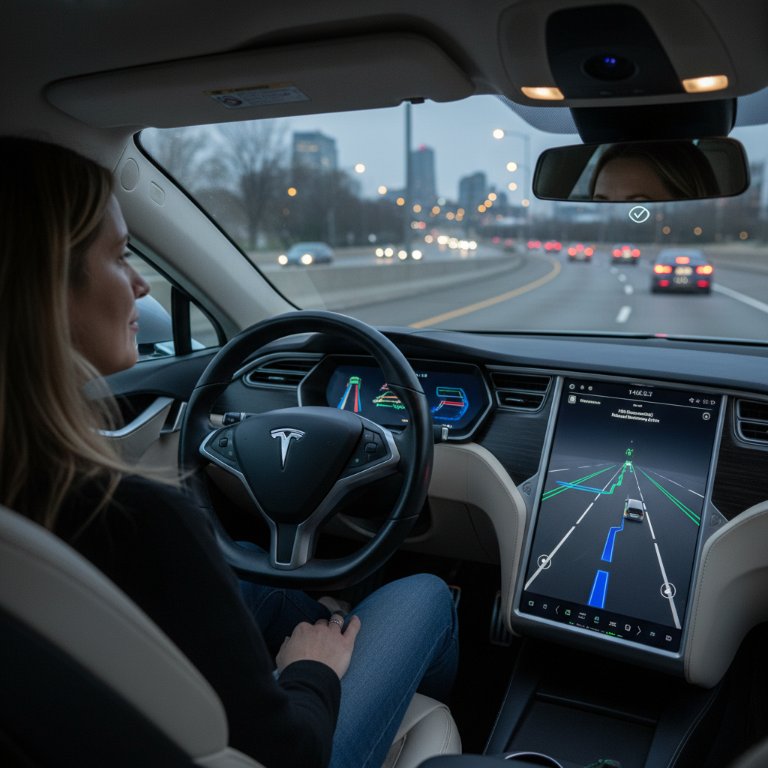
For years, Tesla Full Self-Driving (Supervised) users have navigated the complex dance between groundbreaking autonomous capabilities and the persistent, often intrusive, driver monitoring 'nags.' These alerts, primarily tied to steering wheel torque, have been a source of both safety assurance and significant user frustration. Now, with the rollout of FSD (Supervised) version 14.3.3, Tesla is ushering in a pivotal shift, largely eradicating these traditional prompts by entrusting driver attentiveness to the sophisticated gaze of the cabin camera. This update marks a profound evolution in Tesla’s approach to semi-autonomous driving, moving towards a more seamless and intuitive user experience.
A Decisive Shift to Camera-Centric Monitoring
The core of FSD (Supervised) v14.3.3 lies in its dramatic reduction of traditional driver intervention prompts. Previously, the system primarily relied on steering wheel input to confirm driver engagement, leading to frequent alerts even when drivers were actively watching the road. This new iteration fundamentally rethinks that paradigm.
Key enhancements in v14.3.3 include:
- Scaled-Back Driver Monitoring 'Nags': The most impactful change, significantly reducing the frequency of steering wheel prompts.
- Cabin Camera Dominance: The system now continuously monitors the driver's eyes, ensuring alertness without requiring physical input on the steering wheel, provided attention is maintained.
- Faster Smart Summon: Users can expect a more responsive and efficient Smart Summon experience.
- Improved Voice Commands: Enhancements to the vehicle's voice recognition and command processing.
- Smoother Driving Behavior: Refinements aimed at delivering a more comfortable and natural autonomous driving experience.
It’s crucial to note that this reduced-nag functionality is exclusively available on Tesla vehicles equipped with a cabin camera. This underscores the increasing importance of this internal sensor in Tesla's long-term autonomous driving strategy.
Why This Matters:
This isn't merely another incremental software update; it represents a significant ideological and practical leap for Tesla's Full Self-Driving ambitions. For the savvy EV enthusiast and prospective buyer, the implications are substantial:
- Enhanced User Experience: The reduction of intrusive 'nags' addresses one of the most common and persistent complaints from FSD users. This translates directly into a less fatiguing, more enjoyable, and ultimately more usable semi-autonomous driving experience. For many, the previous monitoring system was a significant barrier to consistent FSD engagement. This change could unlock wider adoption and appreciation of the software's capabilities.
- Validation of Tesla's Vision-First Approach: By shifting responsibility for driver monitoring almost entirely to the cabin camera, Tesla further entrenches its commitment to a vision-only system, not just for external environmental perception but also for internal driver state monitoring. This moves them closer to the sophisticated, camera-based driver monitoring systems found in competing Level 2+ offerings like GM's Super Cruise and Ford's BlueCruise, which have long been praised for their hands-free, eyes-on approach. Tesla is now directly challenging those benchmarks with its own vision-based solution, leveraging a sensor that was initially underutilized for this purpose.
- A Stepping Stone to Greater Autonomy: More robust and accurate driver monitoring is a prerequisite for advancing FSD towards higher levels of autonomy, where the driver's role will progressively diminish. By perfecting a less intrusive yet highly effective eye-tracking system, Tesla gathers invaluable data and refines the foundational elements necessary for future hands-off, and eventually, eyes-off scenarios. This update signals a deepening of Tesla's long-term strategy, demonstrating that the cabin camera is not just for security or novelty but a critical component in the company's quest for full autonomy.
- Market Signal and Competitive Edge: This move could entice more buyers to opt for the FSD (Supervised) package, knowing that a significant quality-of-life improvement has been implemented. In an increasingly competitive ADAS landscape, offering a less intrusive and more natural driver monitoring system provides Tesla a distinct advantage, appealing to a demographic that values both cutting-edge technology and seamless integration.
In essence, Tesla's FSD (Supervised) v14.3.3 update is more than a technical refinement; it's a strategic declaration. By mitigating a major pain point for users and deepening its reliance on the cabin camera, Tesla reinforces its vision-centric philosophy and takes a crucial step towards making semi-autonomous driving feel less like a supervised chore and more like a true co-pilot experience. The road to full autonomy remains long, but this version marks a significant acceleration on that journey, promising a more refined and less demanding interaction for drivers.