Tesla Redefines Safe Space: FSD Supervised Hardcodes 'Lateral Offset' to Protect Pedestrians and Cyclists
Tesla is quietly rewriting the playbook on how autonomous vehicles interact with the messy, unpredictable realities of city streets. On September 8, 2...
Editorial Team
World Of EV
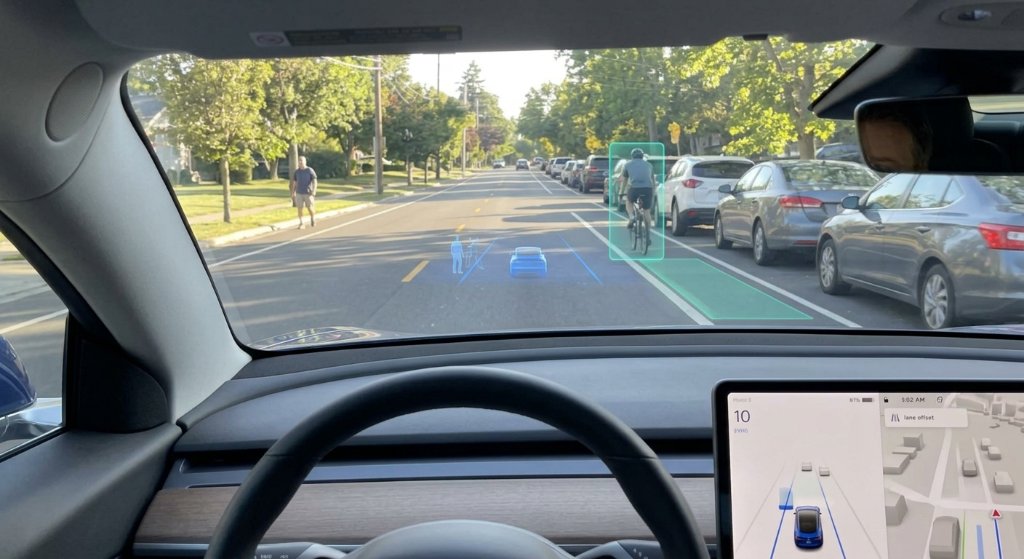
Tesla is quietly rewriting the playbook on how autonomous vehicles interact with the messy, unpredictable realities of city streets. On September 8, 2026, the EV pioneer announced that its Full Self-Driving (FSD) Supervised software is now intentionally programmed to maintain a dynamic "lateral offset buffer" from roadside pedestrians, cyclists, construction workers, and parked cars.
This update represents a massive evolutionary step for FSD, a system that has long battled criticism for its rigid, almost robotic lane-centering. Historically, Tesla’s neural-network-driven software kept cars strictly in the center of their lanes, occasionally passing cyclists or construction zones with an anxiety-inducing lack of clearance. By formalizing this safety margin, Tesla is pushing its driver-assist suite beyond mathematical perfection and toward the intuitive, defensive driving behavior of an experienced human.
Beyond the Center Line: How the Lateral Buffer Works
The core of this software adjustment is simple yet profound: FSD Supervised no longer views lane markings as rigid, unbreakable boundaries when safety dictates otherwise. Instead, the system actively repositions the car within the lane—or nudges slightly over the line when safe—to maximize lateral distance from roadside hazards.
Key applications of this newly programmed lateral offset include:
- The Door-Zone Defense: Giving parked vehicles a wider berth to ensure sudden door openings do not result in a collision.
- Pedestrian Cushioning: Carving out essential reaction room for individuals standing near the curb who might unexpectedly step onto the asphalt.
- Active Cyclist Margins: Consistently tracking and distancing the vehicle from cyclists on the shoulder, ensuring a buffer that most human drivers rarely hold so consistently.
- Worker Safety Zones: Providing a broader safety pocket around construction sites and roadside maintenance workers.
Bridging the Human-AI Behavior Gap
This announcement comes alongside a rapid-fire series of updates to the FSD ecosystem, most notably the rollout of FSD Supervised v14.3.9. This latest version introduces a highly anticipated "Automatic Collision Evasion" system, allowing the car to take over steering and acceleration if a manual driver is about to crash.
The shift to intuitive spatial positioning is highly dependent on Tesla's hardware split. While older Hardware 3 (HW3) vehicles continue to run specialized "Lite" versions of the software, newer Hardware 4 (HW4) vehicles leverage a dramatically larger neural network architecture. This network processes all camera feeds simultaneously to construct a continuous 3D model of the vehicle's surroundings—allowing it to spot partially obscured cyclists or pedestrians before they even step into a single camera's direct line of sight.
Why This Matters:
This development is far more than a minor software tweak; it is a calculated chess move in Tesla's bid for absolute dominance in the autonomous vehicle (AV) market.
- The Bid for Regulatory Trust: Tesla cannot launch its highly anticipated Cybercab and driverless robotaxi network without showing regulatory bodies like the NHTSA that its vehicles can operate safely in complex urban environments. Proving that FSD proactively practices defensive driving—rather than merely reacting to disasters—is key to securing driverless permits.
- The Death of Rider Anxiety: Technical safety is pointless if passengers are too terrified to use the software. A vehicle that passes a cyclist at 40 mph with only inches of clearance destroys rider trust. By mimicking a human's natural instinct to "give a wide berth", Tesla makes the FSD experience vastly more comfortable, which will drive consumer adoption.
- Legacy Competitors Trapped in Geofences: While legacy rivals like GM (Super Cruise) and Ford (BlueCruise) excel on pre-mapped, geofenced highways, they remain largely blind to unstructured, dynamic city streets. Tesla is demonstrating that its vision-only neural network can handle highly dynamic, real-world edge cases (like overhangs and sudden pedestrian steps) without relying on expensive, restrictive LiDAR arrays.
Looking to the Future
By codifying defensive lane positioning, Tesla is transitioning FSD from a hyper-reactive assistant into a proactive, defensive chauffeur. Teaching a neural network to understand not just where the lane is, but where the danger is, solves one of the most difficult "last mile" challenges of urban autonomy. As Tesla marches closer to its driverless dreams, teaching its cars how to share the road like courteous humans might just be the breakthrough that satisfies regulators and wins over skeptical buyers.